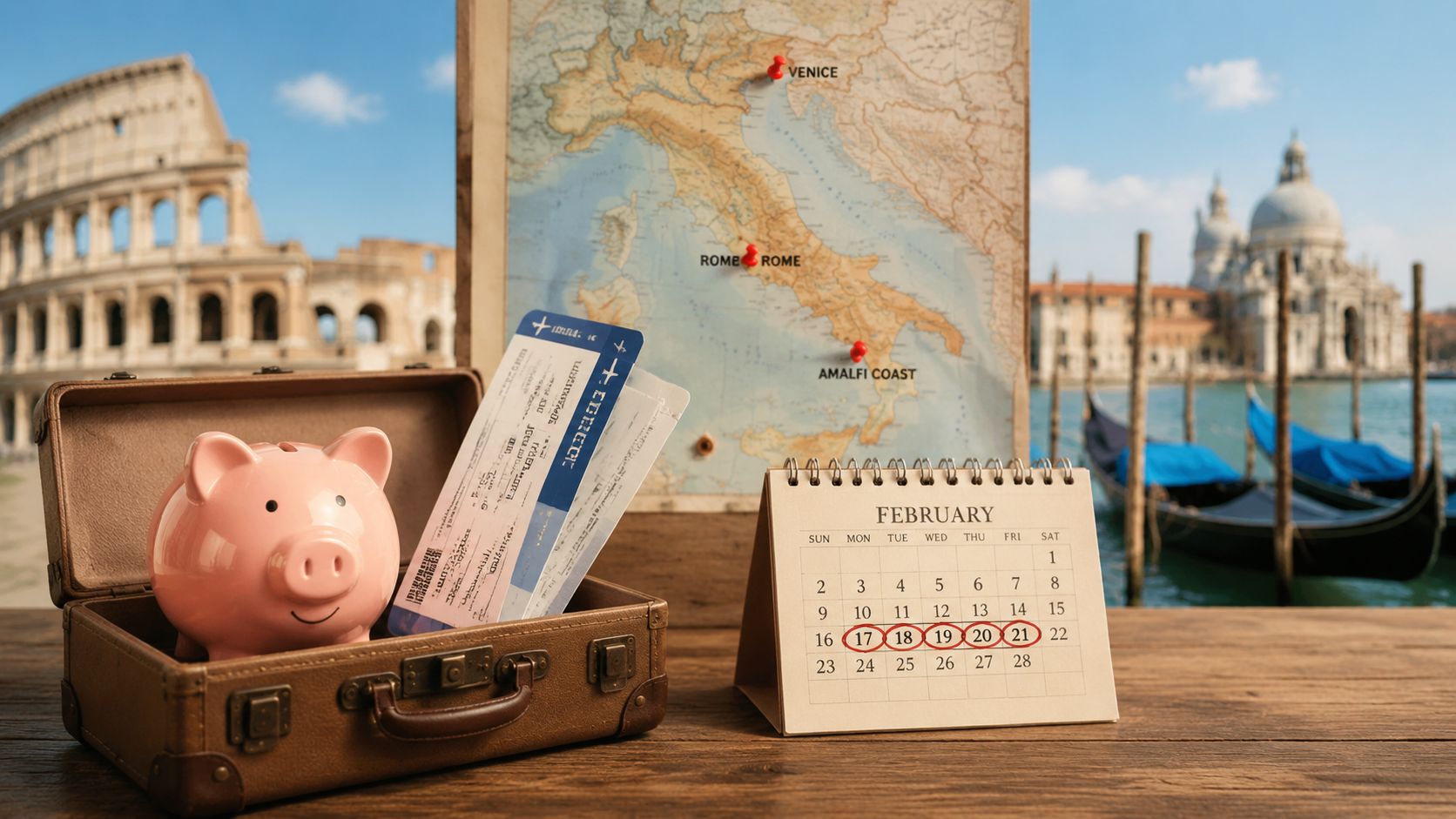
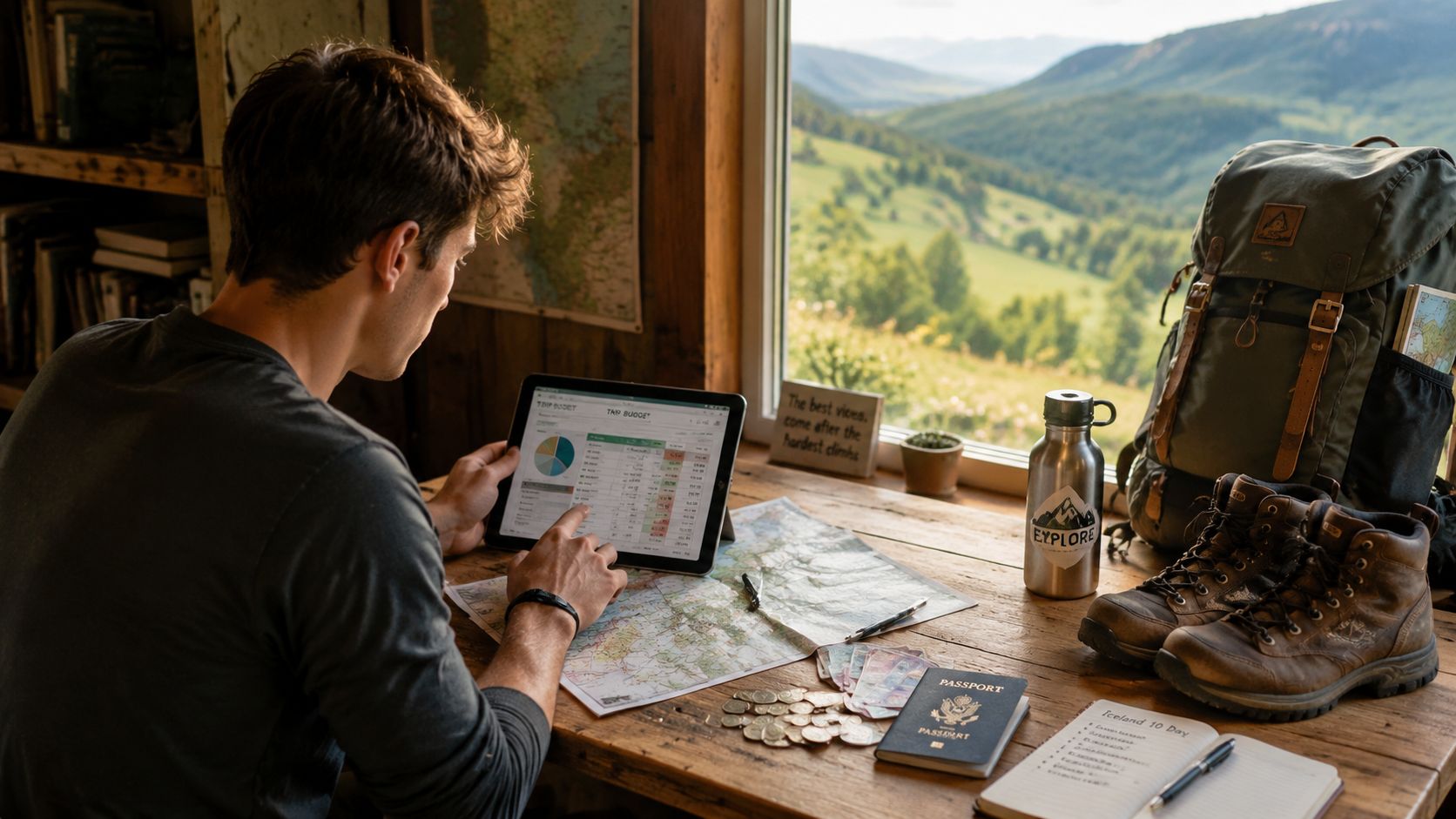
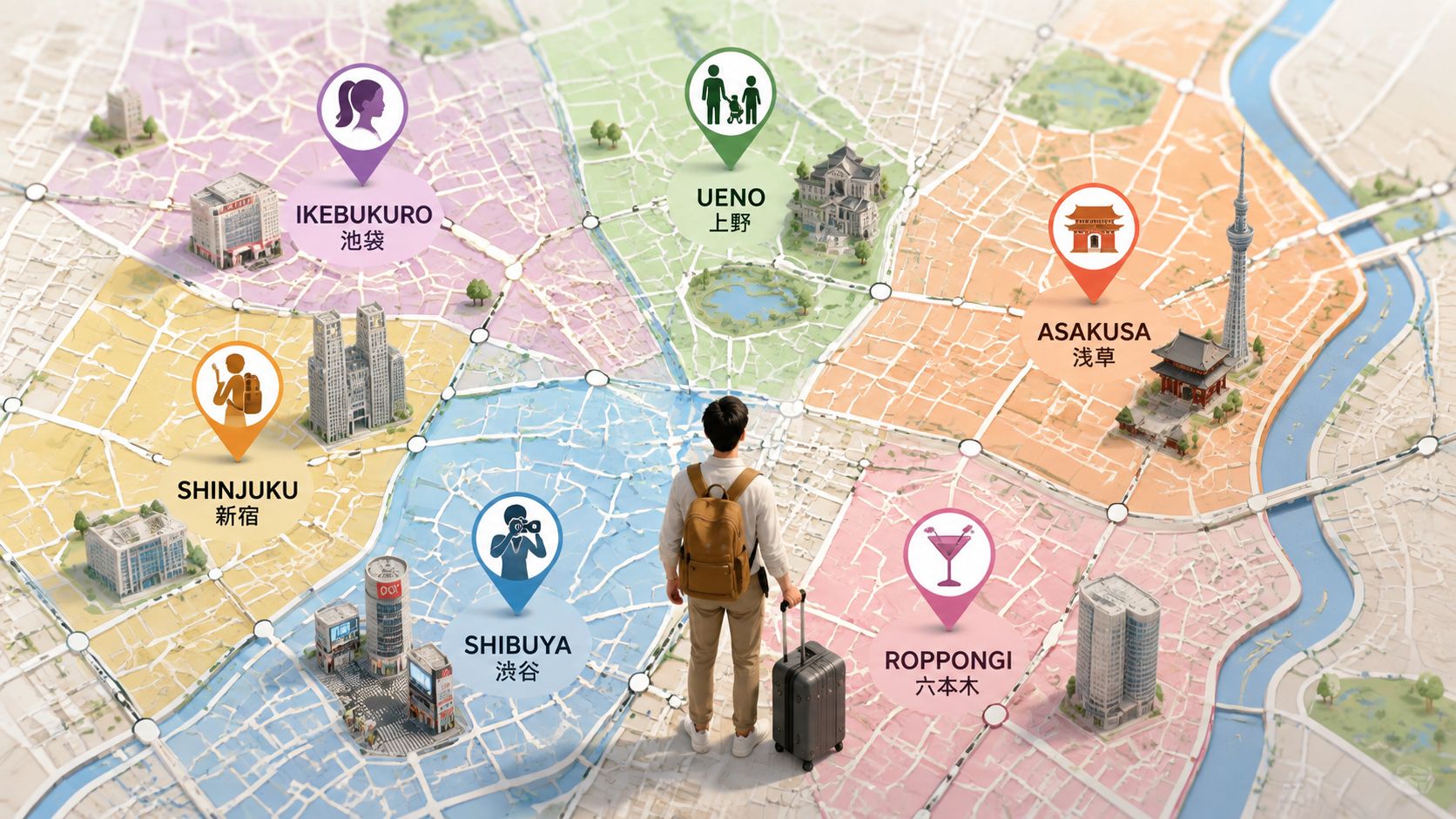
You've opened a dozen tabs, saved restaurants you'll never reach, compared flights until every option looks wrong, and still haven't decided what kind of trip you're planning. That paralysis is normal. Trip planning has become a research-heavy process, and Priceline found that travelers spend the equivalent of 16 hours planning and booking a trip, while 22% of U.S. adults call itinerary building one of the most frustrating parts of travel planning (Priceline research).
The answer isn't another endless checklist. Plan around decision checkpoints. At each checkpoint, decide what must be fixed, what deserves more research, and what should stay flexible. That approach helps you book with confidence without turning your holiday into a project you're too tired to enjoy.
How to Plan a Trip by Setting Clear Travel Goals
The fastest way to make trip planning harder is to start with flights. A cheap fare can pull you toward a destination, a hotel deal can dictate your dates, and a social media post can fill your itinerary before you've asked whether any of it matches the experience you want.
Start with a short travel brief. Write it before you open a booking site, and keep it visible throughout the planning process.
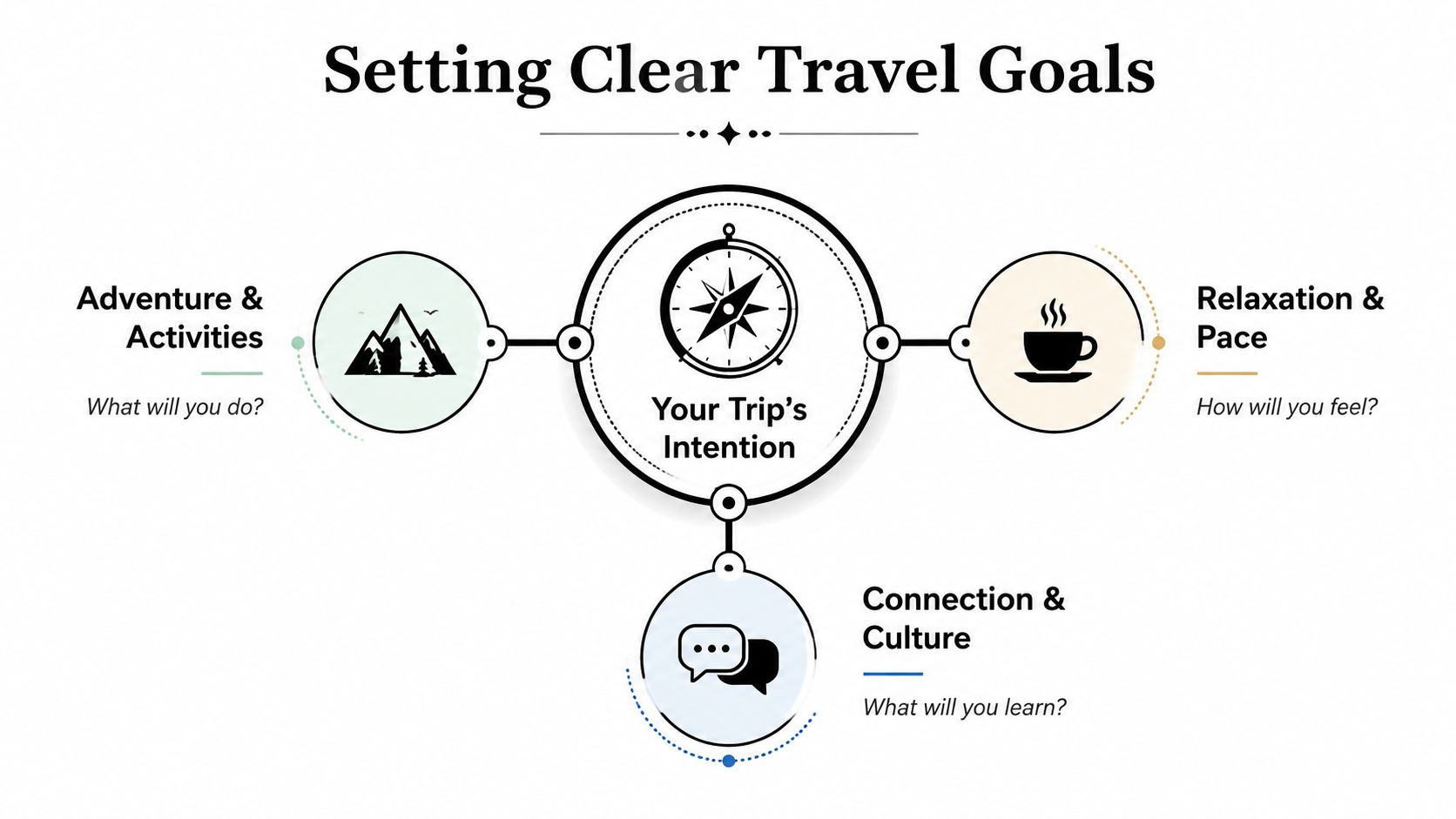
Decide what the trip needs to deliver
Answer these questions in plain language:
- Primary feeling: Do you want energy, peace, curiosity, connection, or a deliberate mix?
- Main activity: Will you hike, photograph streets, eat your way through neighborhoods, swim, volunteer, or explore museums?
- Preferred rhythm: Do you want one base with easy day trips, or a route that changes every few days?
- Travel company: Are you going alone, with a partner, with friends, or as part of a group?
- Non-negotiables: Which experience would make the trip feel worthwhile even if everything else changed?
Your answers create filters. A traveler seeking slow cultural immersion should prioritize walkable neighborhoods, local food, and enough time in one place. Someone chasing outdoor adventure may accept basic lodging in exchange for access to trails. A budget-conscious solo traveler might choose a destination with simple transport and flexible accommodation rather than forcing an expensive dream destination into a short break.
Planning rule: Choose the trip experience first. Choose the destination and bookings second.
Use priorities to settle disagreements
Most trips contain competing preferences. One person wants beaches, another wants history. You want a central hotel, but your budget favors a quieter district. Don't solve every conflict by adding more activities. Rank priorities instead.
Use three categories:
- Must have, features the trip can't lose.
- Nice to have, worthwhile if the price and schedule work.
- Not this time, appealing ideas that would stretch the itinerary or budget too far.
This keeps research purposeful. When an option appears, test it against the brief. If it doesn't support your priorities, close the tab. The freedom to reject attractive but unsuitable choices is one of the most useful planning skills you can develop.
Travelers often spend weeks considering a trip. One travel statistics summary puts the average journey from first considering a trip to booking it at 71 days, including 33 days of inspiration and 38 days of research and planning (travel booking statistics). Use that time to clarify your direction, not to collect unlimited possibilities.
Building a Travel Budget You Can Actually Stick To
A budget should help you choose confidently, not erase the experiences that make the trip worthwhile. Start with the amount you can spend without creating problems at home. Divide it into fixed costs, flexible costs, and protection money, then use those categories as decision checkpoints whenever a booking looks tempting.
Build the budget in three layers
Fixed costs define the trip before you leave:
- Flights, trains, or long-distance buses
- Accommodation
- Visas and required documentation
- Travel insurance
- Pre-booked tours, tickets, or transfers
Flexible costs shift during the trip:
- Local transport
- Meals and drinks
- Entrance fees
- Shopping
- Optional activities
- Laundry and small conveniences
Protection money covers costs you cannot predict precisely. Reserve room for schedule changes, medical needs, luggage charges, exchange-rate movement, and airport transport. A plan that assigns every available penny leaves you exposed when one detail changes.
Use a travel budget calculator to organize estimates before comparing destinations. Then replace generic daily assumptions with figures based on your routes, accommodation, meals, and planned activities.
Decide where to spend and where to save
Cutting the cheapest line item often creates a larger bill elsewhere. An exhausting flight connection can lead to airport hotels, extra meals, and taxis. Remote accommodation can consume both travel time and transport money.
Set clear trade-offs:
| Spend more when | Save when |
|---|---|
| A central location removes repeated transport | You'll spend most days outside the room |
| A direct route protects a short trip | A slower train adds a meaningful experience |
| A trusted activity delivers the trip's main goal | A free walk or local market fits your priorities |
| Flexible cancellation protects uncertain plans | Your dates and arrangements are already firm |
Solo travelers need a particularly honest budget because taxis, rooms, and groceries cannot be split. Location and accommodation therefore carry more weight. Solo female travelers also face significant cost pressure, with 65% reporting cost concerns, according to Opodo travel data. Build flexibility into the plan: a room with a kitchen, a walkable base, or a refundable booking may save more than a cheaper option in an inconvenient area.
Review the budget at each booking checkpoint. If a fixed cost rises, reduce an optional activity or change the route before committing. Holding back is a valid planning decision when the numbers do not work.
Set a spending boundary, not a punishment
Create a daily ceiling for flexible costs, but use it as guidance rather than a test of discipline. Track spending by category instead of recording every purchase. Spend less on transport one day, and you can deliberately redirect that room toward a meal or activity.
Give every major expense a job. If it supports the trip's priorities, protect it. If it does not, remove it or fund it from a lower-priority choice. That approach keeps the budget realistic while preserving the parts of the trip you want to remember.
Mastering Trip Timing and Booking Strategies
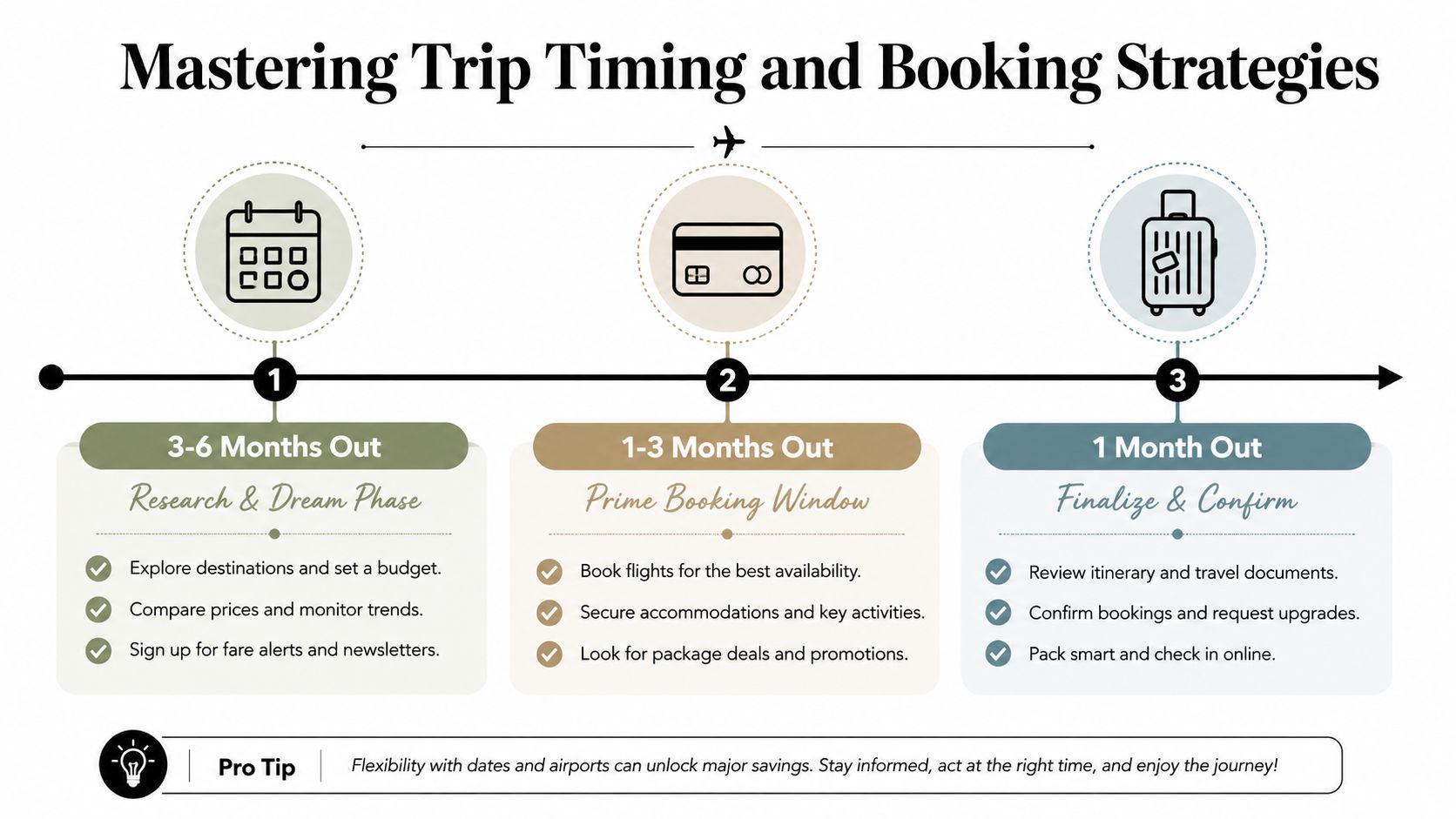
Booking timing works best as a series of decisions, not a hunt for one magical day. Travelers commonly book within a one-to-three-month window in major English-speaking markets. YouGov reported that 46% of Americans booked hotel and flight packages one to three months before departure, while 26% booked less than a month before travel (YouGov travel booking trends).
That window is a benchmark, not a command. A domestic city break, an international route, and a peak holiday trip shouldn't follow identical timing.
Separate research from commitment
Use the earlier months to establish your options. Check routes, accommodation areas, cancellation terms, seasonal conditions, and the activities that sell out. Don't try to perfect the itinerary while the destination, dates, and budget are still unsettled.
The booking window is where you commit to the core. A large hotel dataset found the average booking lead time reached 16.13 days in 2024, up from 14.68 days in 2023, a 9.88% year-over-year increase. Domestic booking lead time rose from 12.91 days to 14.4 days, an 11.54% increase, according to HotelHub booking data.
Those figures show why last-minute planning can work for some trips but become risky for others. Short-haul travelers may have more room to wait. International travelers, peak-season visitors, and anyone with fixed event dates should act earlier because price and availability become less predictable as departure approaches.
Create three decision checkpoints
Checkpoint one, research. Confirm that the destination fits your goals and budget. Compare transport routes and identify two or three suitable areas to stay.
Checkpoint two, commit. Book the flights or main transport and accommodation once the combination meets your requirements. Don't keep searching for a theoretical perfect deal while a practical option is available.
Checkpoint three, finalize. Confirm transfers, reservations, documents, weather-appropriate plans, and cancellation details. Leave minor restaurants and optional activities open.
For deeper flight-specific guidance, use this guide to the best time to book flights, then apply your own priorities. Flexibility with airports, weekdays, or accommodation neighborhoods can matter more than obsessing over a single fare.
Practical rule: Monitor early, decide deliberately, and don't confuse more tabs with better information.
Crafting an Itinerary That Balances Adventure and Rest
A packed itinerary looks impressive before departure and feels exhausting on the ground. The fix is simple: schedule the experiences that define the trip, then protect enough empty space to absorb delays, fatigue, weather, and spontaneous invitations.
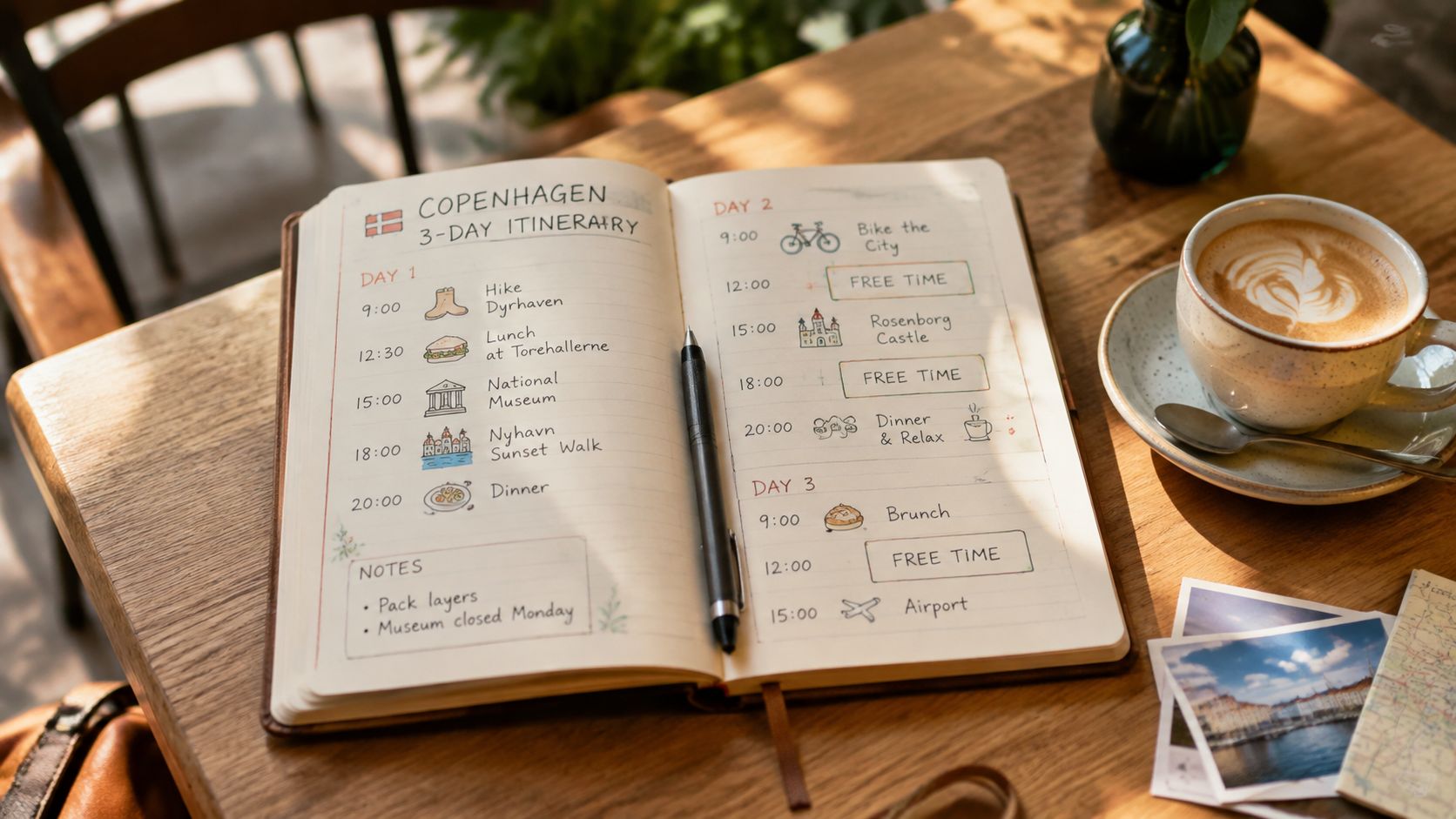
Consider a three-day Copenhagen plan. On the first day, arrive, settle into the neighborhood, and take a short orientation walk. Don't book a major attraction for the same afternoon unless your arrival is early and your energy is reliable.
A realistic day-by-day rhythm
On day two, choose one anchor activity in the morning, perhaps a museum or a guided walking tour. Keep the afternoon open for a market, a coffee stop, photography, or a neighborhood you discover while walking. The anchor gives the day shape without controlling every hour.
On day three, place your second major experience at the time of day when you'll enjoy it most. Add a meal you care about, but don't stack another distant attraction immediately afterward. If the weather changes or you find a district worth lingering in, the plan can bend without breaking.
This structure works because it separates anchors from options:
- Anchors: Activities with fixed times, limited availability, or major importance.
- Options: Restaurants, galleries, viewpoints, markets, and walks you can choose according to mood.
- Buffers: Unassigned time for transport delays, rest, laundry, weather, and simple wandering.
Plan by geography, not by popularity
Put nearby activities together. A famous attraction across town may be less valuable than a less famous place next to your hotel if reaching it consumes half the day. Save locations in Google Maps, group them by neighborhood, and plan one area at a time.
For longer trips, avoid changing accommodation every night unless the route demands it. Each move carries a cost in packing, transit, check-in, and mental energy. A slower route often produces more meaningful encounters because you're not constantly preparing to leave.
Use a simple digital or printable structure with the date, base, anchor, transport note, and open space. You can adapt travel itinerary templates to your style, but don't let the template become another task to maintain.
Leave room for the place to surprise you. The best itinerary guides your attention without claiming every minute.
Smart Packing and Safety Planning for Every Traveler
A heavy bag slows every transfer, while a missing backup can turn a minor problem into a serious one. Pack to reduce unnecessary choices, then build safety measures around the situations your route creates.
Pack for combinations, not individual days
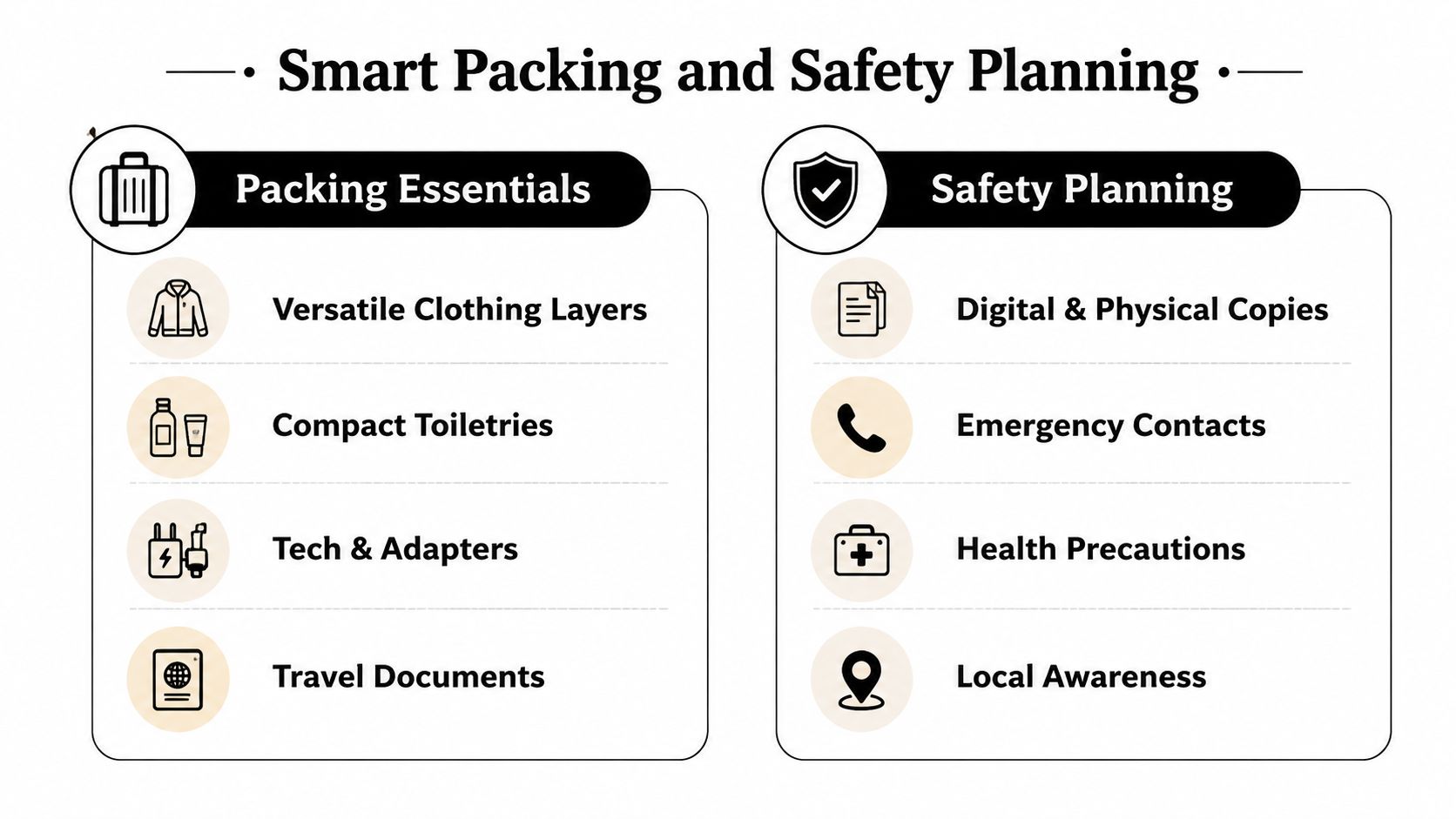
Create a compact wardrobe with layers that coordinate. Match clothing to the climate and local expectations, then bring footwear and equipment for the activities you have planned. Keep toiletries small, limit technology to devices you will use, and store documents where you can reach them without displaying everything in your bag.
Remove anything with only one minor use. Choose versatile replacements when practical, and plan to wash clothes instead of carrying a separate outfit for every day. This cuts bulk and baggage costs, while reducing the familiar “just in case” pile. Use this guide to packing light to turn that approach into a repeatable method.
General safety versus solo safety
Every traveler should protect documents, learn how local transport works, keep emergency contacts available, and research cultural expectations. Solo travelers need more backup because no companion is there to notice a problem, carry important items, or make decisions during illness.
For solo trips:
- Share the framework: Give a trusted person your route, accommodation details, and major transport plans.
- Control first arrivals: Arrange a reliable way to reach your accommodation, especially after arriving late.
- Keep options available: Carry a charged phone, accessible funds, and offline copies of key documents.
- Use local awareness: Identify busy areas, official transport, and the way locals handle common situations.
- Protect your attention: Handle navigation, unfamiliar surroundings, and valuables one at a time when possible.
Safety has become a stronger planning priority among solo travelers. Earlier data noted an increase from 34% in 2023 to 40% in 2026. The pattern supports a practical rule: solo planning should include enough backup that a lost phone, missed connection, or uncomfortable situation does not dictate the rest of the trip.
Travelers also report real exposure to crime abroad, with 33% reporting that experience in the same source. Treat that finding as a prompt to prepare, not a reason to avoid travel. Keep document copies, separate payment methods, discreet bags, and sensible check-ins. Good safety habits should support independence without making the trip feel restricted.
Turning Your Travel Plans into Reality with Tools and Checklists
A plan becomes useful when you can find the right detail quickly. Choose one primary place for bookings, confirmations, notes, maps, and emergency information. That might be a notes app, a cloud document, a spreadsheet, or a paper folder. The tool matters less than consistency.
Use separate sections for:
- Bookings: Transport, accommodation, transfers, and activity confirmations
- Documents: Passport details, visas, insurance, prescriptions, and copies
- Money: Fixed costs, flexible spending, payment methods, and daily tracking
- Route: Addresses, check-in instructions, local transport, and offline maps
- Contacts: Accommodation, tour operators, trusted people at home, and relevant official services
Use a booking checklist at the right moments
Before paying, check the cancellation policy, luggage terms, arrival time, location, and the full cost after mandatory fees. Don't compare only the headline price. A cheaper room far from your activities may create higher transport costs, while a low airfare can become less attractive once baggage and inconvenient transfers are included.
After booking, record the confirmation number, address, payment status, and deadline for any remaining balance. Add reminders for visa applications, health appointments, document renewals, and reservations that need reconfirmation. The travel planning checklist provides a practical structure for these tasks.
Keep the final plan deliberately short
Your travel file should help you act, not force you to read a novel at the airport. Put the essential information on the first page or screen:
- Destination, dates, and emergency contact
- Arrival route and first-night accommodation
- Booking references and cancellation deadlines
- Daily anchors and neighborhood notes
- Budget categories and remaining flexible funds
- Document copies and health information
Use Google Maps for saved places, a spreadsheet for costs, and your preferred booking platforms for confirmations. A notes app can hold local phrases, opening hours, and backup options. Don't add a new tool unless it removes a real problem.
Planning behavior is changing, and shorter windows make flexibility more valuable. Expedia-linked data cited by Tourism Analytics reported a 20% quarter-over-quarter rise in searches for trips planned zero to 13 days ahead, with international searches rising 30% in that comparison (Expedia Group travel trends). Build a plan that can handle a late decision without sacrificing your priorities. Keep the destination brief, budget boundaries, and safety basics firm, while leaving optional activities and some transport choices open.
Travel Talk Today offers practical guidance on budgeting, booking timing, itinerary design, solo travel, and more sustainable ways to explore. Visit Travel Talk Today to find planning resources that can help you turn a flexible travel idea into a thoughtful, affordable trip.