You've priced the flight, opened the accommodation tab, and then stared at the total wondering whether Iceland belongs in the “maybe someday” category. That reaction is understandable. Iceland can punish loose planning, especially when a cheap flight leads to late-booked lodging, an oversized vehicle, and restaurant meals every night.
But budget travel to Iceland isn't about squeezing every pleasure out of the trip. It's about building the trip in the right order. Pick the season first, match transport to your route, choose a sleeping arrangement that fits your group, and then decide which experiences deserve your money. The country received about 2.26 to 2.29 million foreign visitors in 2024, according to a compiled Iceland tourism summary, so low-cost rooms and vehicles can disappear quickly when demand rises.
Why Budget Travel to Iceland Works When You Plan Around Three Variables
A solo traveler can see a hostel bed beside a rental-car quote and decide Iceland is out of reach. Start with a better question: which three choices are driving the total?
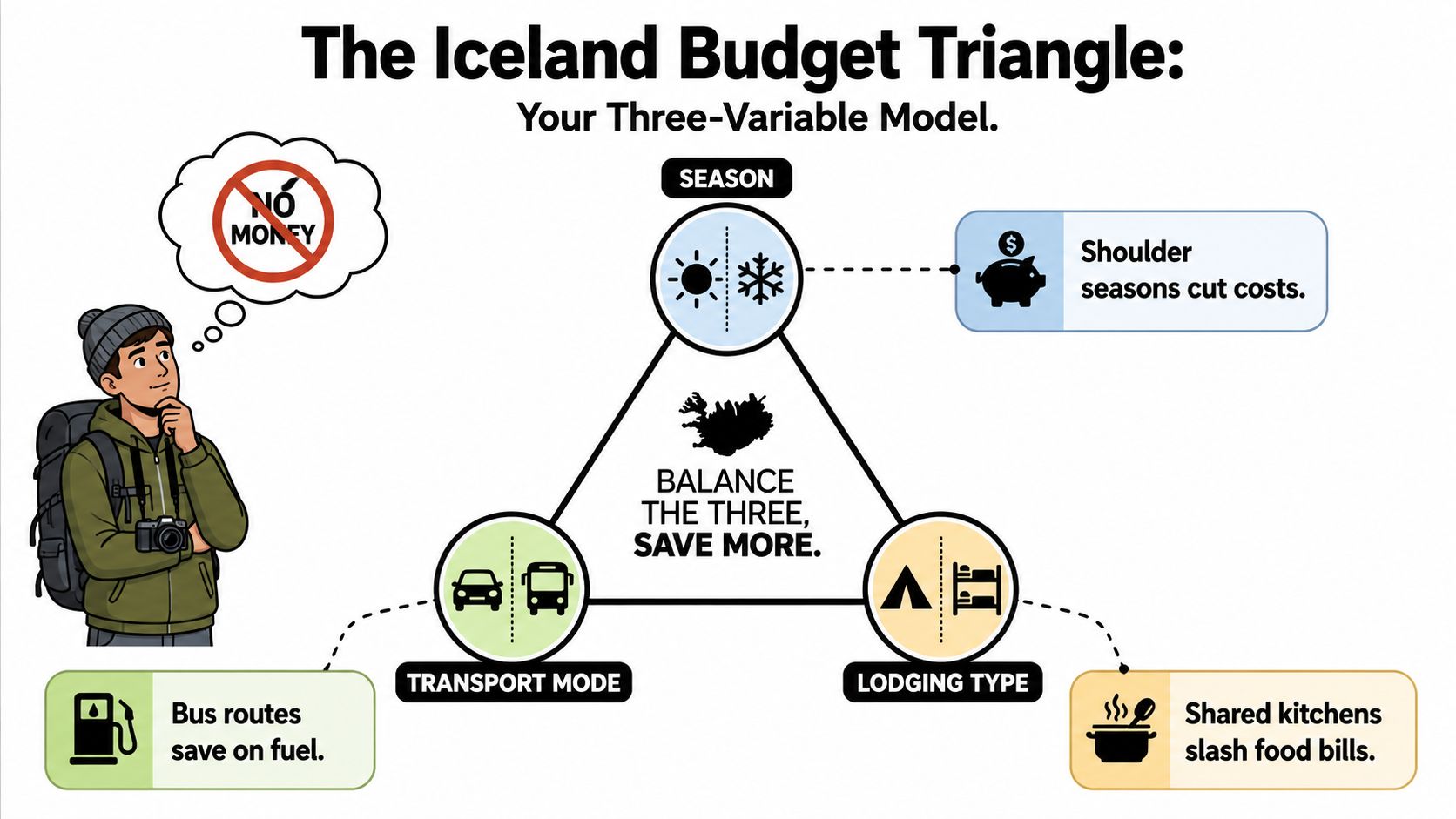
I build an Iceland budget around season, transport mode, and lodging type. These choices affect the two costs that usually reshape the trip fastest, where you sleep and how you move. They also determine whether a low-cost plan feels practical or exhausting.
Start with the season
Summer offers easier road access, long usable days, and the widest choice of tours. It also puts the most pressure on rooms, campsites, and rental cars. Winter may bring lower hotel costs and strong northern-lights opportunities, yet short daylight, weather, and road conditions can require safer, pricier transport.
Shoulder season is my default recommendation. It often gives you better availability while preserving access to substantial parts of the country. For a solo traveler, that flexibility can matter more than chasing the lowest headline price.
Choose transport before attractions
A solo traveler paying for a car alone faces a different budget from a couple sharing fuel and vehicle costs. A smaller 2WD rental can fit a summer Ring Road plan. Someone based in Reykjavík and visiting fewer regions may save more with buses and selected tours.
Do not rent a 4x4 because Iceland looks rugged in photographs. Choose one only when the route, conditions, or vehicle rules require it. Otherwise, the extra capacity can drain money that would buy food, lodging, or an activity you value.
Let lodging shape the route
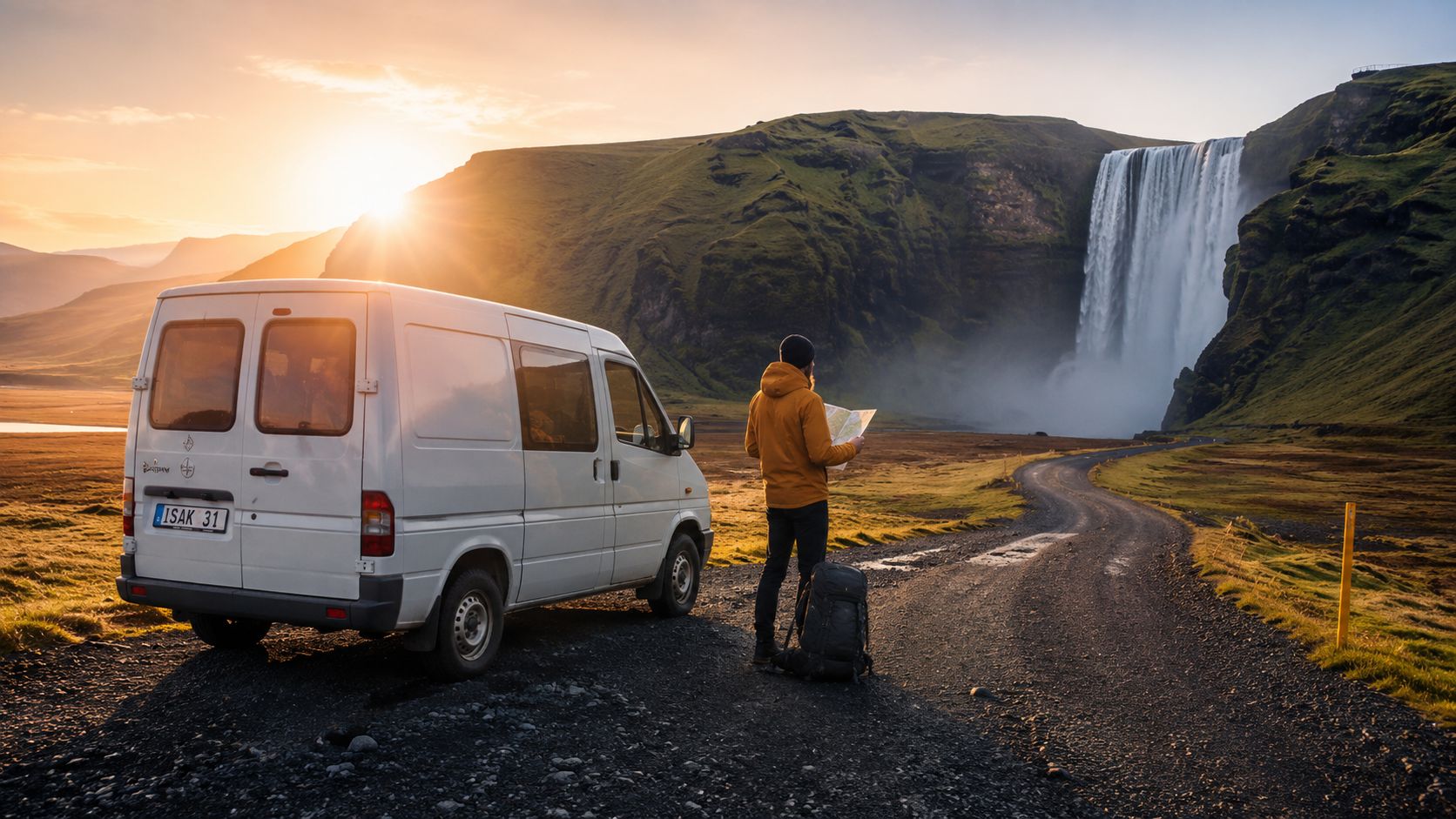
Camping, hostel dorms, guesthouses, and hotels create different trip structures. A campervan combines transport and sleep, but it still requires legal overnight sites and sound weather judgment. A hostel kitchen can reduce food costs for a solo traveler without adding the fatigue of driving every day.
Practical rule: Decide where you'll sleep before deciding how many places you'll visit.
Waiting also carries a real availability risk. Foreign visitor arrivals rose from 807,300 in 2013 to 2,287,300 in 2024, with the pandemic trough reaching 489,900 in 2020, according to the Icelandic Tourist Board arrival series. Do not hunt for one magical bargain. Make season, transport, lodging, flights, food, and activities reinforce the same plan.
What a Real Iceland Daily Budget Looks Like
A workable Iceland budget starts with a daily spending envelope, then adjusts for who is traveling, the season, and the route. Independent budget travel commonly falls around 18,000 to 30,000 ISK per person per day with groceries, hostels or camping, and smaller cars. Shoulder-season self-driving is often estimated near 18,800 ISK per person per day excluding flights. A more comfortable summer setup with a 4x4, guesthouses, and a restaurant meal can reach about 44,200 ISK per person per day, according to Iceland travel budget guidance from Hertz Iceland.
Use those figures as stress-test points, not promises. Lodging and transport deserve attention first because they can absorb most of the daily budget. Groceries and free attractions give you more control, but they cannot repair an expensive vehicle and room combination.
Sample Daily Budget Breakdown in ISK
| Cost Category | Solo Backpacker, Hostel + Bus | Couple in Campervan | Mid-Range Couple, Car + Guesthouse |
|---|---|---|---|
| Lodging | 8,000–12,000 ISK | 6,000–11,000 ISK per person | 16,000–24,000 ISK per person |
| Transport | 3,000–6,000 ISK | 5,000–9,000 ISK per person | 8,000–14,000 ISK per person |
| Food | 4,000–6,000 ISK | 3,500–5,500 ISK per person | 6,000–10,000 ISK per person |
| Activities | 0–4,000 ISK | 0–5,000 ISK per person | 3,000–8,000 ISK per person |
| Contingency | 2,000 ISK | 2,000 ISK per person | 3,000 ISK per person |
| Working daily envelope | 17,000–30,000 ISK | 16,500–32,500 ISK per person | 36,000–59,000 ISK per person |
Use a travel budget calculator to turn the daily envelope into a trip total. Then compare it with your actual vehicle quote and accommodation bookings, not a headline rate.
How the envelope changes
Camping reduces the sleep line, but it ties the plan to weather, campsite availability, and cooking facilities. Hostel travel suits solo visitors, especially around Reykjavík and bus-connected areas. Guesthouses provide warmth and privacy, yet they can make route changes expensive.
A campervan only beats a small car after you include separate lodging. The arithmetic works best for two travelers sharing the vehicle and campsite fees. For one person, buses and hostels can cost less than carrying a private vehicle throughout the trip.
For a 7-day trip, independent estimates place on-the-ground spending around 75,000 to 180,000 ISK, excluding flights, across backpacker-to-midrange patterns, as summarized by Hertz Iceland's budget guidance. Set aside flexibility for weather and transport changes, but protect lodging and transport first. A cheaper supermarket lunch will not rescue a poor combination of rooms and vehicle costs.
Choosing the Right Season to Cut Costs
A shoulder-season campervan near Vík can cost less than a summer vehicle booking, yet it demands stronger weather checks and a more flexible route. Season affects more than airfare. It changes lodging pressure, vehicle availability, daylight, road access, and the number of nights you can realistically spend outside Reykjavík.
| Factor | Summer, Jun–Aug | Shoulder, May, Sep–Oct | Winter, Nov–Mar |
|---|---|---|---|
| Airfare | Often strongest demand | Frequently better value | Can be lower, but varies by route |
| Lodging | Highest pressure on rooms | Better availability | Lower hotel demand in many areas |
| Vehicle | Broadest selection, higher demand | Good balance of choice and price | 4WD and winter capability matter more |
| Daylight | Longest usable days | Generous in late spring, shorter in autumn | Short days limit ambitious routes |
| Road access | Best general access | Strong for main routes, conditions can shift | F-roads closed and weather can disrupt plans |
| Experience | Busy, energetic, easy to cover ground | Quieter, flexible, atmospheric | Northern lights, snow, and storm-ready travel |
Shoulder season is the default recommendation
Choose May or September to early October if you want to drive, cook supermarket meals, and see more than Reykjavík without paying summer's full premium. Late April can also suit travelers willing to check road and weather conditions closely. Some seasonal activities will be unavailable, and conditions can change quickly, so leave room to adjust the route.
The estimates in Machupicchu.org's Iceland budget guide show why the season alone does not set the bill. For a 7-day ground trip, budget travelers are estimated at about 125,000 to 175,000 ISK, while mid-range travelers fall around 245,000 to 385,000 ISK. Lodging and transport choices account for much of that spread. A cheap lunch cannot compensate for an expensive vehicle paired with costly rooms.
Pick winter for a specific experience
Winter works when northern lights are central to the trip and you are comfortable staying in fewer places. Choose a base near Reykjavík or another well-connected area rather than forcing a full Ring Road loop into a short visit. Storms can cancel driving days, while closed highland roads remove routes available in summer. A winter plan needs spare time and a willingness to turn around.
Use summer only when access matters most
Summer earns its higher prices through long daylight, broader road access, highland trips, and extended hiking. It suits travelers who want maximum route flexibility, groups sharing a vehicle, and itineraries built around remote areas. It is a poor fit for anyone focused only on the lowest possible cost.
If summer is your season, reserve lodging and the vehicle before fixing the day-by-day route. Solo travelers should compare buses and hostels before assuming a private vehicle saves money. Couples can make a campervan work when they share both the vehicle and campsite costs, while groups should compare the total vehicle, sleeping, and fuel bill rather than judging by the rental quote alone.
Cheap Flights, Smart Transport, and Low-Cost Places to Sleep
A cheap flight can still produce an expensive Iceland trip. Baggage fees, a late arrival, airport transfers, an oversized vehicle, and one unnecessary hotel night can erase the saving before you reach Reykjavík. Price the whole arrival and departure plan, not just the airfare.
Book international flights to Keflavík International Airport, not Reykjavík's domestic airport. Set alerts on Google Flights and Skyscanner, compare fares with baggage included, and check Tuesday or Wednesday departures before fixing your dates. Budget airlines suit light packers. Once bags, seats, and transfers become add-ons, the headline fare stops being useful. Follow this guide to finding cheap flights for a more disciplined search.
Book transport around the actual route
Transport should follow the roads you will use. For a summer Ring Road trip that stays on suitable paved routes, a 2WD rental usually gives the clearest cost. Reserve early, inspect the fuel policy, confirm insurance exclusions, and check whether your route includes roads the vehicle cannot legally or safely use. A low daily rate is meaningless if the rental adds fees or forces a route change.
Use Strætó when your plan centers on Reykjavík and a few connected areas. Check schedules before booking accommodation, since limited departures can turn a cheap bed into an expensive transfer problem. Public transport removes fuel, parking, and rental costs, but it cannot match the freedom of a self-drive loop. Hitchhiking is not a transport budget; keep basic safety judgment ahead of saving money.
Airport transfers deserve their own line in the budget. A bus can cost less than an ad hoc taxi, while a shared ride may make sense when several travelers arrive together. Match the transfer to your landing time and first night's location instead of assuming the cheapest ticket is automatically the cheapest plan.
Choose a sleep tier deliberately
Camping works for travelers who already enjoy outdoor living and can handle changing weather. Use legal campsites and confirm seasonal opening before relying on them. Hostel dorms are often the practical solo choice, especially when a kitchen replaces restaurant meals and the property sits near a bus route. Shared cabins or guesthouses suit couples and small groups seeking warmth without hotel pricing.
The following comparison uses the broad ground-cost ranges in Play Iceland's cost calculator as a planning reference. Treat each row as a structure, not a guaranteed quote.
| Traveler Type | Transport | Lodging | Estimated 7-Day Cost |
|---|---|---|---|
| Solo budget traveler | Strætó and limited local transport | Hostel dorms | 125,000–175,000 ISK |
| Solo outdoor traveler | Shared transport or small rental | Campsites where open | 105,000–150,000 ISK |
| Couple on a route | 2WD rental | Guesthouses and occasional hostel | 260,000–650,000 ISK total |
| Couple seeking flexibility | Campervan | Campsites | 260,000–750,000 ISK total |
| Comfortable couple | 4x4 rental | Guesthouses | 500,000–1,130,000 ISK total |
The two-person self-drive range, 260,000 to 1,130,000 ISK before flights, shows why vehicle class, fuel, and sleeping arrangements matter more than a small airfare difference. Compare the complete transport and lodging bill before paying a deposit. Plan the route around that confirmed cost, rather than forcing every Iceland highlight into the cheapest-looking option.
A 7-Day Budget Itinerary for Solo Travelers and Couples
Petra starts in Reykjavík with a clear rule: she pays for experiences, not views nature provides free. After checking into a hostel, she shops at Bónus for bread, skyr, fruit, and sandwich ingredients. Reykjavík becomes a gentle landing point before longer travel days, not an expensive launchpad.
A compact route can feel full without constant spending. Give each day one planned splurge, then make the rest of the day earn its place through free scenery, self-catering, and sensible transport.
Petra's solo week
- Day 1, Reykjavík: Walk the harbor, the Hallgrímskirkja area, and central streets. Petra cooks from her supermarket haul, then allows one café meal as the day's treat. A hostel kitchen and bus access keep the first day controlled.
- Day 2, Golden Circle: She reaches Þingvellir, Geysir, and Gullfoss through a low-cost shared or public option. A paid lagoon is the tempting upgrade. Petra chooses a public pool or free walking route instead.
- Day 3, South Coast to Vík: Seljalandsfoss, Skógafoss, and Reynisfjara form the day's backbone. She skips a guided glacier activity and stays somewhere with a kitchen, whether that means a hostel or an open campsite.
- Day 4, Skaftafell and Jökulsárlón: A glacier hike would consume the discretionary budget. Petra chooses a marked park walk and the lagoon shoreline, keeping money available for meals and transport.
- Day 5, East Fjords: She slows the pace. Rather than pay for a fjord guesthouse, Petra chooses a budget bed farther along the route and spends the evening on a short walk.
- Day 6, Lake Mývatn: Geothermal scenery and walking trails replace a full spa session. A public pool supplies the hot-water experience without turning the day into a costly tour.
- Day 7, return route: Petra avoids forcing a packed Ring Road return into poor weather or tight timing. She uses a shorter regional plan, or follows this 4-day Iceland itinerary when a complete loop no longer makes financial or practical sense.
Petra's budget holds because she refuses to make every stop an attraction purchase. Use the daily budget breakdown above as the starting point, then adjust for season, room availability, and transport bookings. A hostel bed and bus network may suit one solo traveler, while a different route can make a rental more practical.
Lena and Jonas in the campervan
Lena and Jonas share the same broad arc, but their budget architecture combines transport and lodging in one purchase. They pay for fuel and campsite access, yet avoid booking a separate room every night and can prepare meals beside the route. That arrangement works when they use the van for cooking and sleeping, rather than paying for it while relying on hotels.
Their planned splurge might be a glacier hike, a boat trip on Jökulsárlón, or a whale tour. They choose one, not all three, and keep the surrounding days inexpensive.
| Traveler | Main savings | Main pressure point |
|---|---|---|
| Petra, solo hostel traveler | Hostel kitchen, no private vehicle, free attractions | Transport is harder to split |
| Lena and Jonas, campervan couple | Shared vehicle and sleeping setup, self-catering | Fuel, campsite fees, weather exposure |
The couple's advantage is cost overlap, not an automatic bargain. Compare the full vehicle, fuel, campsite, and food bill with two people sharing hostel or guesthouse rooms. That comparison shows whether the campervan lowers the trip total for the chosen season and route.
Free and Cheap Activities That Replace the Costly Tours
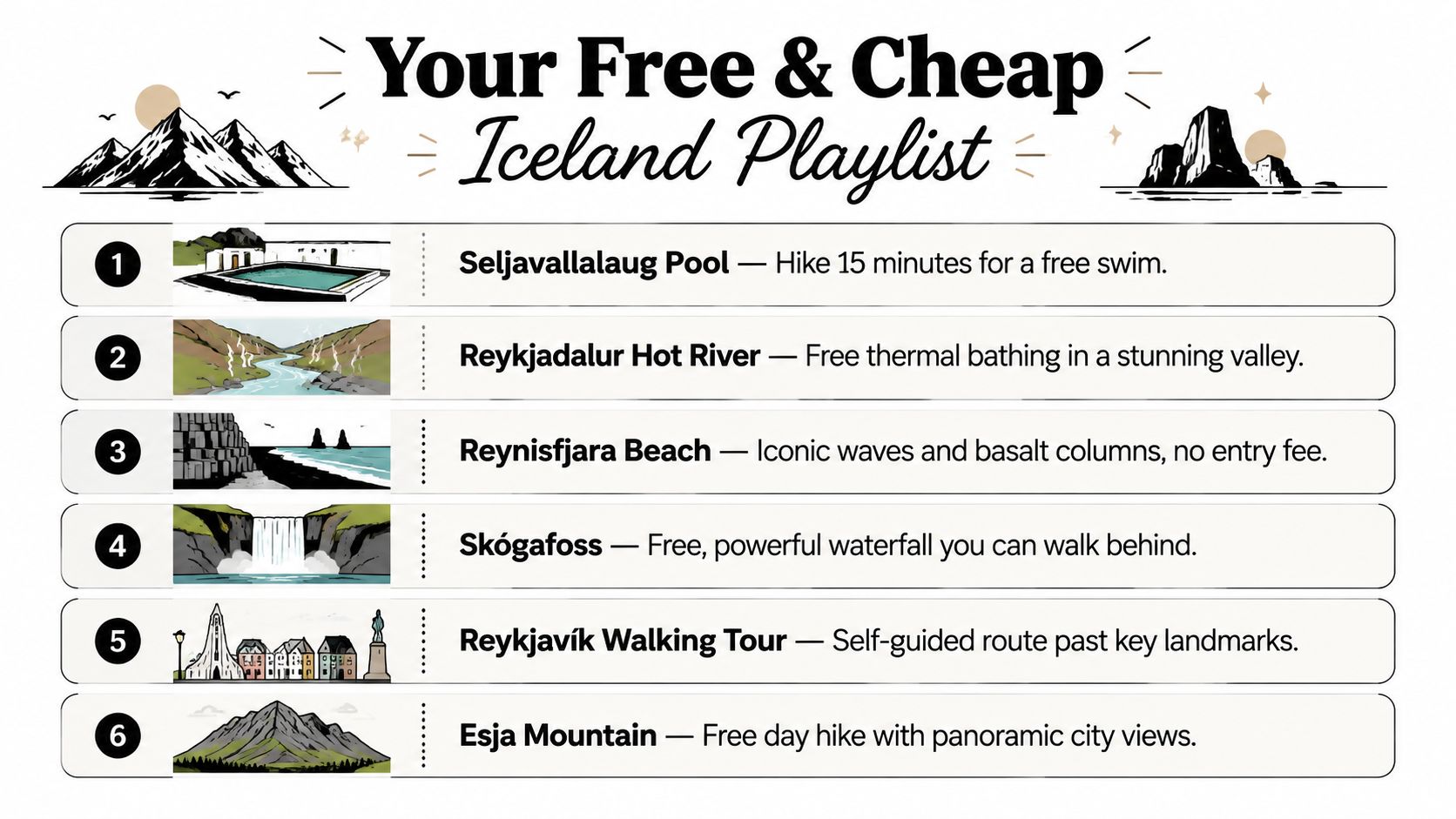
A parked campervan near Vík, supermarket pylsur in the cooler, and a full day outside can cost less than a single guided excursion. Build the itinerary around free scenery first, then decide which paid experience deserves space in the season, route, and traveler budget.
Iceland's strongest budget asset is outdoors. Waterfalls, beaches, volcanic terrain, walking routes, and geothermal areas can fill a week without turning every day into a paid tour. The admission price may be zero, but transport still belongs in the calculation. A free stop reached by an expensive detour is not automatically a bargain.
Build the free backbone
Seljavallalaug and Reykjadalur offer memorable hot-water experiences for travelers willing to walk and check conditions. Reynisfjara provides black sand and basalt formations, while Skógafoss delivers a dramatic waterfall stop without an attraction-ticket budget. Glymur and the Reykjanes peninsula add variety, and Reykjavík is easy to explore on foot when you treat it as a neighborhood rather than a list of paid indoor attractions.
Use your food plan to protect the activity budget. Buy breakfast and lunch supplies, cook in a hostel or campsite kitchen, and reserve restaurant spending for a meal you want. Supermarket pylsur, skyr, bread, fruit, and simple pasta are plain, practical fuel for an outdoor day. They also prevent a late stop from becoming an unplanned restaurant bill. For more ideas, browse this guide to free things to do in Iceland.
Pay for access, not habit
Skip a guided puffin boat if your goal is only to see Reykjavík Bay. A harbor walk is quieter and cheaper, though it cannot replace close wildlife viewing when that is the point of the trip. A northern-lights minibus is also optional. Independent travelers can use a rental car, a safe base, and the forecast at vedur.is, provided they understand the risks of night driving and changing weather.
Paid ice-cave trips need closer scrutiny outside the appropriate season. Do not book one to make the itinerary look complete. Book it when the experience matters most to your trip and the operator has suitable conditions and safety standards.
The budget mistake is paying for an experience you could replace with a better-paced free day.
One or two paid activities can earn their place. A Skaftafell glacier hike provides specialist access and safety equipment, while a Jökulsárlón boat trip changes your view of the lagoon. Choose one, fund it by cutting low-value purchases, and enjoy it without guilt. That approach protects both the traveler's budget architecture and the trip's best memories.
Traveling Safely, Sustainably, and Affordably for the Long Haul
The safest Iceland trip often has the same shape as the cheapest responsible one: fewer miles, more time in each place, local food, and enough flexibility to wait out bad weather.
Staying longer in fewer locations reduces the need to move your luggage, lowers repeated transport costs, and gives you recovery time between drives. It also matters on roads exposed to wind and rapidly changing conditions. A tired driver trying to preserve an overambitious schedule is making a poor safety decision, regardless of the itinerary's price.
Use official checks as part of the budget
Check vedur.is for weather and road.is for road conditions before setting out. If the forecast turns, change the route. The money you lose on a missed booking is less important than the safety risk of pushing through a storm.
Camping outside designated sites isn't a harmless shortcut. Follow local rules, use established campsites where required, protect fragile ground, and pack out what you bring in. Iceland's natural environments look indestructible in photographs, but visitors can damage them quickly when they ignore access guidance.
Apply the three-variable framework again
- Pick the season: Choose shoulder season for balanced access and value, winter for a slower northern-lights-focused plan, or summer when highland routes and long days matter most.
- Pick transport and lodging together: Compare a bus-and-hostel base stay, a smaller car with guesthouses, or a shared campervan with campsites.
- Pick an activity tier: Make free natural attractions the foundation, then reserve money for one or two experiences that need specialist equipment or access.
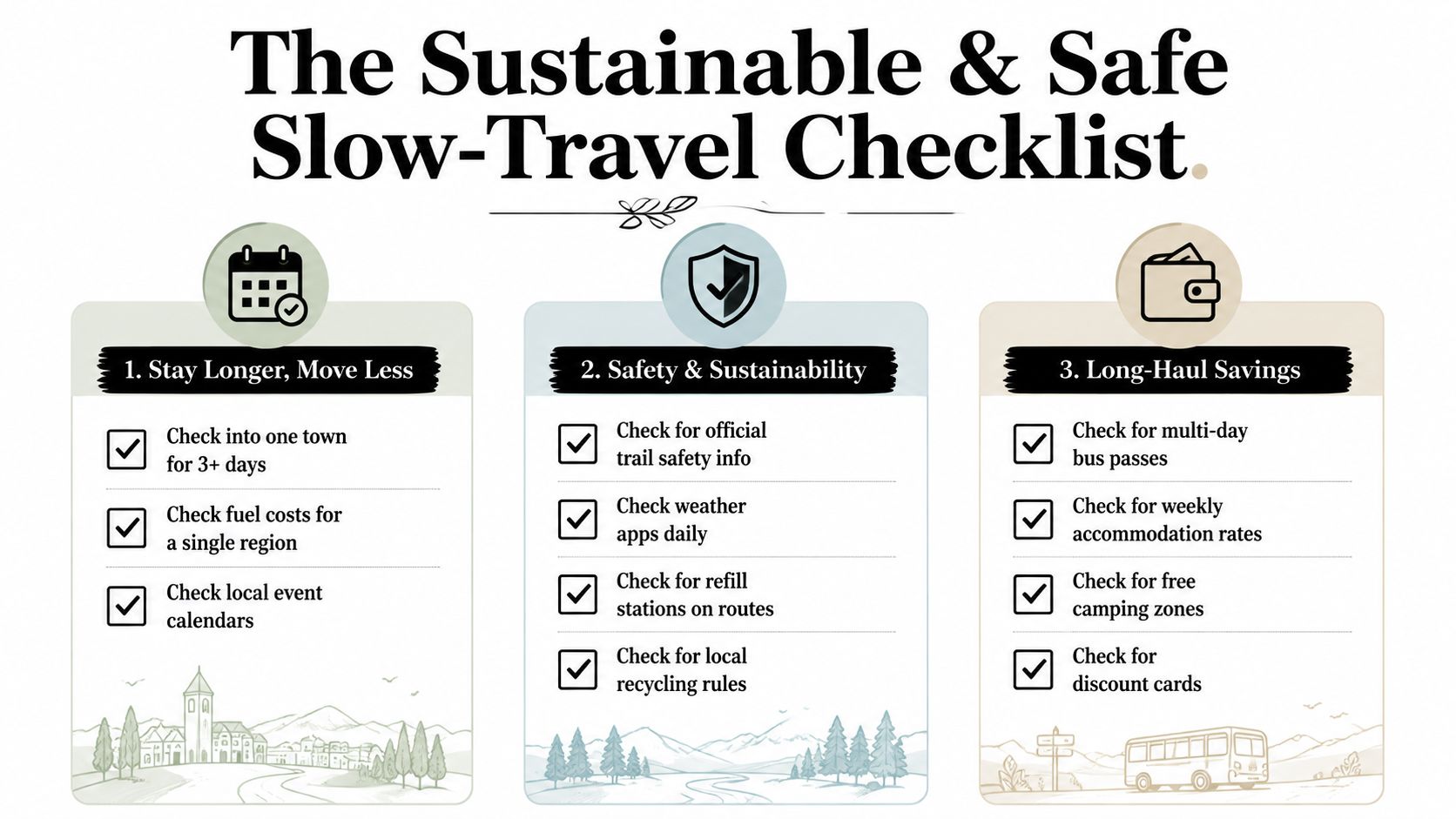
The sustainable travel tips from Travel Talk Today fit this model because sustainability isn't a separate luxury layer. It's often the practical result of staying put, buying local food, using shared transport where possible, and refusing to drive through unsafe conditions.
Iceland rewards patience. Wait for the weather, walk farther, cook at your accommodation, and let one region occupy your attention instead of racing through every landmark. That approach protects your wallet, your safety, and the environment at the same time.
Travel Talk Today offers practical destination planning, budget frameworks, safety guidance, and sustainable travel ideas for travelers who want more than a rushed checklist. Use those resources to shape your Iceland route, then visit Travel Talk Today to turn a realistic budget into a trip you can book.