You know the moment. You're standing on a station platform or in an airport security line, one hand on an overstuffed suitcase, the other trying to keep your passport, phone, water bottle, and jacket from falling. The bag tips over. The zipper strains. You're sweating before the trip has even started.
Packing light changes that whole experience.
It doesn't mean dressing badly, being unprepared, or pretending one black T-shirt solves every travel problem. It means carrying what you'll use, choosing items that earn their space, and giving yourself more mobility than baggage. For solo travelers especially, that freedom matters. You move faster, stay more flexible, and spend less energy managing your stuff.
The Freedom of Traveling Light
A heavy bag creates work all day long. You feel it on stairs, on cobblestones, on trains without elevators, in tiny hotel rooms, and during every rushed transfer when you need one hand free and don't have it.
Traveling light feels different. You land, walk out, and keep moving.
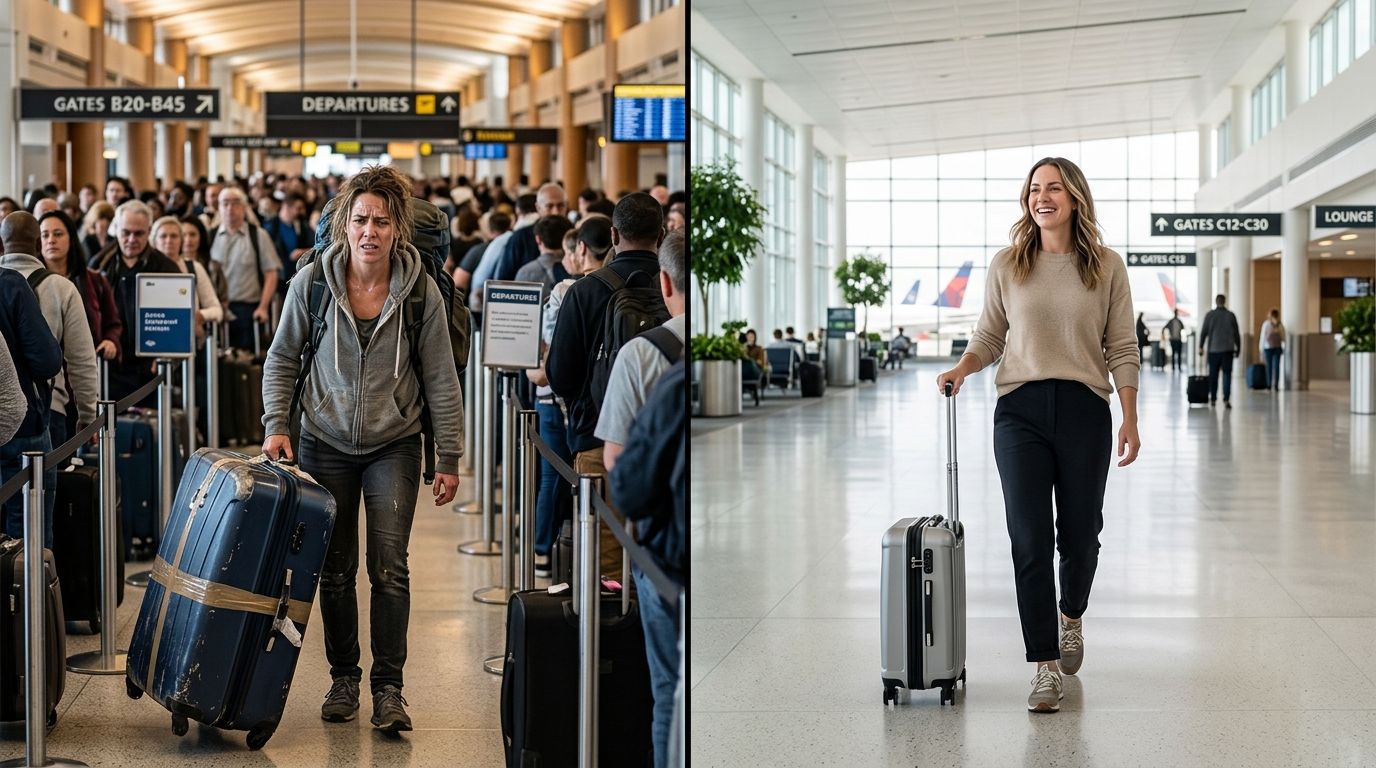
Most people don't have a packing problem. They have an editing problem
The hard truth is that overpacking is normal. According to these travel packing statistics from Radical Storage, 71.7% of travelers say they've overpacked at least once, 40% come home with clothes they never wore, and travelers spend an average of $53 replacing forgotten items.
That combination tells you a lot. People don't just pack too much. They often pack the wrong things.
I've seen this pattern repeatedly in real travel. Travelers stuff bags with extra outfits for imagined scenarios, then forget the charger, toothbrush, or the one layer they need on a cold bus ride. The bag gets bigger, but the kit doesn't get smarter.
Practical rule: Pack for your real trip, not for every version of yourself you might become while traveling.
Why less feels better on the road
Packing light isn't a minimalist performance. It's a practical way to travel with more margin.
A lighter bag usually gives you:
- Faster movement so you can change trains, walk to your hotel, or take the stairs without turning luggage into a workout
- Easier decision-making because fewer clothes that all work together mean less time standing in front of a hotel mirror
- Lower stress when your essentials stay visible, accessible, and easy to repack
- More adaptability if plans change, weather shifts, or you decide to move cities sooner than expected
The best part is psychological. Once your bag stops feeling like a burden, your trip opens up. You're more willing to wander, take public transport, say yes to a side trip, or switch neighborhoods without dreading the logistics.
That's the reward in learning how to pack light. You aren't just saving space in a suitcase. You're creating space in the trip itself.
Build Your Perfect Capsule Wardrobe
A good travel wardrobe doesn't start with outfits. It starts with a system.
A common reason for overpacking is thinking in complete looks. One dinner outfit. One museum outfit. One “what if it rains” outfit. One “what if I want nicer photos” outfit. That method multiplies clothing fast. A capsule wardrobe works better because each piece has to combine with the others.
Start with one proven packing formula
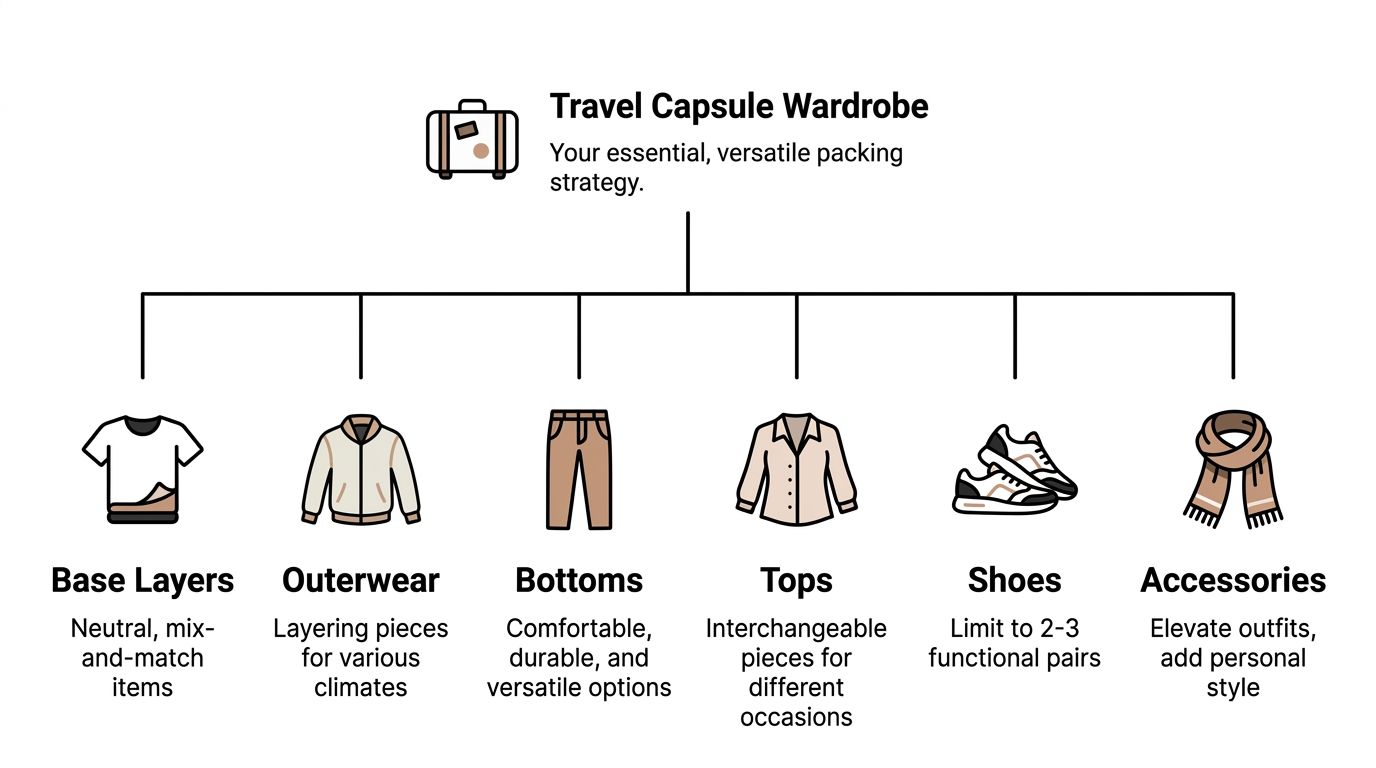
For a weeklong trip, the 5-4-3-2-1 method is one of the cleanest frameworks I know. It means five pairs of socks or underwear, four tops, three bottoms, two pairs of shoes, and one accessory, supported by a 3:1 tops-to-bottoms ratio for flexibility, as outlined in this packing methodology reference.
That ratio works because tops change the look of an outfit faster than bottoms do. A pair of black trousers can handle multiple days. Four tops let those same bottoms feel different.
For a longer trip, I like the 1-2-3-4-5-6 rule: one hat, two pairs of shoes, three bottoms, four tops, five pairs of socks, and six pairs of underwear. It's a practical ceiling, not a prison. If you're carrying more than that for a standard trip, every extra item should justify itself.
Build around repeatable pieces
Capsule wardrobes fail when one or two items only work in one situation. Every piece should cross over.
Use this test:
| Item type | What works | What usually fails |
|---|---|---|
| Tops | Neutral tees, a button-down, a knit tank, a simple blouse | Statement tops that only match one bottom |
| Bottoms | Trousers, dark jeans or travel pants, a skirt or shorts that dress up or down | Heavy denim, fussy fabrics, anything that wrinkles badly |
| Layer | Light jacket, cardigan, overshirt | Bulky jacket that only works in one temperature |
| Shoes | Sneakers plus one second pair with multiple uses | Shoes for one event only |
A strong travel palette is usually built from neutrals, then lifted with one accent color or one accessory family. Black, navy, olive, tan, cream, grey. Pick a base and stay disciplined.
If every top works with every bottom, you don't need many clothes. You need a coherent wardrobe.
Choose fabrics for the trip you're actually taking
Fabric has more impact than people think. It affects weight, drying time, wrinkles, comfort, and how often you can re-wear something before it feels tired.
When I'm narrowing choices, I look for:
- Light layers that can stack without bulk
- Wrinkle-tolerant fabrics that still look decent after a long travel day
- Pieces that can be reworn with a quick airing out or spot clean
- Items that work across settings like a shirt that goes from daytime walking to dinner
If you're updating your kit, this guide to quick-dry travel clothes is useful, but don't assume quick-dry solves every destination. Climate matters, and I'll come back to that.
A simple city-break capsule
For a week in a walkable city, a practical capsule might look like this:
- Four tops including two casual basics, one smarter top, and one layering shirt
- Three bottoms such as trousers, dark jeans or travel pants, and a skirt or shorts depending on weather
- Two shoes with one pair on your feet and one packed
- One accessory that changes the feel of the same clothes, like a scarf or compact jewelry set
That's enough to look put together without turning your luggage into a closet.
Master Your Space with Smart Packing Techniques
Space problems usually start before the zipper does. They start when everything in the bag is packed the same way, even though different items behave differently in transit.
I learned this the hard way on solo trips with camera gear. A backpack can look tidy on the floor and still become a frustrating mess the second you need a jacket, a battery, or clean socks in a train station. Good packing saves space, but the better test is whether you can find what you need fast and repack without blowing up the whole bag.
Rolling versus folding
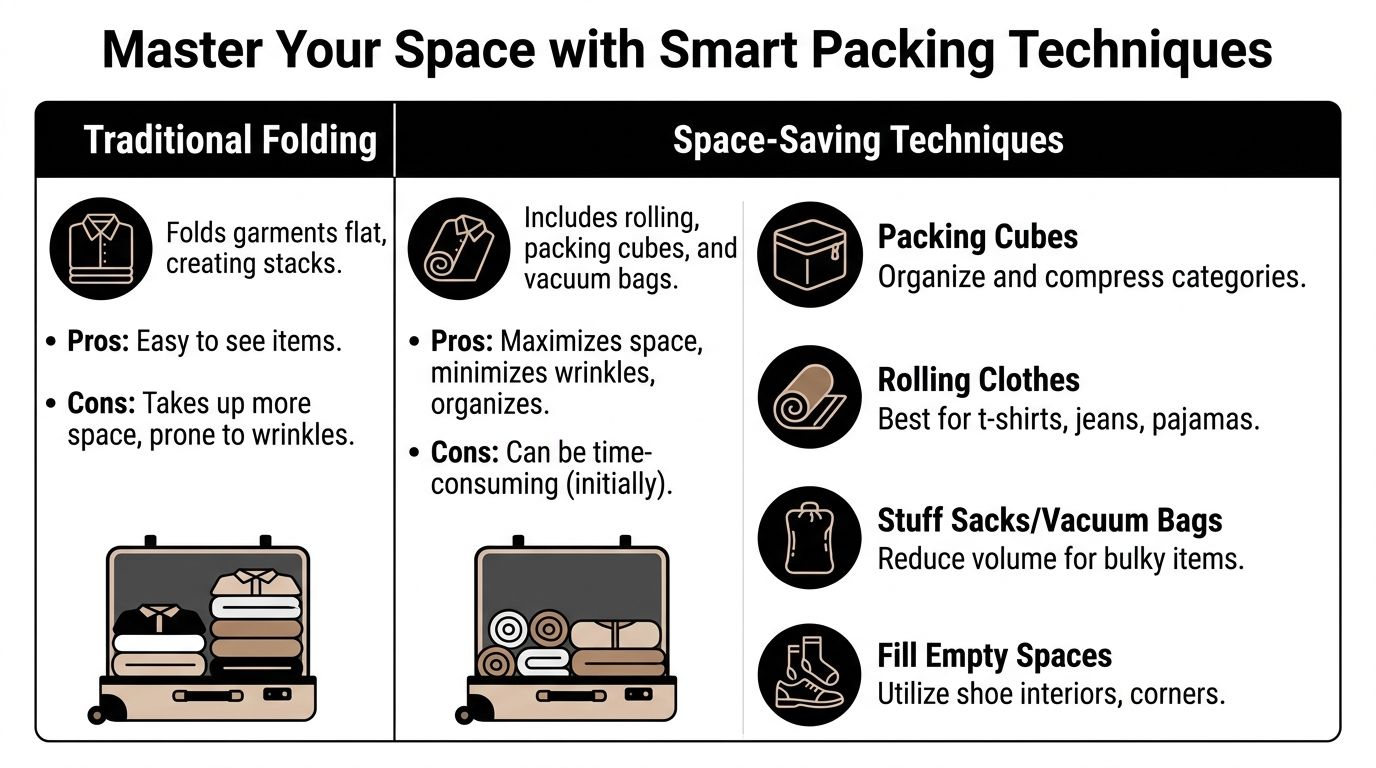
Rolling works best for soft, casual clothing. Folding works better for pieces that need shape. Treating one method as the winner is how travelers end up with wrinkled shirts or wasted space.
| Method | Best for | Main drawback | Best use |
|---|---|---|---|
| Rolling | T-shirts, knitwear, leggings, sleepwear, softer fabrics | Can distort structured garments | Saving space and keeping items visible |
| Folding | Button-downs, blazers, trousers with crease lines, stiffer fabrics | Creates flatter but bulkier stacks | Protecting shape in selected garments |
For most carry-on setups, I roll the clothes I'll reach for often and fold the few items that need to arrive looking decent. That mix matters more than loyalty to one packing method.
Use compression with some judgment
Compression helps, but only with the right clothing. SmarterTravel's carry-on packing guidance notes that rolling air out of clothing packed in sturdy plastic bags can cut bulk compared with standard folding.
That benefit is real. So is the trade-off.
Compression is useful for T-shirts, base layers, underwear, gym clothes, and sleepwear. It is a bad fit for linen, structured shirts, and anything you plan to wear straight off the plane. Solo travelers feel this trade-off fast because there is nobody else carrying the overflow if the system stops working halfway through the trip.
Packing cubes are different. They rarely save dramatic amounts of space, but they do keep the bag stable. I use them more for containment than compression. One cube for tops, one for bottoms, one for small items. For longer trips, a practical backpacking essentials checklist for carry-on travel helps catch duplicates before they eat space.
Pack for access and weight
A compact bag can still be miserable if the heavy items sit in the wrong place.
With a backpack, dense gear should ride close to your back and near the middle of the bag. That keeps the load from pulling backward. For photographers, this matters even more. A camera body, lens, charger, and hard drive can outweigh half your clothing, so the clothing has to flex around the gear, not the other way around.
A few habits make a noticeable difference:
- Wear your bulkiest shoes on travel day
- Use the space inside shoes for socks, cables, or smaller accessories
- Keep your heaviest items centered instead of at the outer front of the bag
- Limit extra shoes hard because they take both volume and weight
- Leave a little expansion room so repacking on day five is still easy
That same SmarterTravel guidance also notes a practical benchmark of about 10% of your body weight. I treat that as a warning sign, not a strict rule. If you are carrying camera gear, cold-weather layers, or food for a long transit day, the number can creep up. The point is simpler. If the bag feels punishing after fifteen minutes, something in it has not earned its place.
A good packing system still works when you are tired, rushed, and repacking on a hostel bed.
Organization that survives the trip
Neat at departure is not enough. The bag has to stay usable after security checks, laundry days, and bad weather.
Keep the layout simple:
- Bottom layer for low-use items such as spare clothes or backup toiletries
- Middle zone for dense items like shoes, cubes, or camera gear packed close to your back
- Top layer for daily-use pieces such as a sweater, rain shell, or wash bag
- Quick-access pocket for small necessities including passport, medication, pen, earbuds, and charger
- One laundry bag so worn clothes stop migrating back into the clean pile
If you can get to one item without disturbing five others, the system is doing its job. That is the true mark of smart packing.
Choose Sustainable and Smarter Items
Packing light gets easier when you stop treating every purchase as neutral. Some items make travel smoother. Others create tiny headaches every day.
That's especially true with toiletries, electronics, and fabric choices. A smarter bag is usually a smaller bag because each item does more, leaks less, and asks less of you on the road.
Buy fewer single-purpose items
I'm skeptical of anything marketed as a travel essential that solves one narrow problem and creates two new ones. Tiny gadget organizers, mini beauty tools, backup backup chargers, novelty containers. They add up.
A leaner setup usually looks like this:
- Solid toiletries when possible, especially soap, shampoo bars, or cleanser bars
- One charging system that covers your phone, earbuds, watch, or camera battery when possible
- A scarf or overshirt that works as style piece, warmth layer, and transit comfort item
- A tote or packable bag that folds flat and handles groceries, beach gear, or laundry
For broader habits that reduce waste while traveling, these sustainable travel tips are worth applying before you ever zip the bag.
The quick-dry fabric myth
Quick-dry clothing gets praised like it works everywhere. It doesn't.
According to TripWellGal's packing guidance, the usual quick-dry advice fails in 42% of budget accommodations in Southeast Asia and Latin America where humidity exceeds 85%, and the recommended alternative is a fabric hybrid system made up of 60% quick-dry tops and 40% breathable cotton or linen bottoms.
That matches what many travelers learn the hard way. A synthetic top may dry quickly enough after a sink wash, but in a humid room with weak airflow, some fabrics stay clammy far longer than expected. You save space in theory, then lose comfort in practice.
Choose fabrics by climate, not by marketing
A better approach is to pack around the destination's drying conditions, not just the label on the garment.
Use this decision guide:
| Condition | Better choice |
|---|---|
| Humid, low-ventilation lodging | Hybrid mix of quick-dry tops and breathable bottoms |
| Cool, variable weather | Light layers that can repeat across multiple days |
| Urban trips with occasional laundry access | Pieces that look good after rewearing, not just after washing |
| Hot destinations | Breathable fabrics with enough structure to avoid feeling sloppy |
The most sustainable item in your bag is often the one you can use often, wash with ease, and keep wearing without fuss. That's a better standard than chasing the latest “travel fabric” promise.
Pack with Purpose for Solo and Creative Travel
Solo travel adds a different layer to packing decisions. You're carrying everything yourself, keeping track of everything yourself, and often making safety choices without anyone to share the load.
If you also care about photography, another conflict shows up fast. You want better images, but camera gear gets heavy long before it gets reasonable.
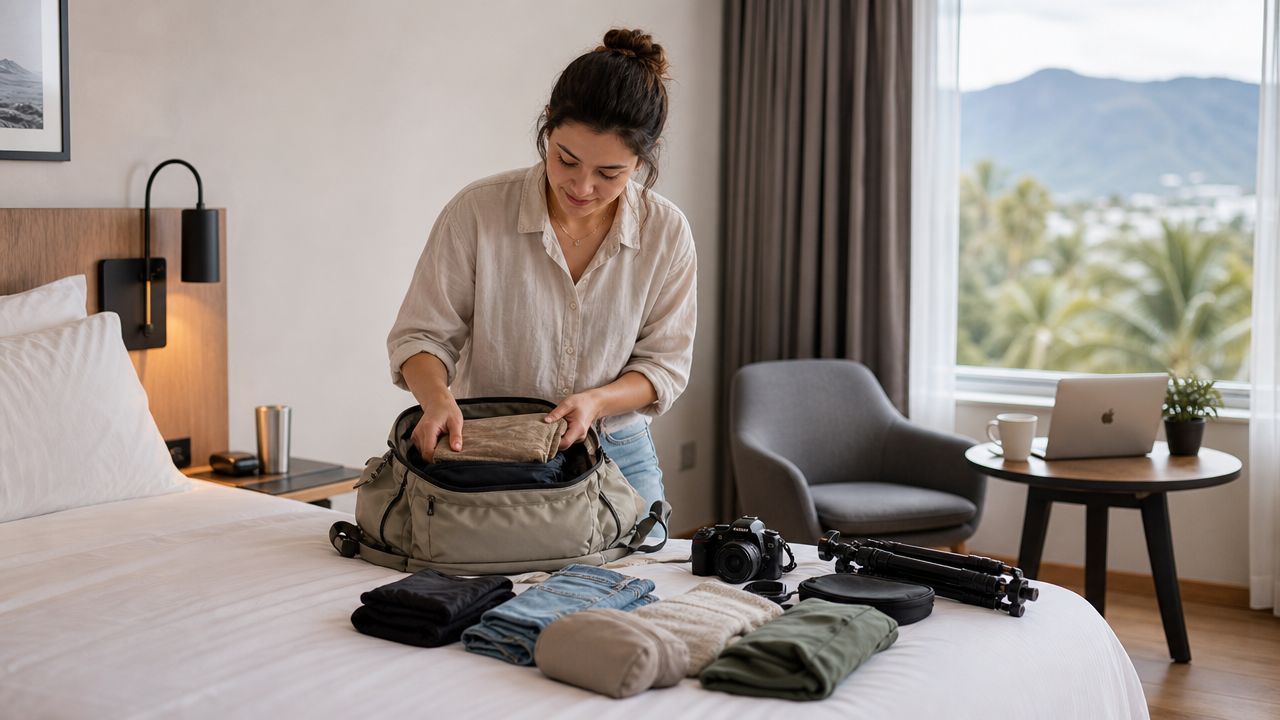
Pack for confidence first
The best solo-travel bag supports movement and awareness. It shouldn't make you look overloaded, distracted, or easy to unsettle.
I keep solo packing centered on a few priorities:
- Security items that are small and realistic like a doorstop alarm, personal safety alarm, and discreet money belt
- One bag you can manage alone up stairs, through stations, and into bathrooms or changing rooms without drama
- Easy access to key items so you're never digging for your passport or phone in public
- Clothes that help you blend in enough to avoid announcing yourself as a stressed tourist
If you're building your first solo setup, this guide on how to plan a solo trip pairs well with packing decisions because route, transport, and accommodation style affect what belongs in your bag.
The safest bag is often the one you can carry calmly, close quickly, and never need to wrestle with in public.
Don't pack a studio just because you love photos
A lot of solo travelers prioritize images. That's not vanity. Photos help document the trip, support a blog or social feed, and preserve places that mattered.
But gear anxiety makes people pack for every possible shot. According to this discussion on travel packing and photography trade-offs, 68% of solo female travelers prioritize photography, 74% report overpacking camera gear, and modern smartphone cameras with attachable lenses can replace 80% of traditional DSLR setups, reducing weight by an average of 3.5kg.
That's a huge shift, and for many trips it's the smartest one available.
A lighter creative kit that still delivers
For most city trips, cultural travel, and solo itineraries, a compact photo setup is enough:
| Travel style | Best-fit gear approach |
|---|---|
| Casual documentation with strong image quality | Smartphone plus attachable lens |
| Social content and street photography | Smartphone, mini tripod, compact mic if needed |
| Dedicated photography trip | Mirrorless body with one versatile lens |
| Mixed travel with lots of transit | Prioritize the kit you'll actually carry all day |
The biggest mistake is packing gear you only use in ideal conditions. A full DSLR setup may produce beautiful files, but if it stays in your accommodation because it feels too heavy or too conspicuous, it's dead weight.
I'd rather carry a camera setup I'll use every day than a better one I resent by lunchtime. For most travelers, that means one body or one phone-centered system, one charging routine, and one protective pouch. No duplicates unless they are indispensable for the trip.
That's how to pack light without sacrificing creative ambition. You choose the smallest setup that still supports your purpose.
Your Go-To Checklists and The Final Edit
A checklist helps, but it won't save you from indecision on its own. Its main value is using a checklist as a filter, not as permission to keep adding things.
That's where most travelers slip. They write everything down, feel organized, then pack almost all of it.
Use short checklists by trip type
A good packing checklist should reflect the kind of trip, not some imaginary universal traveler. I prefer three small templates instead of one giant master list.
City trip checklist
Walking shoes, compact day bag, layering piece, simple capsule wardrobe, portable charger, basic toiletries, one nicer top or accessory.
Warm-weather trip checklist
Breathable clothing, sandals or light second shoe, sun protection, swimwear if needed, laundry plan, compact towel or tote.
Adventure or transit-heavy trip checklist
Weight-conscious layers, durable shoes, rain option, refillable bottle, power bank, medications, documents pouch, laundry separation bag.
If you like having a printable framework before departure, a travel planning checklist can keep the process focused without making your bag bigger.
The final edit matters more than the first pack
The most important packing move happens after you think you're done.
The same packing statistics referenced earlier note that 72.9% of people make a packing list, but lists alone don't stop overpacking. The stronger method is the 50% Rule, which means cutting your initial packed items in half. Because of the source URL dedup requirement, I'm referring here to that earlier research rather than linking it again.
That sounds extreme until you try it. Then you realize how many items were there to calm your nerves, not to serve the trip.
Use this final edit sequence:
- Lay everything out on the bed or floor
- Group duplicates such as extra tops, duplicate layers, backup shoes, or spare tech
- Remove anything with weak purpose including “just in case” pieces you can't strongly justify
- Challenge every bulky item especially jackets, denim, and extra footwear
- Pack once, then lift the bag because your body notices excess faster than your eyes do
If an item has no clear job on the trip, it's asking for a free ride.
What a finished light bag should feel like
By the end, your bag should feel boring in the best way. No drama. No stuffed corners. No mystery pouch of things you probably won't touch.
You should know what's in it, why it's there, and how you'll use it.
That's the point of learning how to pack light. Not austerity. Not bragging rights. Just a trip that starts easier, moves better, and leaves more room for what you came for.
Travel gets better when your bag stops running the show. If you want more practical, thoughtful guidance for lighter, smarter trips, spend time with Travel Talk Today, where solo travel confidence, affordable planning, and meaningful travel strategies come together.