Italy gets more rewarding, and often cheaper, once you stop building your trip around the headline cities. Rome, Florence, Venice, and the Amalfi Coast earn their reputation, but they also bring higher prices, tighter booking windows, and a version of Italy shaped around visitor demand. Travelers who care about value, pace, and local character usually do better elsewhere first.
I've found the smartest itineraries start region by region. Pick a corner of the country, stay longer, and focus on places that still function as real communities. That shift changes everything. Meals get better for the price, train and bus days get simpler, and your time fills with markets, harbor walks, neighborhood bars, and evening passeggiate instead of queues.
That is the angle of this guide. It is not just a list of pretty places. These 10 picks are organized by region, with a clear reason to go and a practical way to do each one well on a budget. Some are famous enough to appear on postcards, but the useful question is different. Why visit this place now, in this season, and how do you experience it without paying peak-price penalties or falling into the usual day-trip routine?
Several of these stops work best as part of a slower trip through small towns in Italy worth building an itinerary around. Others make sense as side trips from larger hubs, but only if you time them properly.
Expect specifics, not fluff. Matera beyond the tourist script. Alberobello in the off-season. Bolzano for travelers who want Alpine culture without Dolomites resort prices. Civita, Scilla, Norcia, Procida, Orvieto, Sapri, and Mondello each earn their place here for a different reason, and the trade-offs matter as much as the beauty.
1. Civita di Bagnoregio The Dying Town
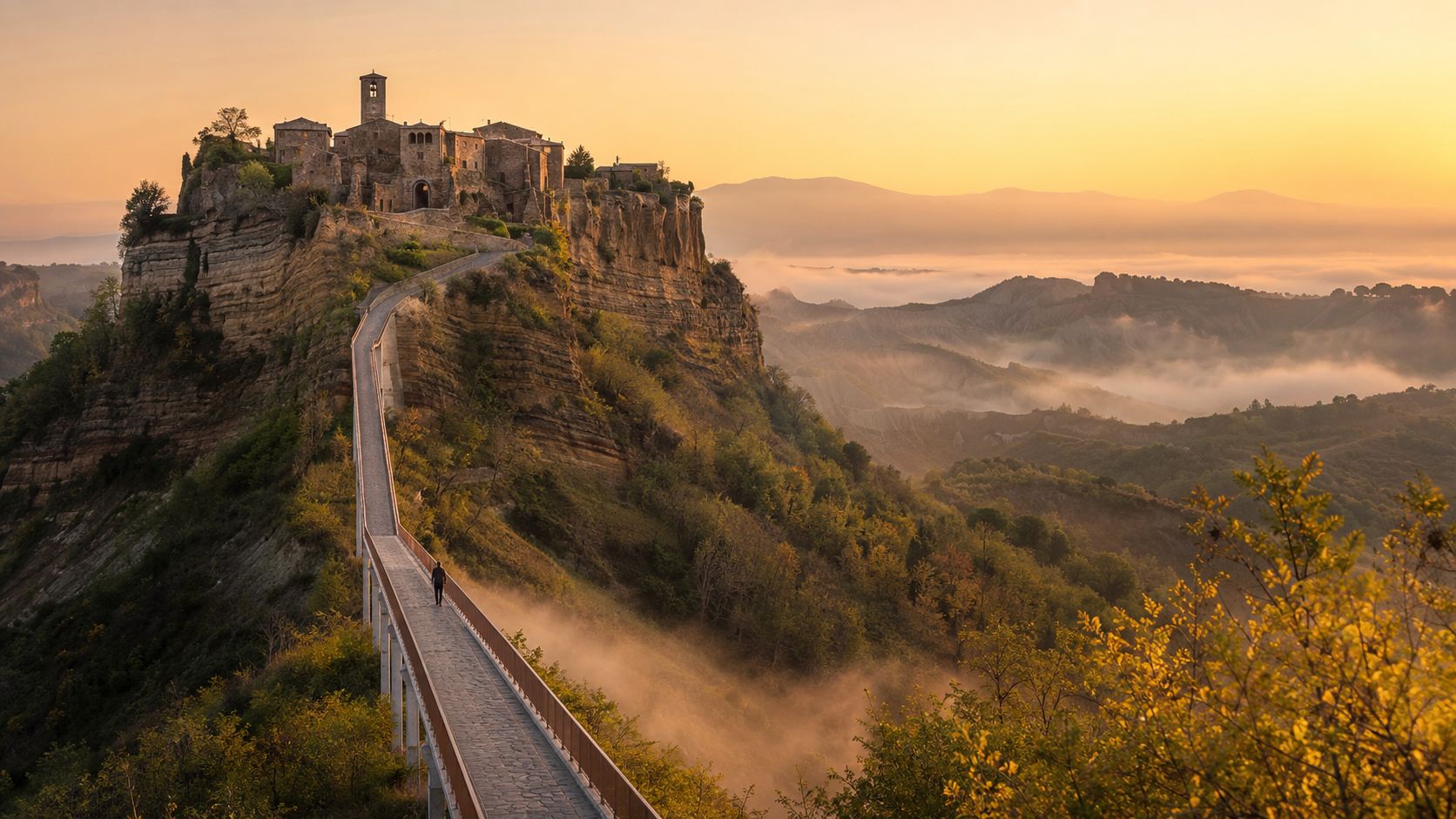
Civita di Bagnoregio feels theatrical at first glance. Then you walk the long footbridge, hear your own footsteps, and realize the drama is geological, not staged. The town sits isolated on its plateau, with the surrounding land dropping away into pale, eroded folds that look almost lunar in certain light.
This is one of the best hidden gems in Italy for travelers who like short, focused visits with a strong sense of place. It isn't a town to “do” quickly and tick off. It works best when you accept its pace, wander the quiet lanes, and let the views do most of the work.
How to do it well
Many visitors make the same mistake here. They arrive midday, wear slick-soled shoes, and treat the bridge approach like a formality. It isn't. The approach is part of the visit, and sturdy shoes matter if the weather turns or the path feels tiring in the heat.
A weekday visit makes the whole place feel more intimate. Bring water and a snack too, because relying on one café can backfire if hours shift or service slows.
Practical rule: Treat Civita as a half-day slow stop, not a rushed photo stop.
If you're stitching together a route through central Italy, it pairs well with other small towns in Italy worth lingering in. I'd aim for early morning or late afternoon, when the stone glows and the surrounding badlands look their best.
- Best timing: Go on a weekday for a quieter feel.
- What to wear: Choose walking shoes with grip, not fashion sneakers.
- What to pack: Bring water and light snacks so you're not dependent on a single café.
- Best light: Early morning and late afternoon are the strongest windows for photos.
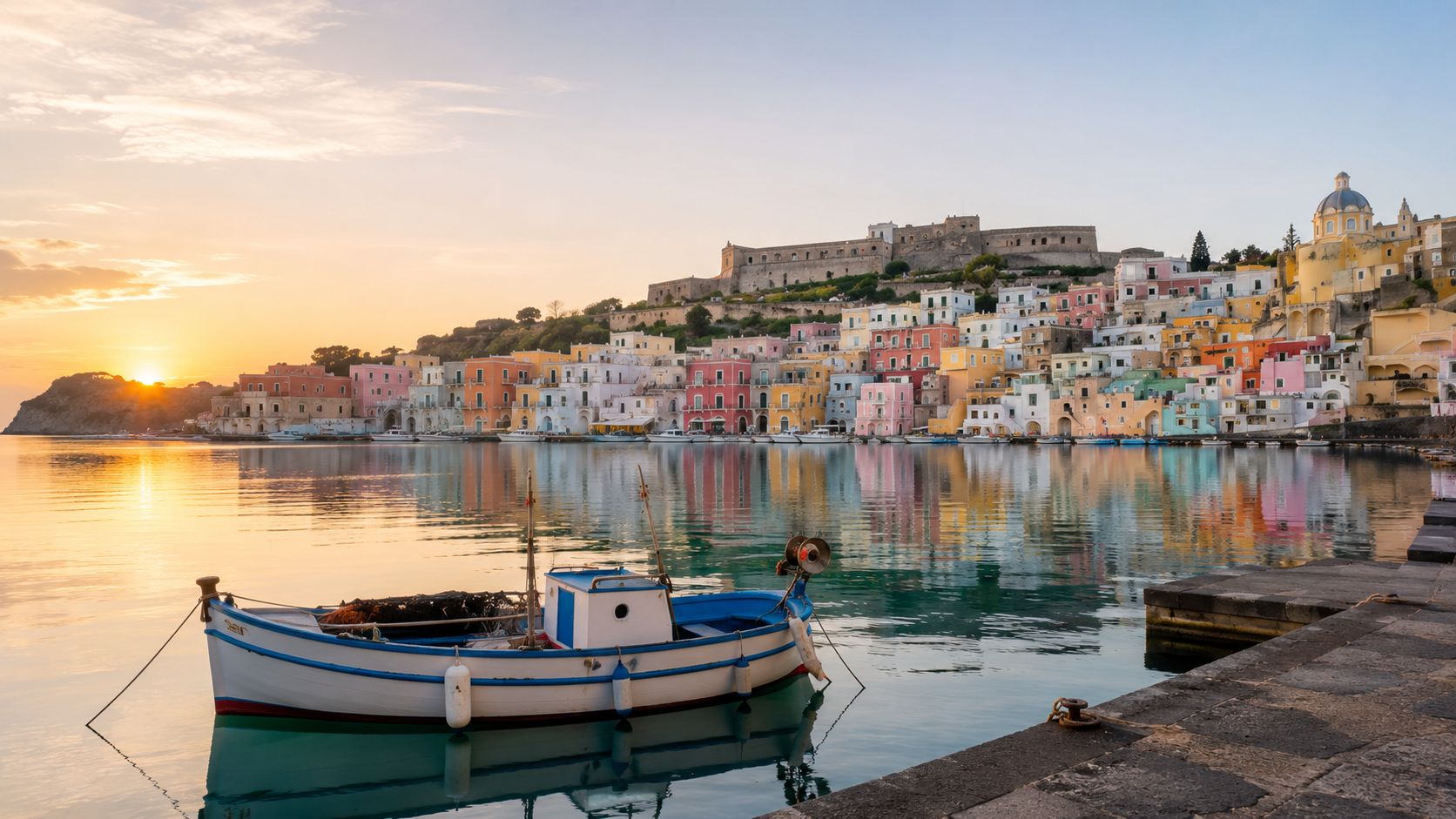
2. Procida The Authentic Bay of Naples Island
If Capri feels polished and Ischia feels broad, Procida feels lived-in. Laundry hangs above narrow streets, fishing boats still anchor the daily scene, and the harbor has color without trying too hard. That's the appeal. It gives you Bay of Naples beauty with more local texture and less performance.
Procida became more visible after its Italian Capital of Culture year in 2022, but it still works best for travelers who want island life without turning every hour into a queue. It's also one of the rare places near Naples where “doing less” is the right plan.
Where value shows up
Value on Procida doesn't just mean spending less. It means using your time better. The simple move is to arrive early, before the ferry day-trippers thicken the harbor, then drift uphill or toward a quieter beach stretch while everyone else clusters near the obvious spots.
For lunch, skip the front-row harbor tables unless the view matters more than the meal. Family-run fish restaurants a few streets back usually offer a more grounded experience and better value.
Go early, eat one street back from the postcard view, and save the sunset for Terra Murata.
A good day here has very little agenda. Walk the harbor, browse side lanes, pause for coffee, then climb to Terra Murata near sunset when the light softens and the island settles down again.
- Best months: May, June, and September usually strike the best balance of weather and manageable crowds.
- Smart arrival: An early ferry helps you enjoy the island before it fills out.
- Best viewpoint: Terra Murata at sunset is worth the climb.
- Better lunch strategy: Pick a simple seafood spot away from the main harbor drag.
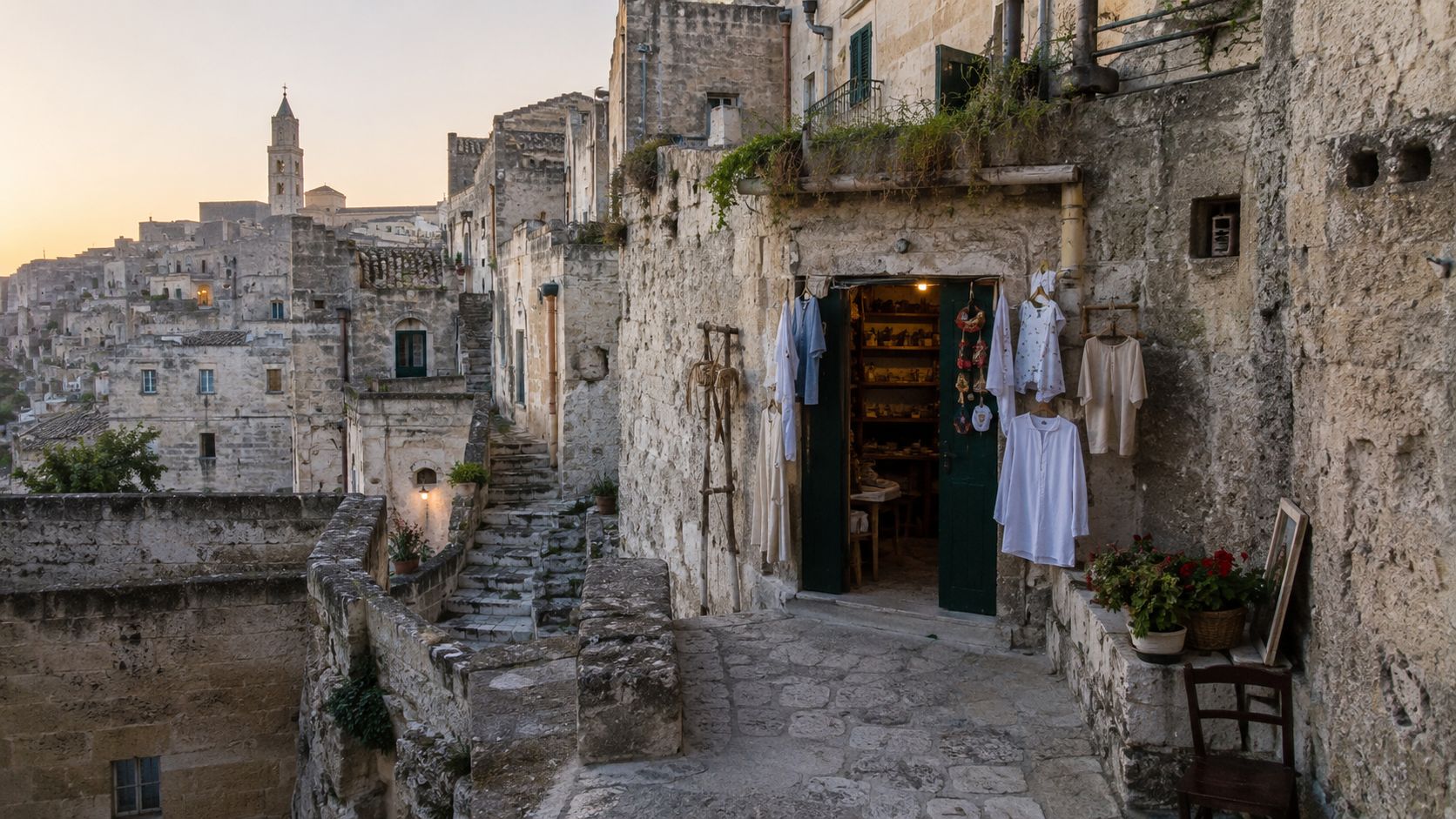
3. The Sassi of Matera Beyond the Tourist Trail
Matera gets treated like a backdrop. It works better as a place to live in for a night or two.
The mistake budget travelers make here is paying for the postcard and then moving through it with everyone else. Matera rewards a different approach. Use the famous lanes early, then spend the rest of your time on the upper streets, along the ravine edge, and in the parts of town where daily life still outweighs sightseeing.
Its cave dwellings and rock-cut churches give the city its pull, but the key difference is rhythm. Sleeping nearby changes what you notice. Before day-trippers arrive, the stone feels quieter, church bells carry across the ravine, and the Sassi read less like a monument and more like a neighborhood shaped by hard geography.
Stay above the obvious
A room inside the deepest part of the Sassi looks romantic on booking sites. In practice, it can mean dragging bags over uneven stone, climbing a lot more stairs than expected, and paying extra for atmosphere you only use at night. I usually point travelers toward the upper town, including areas around Piano. You still reach the historic core on foot, but you get easier arrivals, more useful shops, and calmer evenings.
That setup fits a slower style of travel in Italy better than trying to tick off every viewpoint in one afternoon. Pick up fruit, bread, and cheese from a neighborhood alimentari, head into the Sassi at first light, and save the middle of the day for a long lunch or a museum when the stone lanes feel hotter and more crowded.
Shoes matter here more than hotel thread count. The polished surfaces can get slick, especially after rain or with smooth-soled sneakers. Good grip will improve your day more than almost any upgrade.
- Best strategy: Sleep at least one night, then walk the Sassi early and late, not only at midday.
- Smarter base: The upper town gives you easier logistics and often better value.
- Budget move: Use local food shops for breakfast, picnic supplies, or a simple aperitivo.
- Practical warning: Expect stairs, uneven paving, and slippery stone. Pack shoes with real traction.
4. Scilla The Mythical Calabrian Fishing Village
Scilla has one of the strongest arrival moments in southern Italy. You see the sea, the rock, the castle, and the houses pressed along the water, and the old myth suddenly makes sense. This is the scenery tied to Scylla and Charybdis, and even if you're not chasing legends, the setting lands hard.
What I like most about Scilla is that it still behaves like a real coastal town. You'll find swimmers, fishermen, older residents chatting in the lanes, and restaurants that don't seem built around foreign expectations. That's increasingly rare in places with this much visual appeal.
What works and what doesn't
Scilla works when you keep expectations southern, not luxury. That means slower service, informal rhythms, and a bit of flexibility. If you need everything polished and translated, you may find it rough around the edges. If you want atmosphere and a place that still feels local, that roughness is part of the value.
The Chianalea district is the stretch to walk at sunset. The light bounces off the water and stone, and the village takes on that soft, cinematic look Calabria does so well.
Scilla rewards patience. If you rush it, you'll mostly see scenery. If you slow down, you'll notice daily life.
A few words of Italian go a long way here. Order swordfish, linger by the waterfront, and avoid August if you want lower-pressure travel.
- What to eat: Pesce spada is the obvious local choice for a reason.
- Best season: Outside August, the village feels calmer and easier on the budget.
- Best walk: Chianalea at sunset is the right hour and the right place.
- Cultural tip: Basic Italian greetings noticeably improve interactions.
5. Norcia Umbria's Culinary Heart
Norcia isn't hidden from Italians. It's hidden from international itineraries that rush through Umbria looking only for postcard hill towns. That's a mistake, because Norcia gives you something richer than scenery alone. It gives you a food culture with deep roots, mountain access, and a center that still feels purposeful rather than decorative.
The town is strongly associated with pork butchery traditions, so much so that the Italian word “norcineria” comes from its name. For travelers who plan around meals as much as monuments, this is one of the smartest hidden gems in Italy to build a few days around.
Build the stay around food and countryside
Norcia is best in autumn, when truffle season overlaps with cooler hiking weather and mountain color. Spend your mornings browsing artisan food shops, then use the afternoon for a walk or drive into the Sibillini area. That rhythm keeps the trip balanced. Rich meals, fresh air, repeat.
If you want a more immersive base, this is a good place to look into agritourism in Italy. A farm stay outside town can give you better meals, more space, and a deeper connection to the countryside than a generic hotel.
Buy directly from producers when you can. The quality is usually better, and the conversation often becomes part of the experience.
- Best season: September and October suit both truffle lovers and hikers.
- What to eat: Pasta alla norcina is the dish to order at least once.
- Best buying strategy: Pick up cured meats and pantry goods directly from producers.
- How to stay: Consider a countryside agriturismo rather than sleeping only in town.
6. Bolzano An Alpine Blend of Cultures
Bolzano catches travelers in transit. Many pass through on the way to the Dolomites without giving the city itself a proper day. That's a waste, because Bolzano is more than a transport base. It has a distinct bilingual culture, a handsome old center, a strong market scene, and a mood that feels different from the rest of Italy without feeling detached from it.
The contrast is the point. You can eat dumplings, hear German and Italian in the same morning, browse arcaded streets, and still be looking at Alpine ridges by lunch. That layering makes Bolzano one of the more intellectually interesting hidden gems in Italy, even if it's not obscure.
Use the city like a local base
The Piazza delle Erbe market is the practical anchor. Go in the morning and build a cheap, satisfying lunch from what's fresh rather than sitting down for a full tourist-priced meal in the center. That's one of the easiest ways to keep Bolzano affordable.
Bolzano also rewards travelers who use public transport well. A Mobilcard can simplify movement across buses, trains, and some cable cars, which matters if you want both city time and short mountain escapes without a car.
One of the best easy walks is the Guncina route starting from town. You don't need a full hiking day to get views that reset your sense of space.
- Best food move: Use the market for lunch instead of defaulting to center restaurants.
- Transport tip: Public transport is part of the experience here, not a compromise.
- What to try: Canederli and speck make sense in this borderland setting.
- Best add-on: A short town-to-hillside walk gives you a strong return for little effort.
7. Alberobello The Off-Season Trulli Experience
Alberobello is one of the easiest places in Italy to get wrong. Arrive on a sunny peak-season afternoon, follow the main lanes with the day-trippers, and it can feel polished to the point of fatigue. Come in the off-season, especially from late autumn to early spring, and the same town becomes quieter, cheaper, and far easier to appreciate.
Timing matters more here than in many better-known stops. The trulli are famous for good reason, but the main value for thoughtful travelers is not the photo. It is the chance to see how the architecture sits within a lived-in town, and to do it without paying peak rates for every bed, meal, and coffee.
Why the off-season changes the experience
In cooler months, Alberobello slows down enough for details to return. Roof markings stand out. Side streets feel residential again. Early morning and late afternoon become the best hours to walk because you can hear the place rather than just pass through it.
I would not make Alberobello the whole trip unless you have a specific reason to stay in the historic core. It works better as part of a broader Puglia route through the Itria Valley, with a base in a farmhouse or small guesthouse outside the center. That approach usually gives better value, easier parking, and a calmer evening than sleeping in the busiest trullo zone.
If you're shaping this into a wider central and southern Italy route, these day trips from Florence that reward slower travel can pair well with an onward train or flight south.
Food is the smart place to spend here. A cooking class or a long lunch in a family-run spot will stay with you longer than another round of souvenir browsing. That trade-off matters in Alberobello because the commercial side is obvious. The more rewarding version of the town comes from stepping slightly outside it.
- Best timing: Late autumn through early spring brings lower prices and a calmer pace.
- Where to stay: Choose an agriturismo or small countryside stay if you want better value.
- How to explore: A car helps if you plan to pair Alberobello with Locorotondo, Martina Franca, or Cisternino.
- Best use of your budget: Spend on food and one hands-on local experience, not on the most photogenic room in the center.
8. Orvieto Deeper Than the Duomo
Most visitors arrive in Orvieto, admire the cathedral, take a few photos, and leave. That's exactly why staying overnight works so well. Once the day visitors are gone, Orvieto recovers its balance. The side streets quiet down, local routines become visible again, and the town feels less like a monument and more like a place.
The Duomo deserves its reputation, but it shouldn't dominate your schedule. Orvieto is one of those hidden gems in Italy where the second layer matters more than the first. Underground spaces, overlooked lanes, small wine bars, and early-morning views are where the town settles into memory.
Stay after the buses leave
Late afternoon arrival is the sweet spot. Check in, walk the center once the busiest hours pass, then claim the evening for yourself. Residential B&Bs away from the main square usually give a more peaceful experience than trying to sleep in the most exposed tourist zone.
If you're shaping a larger central Italy route, Orvieto works beautifully among other day trips from Florence that deserve more than a few hours. It can be a stopover, but it's better as an overnight.
Book underground cave visits ahead when possible. Those slots can fill, and they add depth to a town many people otherwise experience only at surface level.
- Best arrival: Come late in the day, not first thing in the morning.
- Where to stay: Choose a residential B&B over the busiest central square.
- Must-book experience: Reserve underground visits ahead if they matter to you.
- Best view timing: Climb Torre del Moro early, before the town fully wakes up.
9. Sapri The Cilento Coast's Local Secret
Sapri gives you one of the best trade-offs in southern Italy. You get sea, a working-town feel, waterfront life, and access to a coast that doesn't carry the same pricing pressure or image-management as Amalfi. It feels like a place Italians use, because that's largely what it is.
That matters if you want a beach base where local routines still shape the day. In Sapri, the win isn't that there's nothing to do. The win is that what there is to do still feels proportionate. Swim, eat, stroll, take the train, repeat.
How to keep it simple and affordable
Family-run hotels and B&Bs are usually the right fit here. You don't need luxury inventory for a town like this, and simple places often come with better hospitality and local advice. The same goes for food. Waterfront trattorias without English menus can be your best meals.
Regional trains are part of the appeal. They're useful, scenic, and remove the need to overplan every transfer. If your idea of hidden gems in Italy includes room to breathe, Sapri is one of the strongest coastal picks.
For travelers hunting off-the-beaten-path destinations, this is the kind of town that makes a broader region click. One night can feel pleasant. Several nights start to feel restorative.
- Best months: May, June, and September usually give the best balance.
- Where to stay: Small family-run places often offer the best value.
- Where to eat: Follow local crowds, not polished signage.
- How to move: Regional trains make the coast easier and more affordable.
10. Mondello Palermo's Authentic Beach Escape
Mondello is one of the easiest hidden gems in Italy to add without rebuilding your whole trip. If you're already in Palermo, a short bus ride changes the mood completely. The city noise drops away, the sea opens up, and you land in a beach district that still serves local summer life as much as visitor demand.
That local function is what keeps Mondello useful. It doesn't need to be a secret to feel rewarding. It just needs to be timed well.
Go when locals aren't all off work
Weekday mornings are your friend. That's when the beach feels spacious, the bus ride is simpler, and lunch can stay casual instead of turning into a scramble for tables. Palermo gives you intensity. Mondello gives you release.
Bus 806 from Piazza Sturzo or Politeama keeps the logistics easy, which matters after a few days in a busy city. Once you arrive, don't overcomplicate lunch. Arancini and panelle make more sense than chasing a formal sit-down meal in beachwear.
A small move improves the experience a lot. Walk toward the northern end of the beach. It's often calmer, and the atmosphere loosens up.
- Best timing: Weekday mornings beat weekends by a wide margin.
- How to get there: Bus 806 is the straightforward option from central Palermo.
- What to eat: Street food works perfectly here.
- Where to settle: The northern end of the beach is often more relaxed.
Hidden Gems in Italy: Quick 10-Place Comparison
A quick table is useful, but only if it helps you choose based on trade-offs, not hype. These ten places work best when matched to region, transit tolerance, and the kind of trip you want to have.
| Destination | Region and why go | Access / complexity | Budget and logistics | Best fit | Key advantage |
|---|---|---|---|---|---|
| Civita di Bagnoregio: The Dying Town | Lazio. Go for the drama of the setting and the quiet once day-trippers leave. | Reached on foot via a long bridge, with a steady uphill walk. | Best as a day trip or one-night stop paired with nearby towns. Bring water and pack light. | Photographers, slow travelers, anyone building a central Italy road trip. | A striking eroded setting and a rare sense of stillness. |
| Procida: The Authentic Bay of Naples Island | Campania. Better for travelers who want island life without Capri prices or performance. | Short ferry ride, then mostly on foot or by local transport. | Ferry costs stay reasonable, but rooms are limited in peak months. Book early if sleeping over. | Couples, food-focused travelers, Naples add-ons. | Strong local character at a lower cost than the famous islands. |
| The Sassi of Matera: Beyond the Tourist Trail | Basilicata. Go for the cave districts, then stay for the lived-in parts beyond the postcard views. | Beautiful but physically demanding. Expect stairs, stone lanes, and uneven footing. | Costs rise fast in the most photographed areas. Better value often sits just above the Sassi. | Culture-led trips, shoulder-season travelers, anyone willing to walk. | One of Italy's most memorable urban settings, with more depth than a quick photo stop suggests. |
| Scilla: The Mythical Calabrian Fishing Village | Calabria. A strong pick for southern coast atmosphere without resort pricing. | Small and manageable, though connections can be slower than in northern Italy. | Works well on a regional train route. Seafood is often a better spend than formal lodging upgrades. | Travelers who care more about place than polish. | Calabrian coast charm with honest prices and a real working-village feel. |
| Norcia: Umbria's Culinary Heart | Umbria. Go for food first, then use it as a base for mountain air and outdoor time. | Easier with a car, especially if you want to explore producers and nearby trails. | Best value comes from eating locally and timing the trip around seasonal produce. | Food travelers, hikers, autumn itineraries. | Outstanding cured meats, truffles, and access to the Sibillini area. |
| Bolzano: An Alpine Blend of Cultures | South Tyrol. A smart choice if you want mountain access without committing to a remote base. | Very accessible by train, and local transport is well run. | Lodging can be pricey, but transport efficiency helps control overall trip costs. | City-and-nature travelers, rail travelers, first-time Dolomites visitors. | A rare Italian-Austrian cultural mix with excellent public transport. |
| Alberobello: The Off-Season Trulli Experience | Puglia. Worth it when the timing is right, especially outside summer. | Easy enough by car, less flexible by public transport if you want to explore the wider valley. | Winter and shoulder season usually offer much better value than summer. | Architecture fans, off-season travelers, Puglia road trips. | The trulli feel far more atmospheric when crowds thin out. |
| Orvieto: Deeper Than the Duomo | Umbria. Go beyond the cathedral for caves, food, and a much calmer evening mood. | One of the easiest hill towns to reach from Rome by train. | Good for a flexible stop because transport is simple and overnight rates can be fair. | Short breaks, rail itineraries, travelers who like history without heavy logistics. | High reward for relatively low planning effort. |
| Sapri: The Cilento Coast's Local Secret | Campania. A better fit for travelers who want sea access without Amalfi prices. | Regional coastal travel takes patience, but the town itself is straightforward once you arrive. | Family-run stays and simple meals keep costs grounded. | Budget beach trips, longer southern itineraries, low-key summer travel. | A practical coastal base with local energy instead of destination branding. |
| Mondello: Palermo's Authentic Beach Escape | Sicily. Best used as an easy release valve from Palermo, not as a standalone destination. | Very simple from the city by local bus. Timing matters more than planning. | Cheap to reach and easy to do well if you avoid peak weekend hours. | Palermo travelers who want one beach day without adding hotel changes. | Fast access to sand, street food, and a local summer atmosphere. |
Use this comparison to narrow the field by region first. Then choose based on effort. Civita and Matera ask more from your legs. Bolzano and Orvieto reward travelers who want simpler rail logistics. Scilla, Sapri, and Procida make the most sense for people who care more about rhythm, meals, and local texture than box-checking.
For budget-conscious travelers, the strongest value usually comes from timing, not from chasing the most obscure pin on the map. Alberobello in the off-season, Matera with a smarter base, and Procida outside peak summer all prove the same point. Italy gets cheaper and more personal when you stop traveling on everyone else's schedule.
Your Journey to Italy's Soul Begins Now
The best hidden gems in Italy don't just save you money or help you avoid crowds. They change the way you travel. Instead of spending your days inside a cycle of queues, timed tickets, and overpriced convenience, you start noticing the things that make a trip feel personal. The market where you buy fruit for the train. The old man who recommends the right trattoria. The side street that ends in a view no one had to advertise to you.
That shift matters. Italy is one of the easiest countries in the world to love superficially. It's much harder, and much more rewarding, to love it attentively. Smaller towns and less-hyped regions make that easier because they ask less performance from you. You don't have to consume them at speed. You can sit longer, spend less, and pay attention.
There are practical benefits too. Parts of southern and inland Italy are often better value than the country's headline destinations, and that creates room for longer stays, slower meals, and more flexible planning. In some overlooked cities and towns, even the property market reflects that broader affordability. For example, a roundup of under-the-radar Italian destinations notes average prices around €1,345 per square meter in Mantova and €1,580 in Lecce, with reported year-over-year appreciation in that province. That doesn't mean every traveler is moving to Italy, of course. It does show how different the economics can feel once you step away from the usual circuit.
The same source points to places such as Ascoli Piceno, Monte Conero, and the Tremiti Islands as examples of regions that remain overlooked compared with Tuscany while still offering striking scenery and strong local identity. That's the broader lesson. Hidden gems in Italy aren't only single towns. They're often entire regions that reward curiosity more than status-seeking.
There's also a gap in a lot of Italy content. Many guides list pretty places but don't answer practical questions about affordability, transport, safety, or sustainability, especially for solo travelers. One travel discussion highlights how common that gap is, particularly when people want places that feel manageable in peak season or want more regenerative ways to travel that support local communities and lower-impact choices, as discussed in this conversation about overlooked destinations and sustainability-minded travel. That's worth keeping in mind as you plan. Scenic value is only part of the decision. Ease, timing, and local fit matter just as much.
So don't try to do all ten. Pick one that matches the trip you prefer. If you need sea and simplicity, choose Sapri or Mondello. If you want layered history, choose Matera or Orvieto. If food is the anchor, go to Norcia. Then give that place enough time to open up. That's when Italy stops feeling famous and starts feeling yours.
Travel Talk Today helps you plan trips exactly like this: slower, smarter, and more affordable. If you want more destination guides, practical budgeting advice, and ideas for meaningful travel across Europe and beyond, explore Travel Talk Today.