You can drive on a current overseas car licence in New Zealand for up to 18 months after arrival, and you only need an International Driving Permit if your home licence isn't in English, with the original licence carried alongside it. If you're on a motorcycle or truck licence, the visitor window is 12 months, not 18, so the details matter before you land.
That's why people get tangled up at the rental counter. The question usually isn't “Do I need an IDP, yes or no?”, it's “What does my licence language say, and am I a visitor or a new resident?”
Why the International Drivers Permit Question Trips Up New Zealand Visitors
A traveler leans across the desk at Auckland airport, passport in one hand, rental booking in the other, and realizes the licence in their wallet is printed in a script the agent can't read. That moment is where the whole international drivers permit New Zealand question stops being theoretical and turns into paperwork, delay, or a polite refusal.
The confusion comes from mixing up three different things. First, whether your licence is in English. Second, whether you're a visitor or someone who has moved to New Zealand and is settling in. Third, how long you'll be driving, because the legal window changes depending on the vehicle class and your status as a visitor. New Zealand's transport guidance says visitors can drive on a current overseas car licence for up to 18 months, but the rule drops to 12 months for overseas motorcycle or truck licences, and if the licence isn't in English, you need an approved translation or an IDP carried with the original licence. The IDP alone is not enough to drive legally. NZTA visitor licence rules
Why most pages make this harder than it needs to be
A lot of travel pages treat this as a yes-or-no question, which is why people end up overbuying documents or underpreparing. The decision is scenario-based. If your home licence is already in English and you're visiting, you may not need anything extra beyond the current licence itself. If the licence isn't in English, the IDP or approved translation becomes the bridge between your home document and what New Zealand authorities can read.
That's also why rental desks can feel stricter than the law on paper. Staff aren't there to interpret every language or solve a documentation puzzle on the spot, they're there to avoid handing keys to someone who can't produce the right combination of documents. The official and practical answers can overlap, but they're not always identical.
Practical rule: think in pairs, not singles. A non-English licence usually needs a second document, and a resident's paperwork needs a different check than a short-term visitor's.
Who Actually Needs an IDP to Drive in New Zealand
If your licence is already in English and you're visiting, the path is simple. You carry your current overseas licence, keep it valid, and drive within New Zealand's visitor time limit. For a car licence, that visitor window is 18 months; for a motorcycle or truck licence, it's 12 months. The New Zealand government also makes it clear that the permit isn't a replacement for the licence, it's only an add-on when language becomes a barrier. NZTA visitor licence rules
If your licence is not in English, the question changes. You need either an approved English translation or an International Driving Permit, and you still need to carry the original licence with it. That's the part travelers miss most often, because they assume the extra document can stand alone. It can't.

The status test matters as much as the language test
A short-term visitor and a new resident are not in the same lane. Visitors can use the overseas-licence rules above, but once someone is living in New Zealand rather than just touring through, the paperwork question starts shifting toward conversion to a New Zealand licence. That's why people who arrive on a six-week holiday and people who have moved for work shouldn't read the same advice as if it applies equally.
A simple way to think about it is this. If your trip is temporary, check your licence language first. If you've moved, check the residency side of the rule first. The language issue can still matter, but the longer-term licensing path becomes the bigger question.
A fast way to place yourself in the right bucket
- English licence, visitor: carry the current licence and follow the visitor driving window.
- Non-English licence, visitor: carry the original licence plus an approved translation or IDP.
- New resident: don't treat an IDP as the end of the story, because your licensing path changes.
- Motorcycle or truck driver: remember the shorter 12-month window if you're using an overseas licence. NZTA visitor licence rules
If you want a wider travel-planning comparison for driving paperwork in other countries, this practical guide to driving requirements in Costa Rica shows how the logic often changes by destination.
IDP Versus English Translation and When Each One Applies
A driver in Auckland with a non-English licence usually faces one question first, which document makes the licence readable, and which one does the job well enough at the counter or roadside check? That is where the difference between an International Driving Permit and an English translation matters. The IDP is a standard companion document that sits with your home licence. An English translation is a direct language bridge for the licence details. In New Zealand, either one can solve the language problem, but neither one replaces the original licence.
That point matters because travelers often hope for one paper that covers every situation. New Zealand does not work that way. If your licence is not in English, the IDP or translation goes alongside it, while the original licence remains the main document. Government guidance is clear that an IDP by itself is not enough to drive legally. NZTA visitor licence rules
A good way to separate the two is to ask what problem you are solving. If you may cross borders, use several rental desks, or move through more than one country on the same trip, an IDP can be the better fit because it is a widely recognized travel document. New Zealand's AA says it is recognized in many countries and can be applied for online or in person, which helps when a rental counter or roadside officer wants a document they can read quickly. AA driving permits for overseas travel
An English translation is narrower. It is aimed at making a non-English licence readable in New Zealand, so it suits a visitor whose trip stays local and who only needs to satisfy the language requirement here. It does not carry the same cross-border value as an IDP, but for a single-country itinerary it can be the cleaner choice.
A quick test helps. If your licence is already in English, you usually do not need either extra document for the language issue. If your licence is not in English, bring one supporting document that makes it readable, plus the original licence. If you are planning a multi-country road trip, an IDP may be the better travel companion. If you are only headed to New Zealand, choose the document that matches the rule you need, not the one that sounds more official.
That distinction saves money and avoids confusion at the airport or rental counter. It also keeps travelers from buying a document that looks useful but does not solve the right problem.
How to Get an International Driving Permit Before You Fly
A good way to sort this out is to start with the question your trip raises. Do you need a permit because your licence is hard to read, or are you collecting documents for a wider road trip? That answer changes where you apply and what you hand over at the counter.
Start with the motoring authority in the country that issued your licence, because that is where a legitimate IDP comes from. In the United States, that usually means AAA or AATA, while in the United Kingdom the AA is one of the common issuing bodies. The route is different from country to country, but the paperwork usually looks familiar. You show your current licence, a passport-style photo, and identity documents, then apply before you leave. A travel planning checklist is useful here, because it helps you line up the permit with flights, accommodation, and the rest of your pre-trip jobs.
If you hold a New Zealand licence and are heading overseas, the AA says you must be over 18, hold a current full NZ driver licence, and provide a passport-style photo. The permit they issue is valid for 12 months from issue as long as the NZ licence remains current. That makes it a handy companion document for driving abroad, but it still works alongside your licence rather than replacing it. AA driving permits for overseas travel
The timing matters more than people expect. Courier delays, photo problems, or extra identity checks can easily land in the week you are packing. Some countries let you apply online, others want you to appear in person, and some allow both. The safest move is to check the official motoring body in the country where your licence was issued, then gather everything before you book the rental car.
A simple pre-flight check keeps the process tidy.
- Current home licence: bring the original, valid licence.
- Passport-style photo: many issuing bodies ask for one.
- Passport or ID: some offices want identity proof beyond the licence.
- Application timing: sort it before you fly, not after you land.
- Country-specific rules: some motoring associations accept online applications, others want a visit in person. AA driving permits for overseas travel
If you are planning a longer route, pairing this with a solid travel budget checklist can help you decide whether adding a permit stop fits into the rest of your pre-trip errands.
What Rental Car Companies in New Zealand Really Want to See
A rental counter is not trying to solve the whole driving question. The agent is usually checking one thing first, can you take this car away today without creating a paperwork problem for the company? If your licence is in English, that part is often straightforward. If it is not, the desk may ask for an international driving permit or an English translation straight away, because staff need a document they can read without hesitation.
The gap between law and desk policy is what catches visitors out. A licence can be valid for driving in New Zealand, yet still trigger a pause at pickup if the rental company wants extra proof for language, identity, or insurance purposes. That is why the booking page can look fine while the handover stalls beside the counter. For a sense of how travellers talk about those pickup-day checks, the review style in ACE car rental experiences shows why people read the fine print before they arrive.
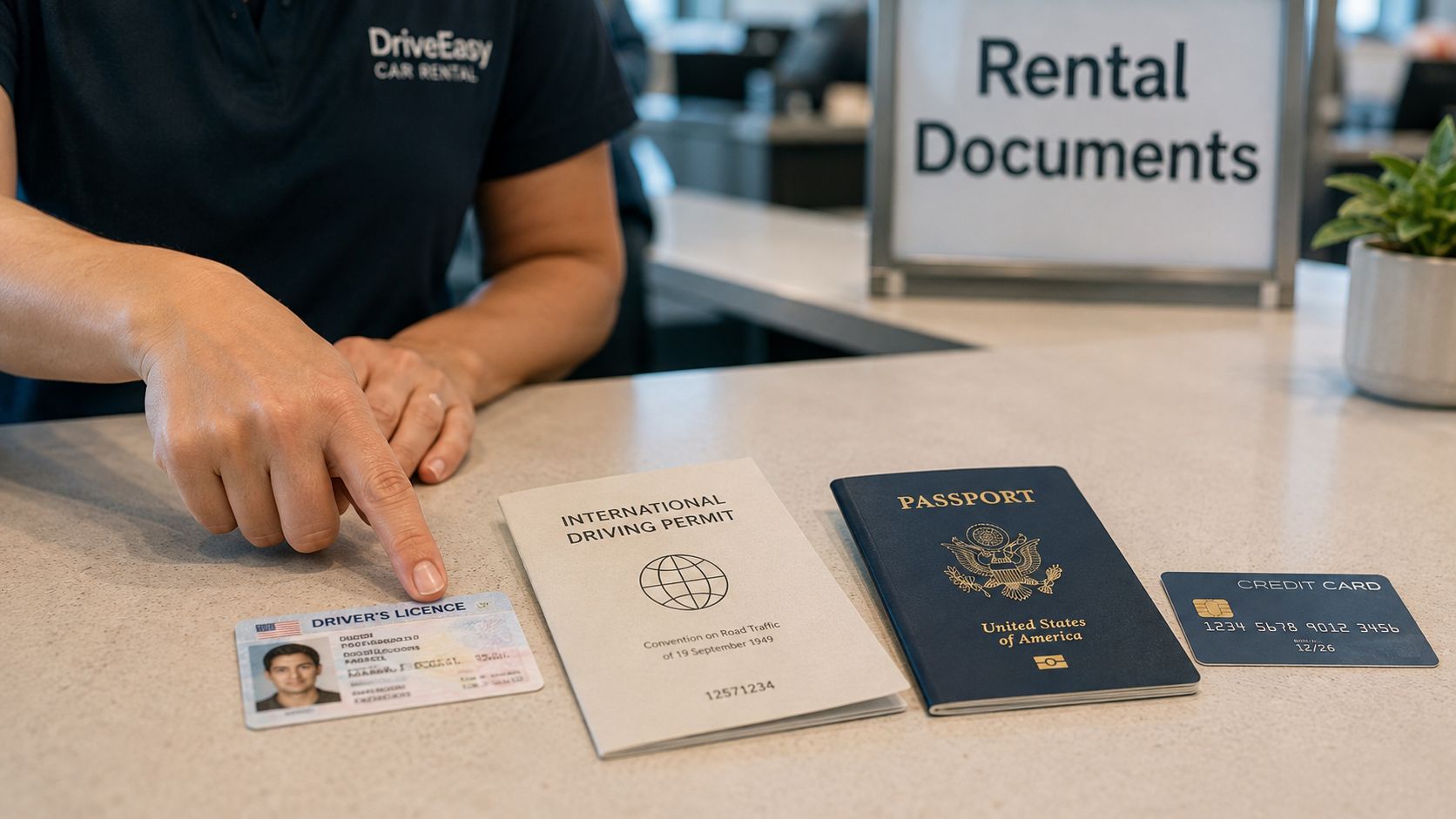
The counter looks for documents it can verify quickly
The desk usually works through a simple set of checks. The agent wants a valid licence, something that clears up a language issue if your licence is not in English, and a payment method that matches the company's rules. If one of those pieces looks unclear, pickup can slow down or stop while staff sort it out. An IDP helps because it gives the agent a familiar format to read instead of making them guess at a foreign licence.
Different companies can still handle the same licence in different ways. Some staff are comfortable with a licence and passport alone if everything is easy to verify. Others will want the extra document immediately, because they are trying to avoid a problem with insurance or a later dispute over who was allowed to drive. The safest approach is to assume the desk will check more carefully than the website summary.
Pack for the handover, not just the highway
- Current licence and supporting document: bring both if your licence is not in English.
- Passport: many desks use it to confirm identity.
- Payment card: check the booking terms before you arrive.
- Matching name details: make sure the booking name matches the licence and card.
- Pickup timing: arrive with time to fix a document mismatch instead of rushing to the car park.
The document stack matters because the rental handover moves fast. A mismatched name, an expired card, or a licence the agent cannot read can turn a simple pickup into a delay at the counter. If you want a clear example of how travellers usually prepare for that step, the same ACE car rental experiences discussions show how much attention people give to the paperwork before they ever get the keys.
Insurance, Road Rules, and Left-Hand Driving Safety Essentials
A permit helps with paperwork, but it does not make the road feel familiar. In New Zealand, traffic stays on the left-hand side, suburban streets can tighten into narrow lanes, and a dry-looking route can change quickly once weather or terrain shifts. That means visitors need to think about two things at once, the driving setup and the cover behind it, because either one on its own leaves a gap. Driving safety basics for visitors
A useful way to picture the first drive is to treat it like a new kitchen layout. You know where the fridge should be, but your hands still reach the wrong cupboard until you slow down and look twice. The same thing happens at roundabouts, turns, and merges, where a quick pause is often the difference between a calm start and a stressful mistake.
Treat insurance as part of the driving plan
Rental cover changes how a small mistake feels. Without stronger protection, a scrape in a car park, a chip on gravel, or a minor bump can turn into a bill that catches people off guard. Some rental firms include basic protection and then sell upgrades that reduce excess liability, while some visitors rely on travel insurance to help with the cost afterward. Read the cover before you collect the keys, because the counter staff will expect you to understand what is protected and what is not. Travel insurance comparison guide
Don't wait for a rain shower to find out what your policy leaves out.
The cleanest approach is to separate vehicle damage cover from trip protection and read both sets of terms on their own. They can work together, but they do different jobs.
Build three habits before you leave the airport
- Drive slower than your instincts suggest: a new road always feels unfamiliar for the first stretch.
- Keep checking lane position and the shoulder: left-hand driving can feel odd until your eyes settle.
- Pause before every turn: that short mental reset helps prevent a wrong-side mistake.
- Respect fatigue: jet lag and unfamiliar roads are a poor mix.
- Ask about road conditions: weather and route changes matter more on rural drives than many first-time visitors expect.
Some visitors treat the first hour like a warm-up lap, and that is usually the right instinct. Check the map before you roll out, confirm the insurance details, and give yourself time to settle into left-hand driving before leaving the city.
Common IDP Myths and Costly Misconceptions
A lot of confusion starts with the idea that an IDP is a licence on its own. It is not. In New Zealand, you still need the original overseas licence with it, and the permit mainly helps if your licence details need to be understood by the rental counter or a roadside check.
Another common mistake is trusting any “international licence” sold online. That can lead to trouble fast. A real permit comes from the issuing authority in your home country, not from a checkout page run by a random seller.
A third myth is that an IDP changes your status from visitor to future resident, or makes New Zealand licence conversion automatic. It does neither. The permit only supports temporary driving as a visitor, while the separate rules for settling in or converting a licence still apply later.
Rental desks usually care about two simple things, your licence must be valid, and they must be able to read it. The law and the counter staff are not asking the exact same question, so it helps to separate them. If your licence is in English, the paperwork is usually straightforward. If it is not, you may need extra documentation so the staff can verify it quickly.
A fourth myth treats car, motorcycle, and truck rules as if they all work the same way. They do not. The overseas driving window is 18 months for cars, but 12 months for motorcycle and truck licences, so the vehicle class matters. NZTA visitor licence rules
A fifth mistake is assuming the document rules are the only cost to plan for. They are part of a wider trip budget, especially if you are deciding between translation paperwork, extra insurance, or both. A practical New Zealand travel money guide can help you decide where the money is better spent before you arrive.
Arrival Checklist and Next Steps for Confident Driving

Before you fly, give your paperwork one last check at the kitchen table, not at the rental counter. Start with the licence language. If it is in English, the path is usually simple. If it is not, decide whether you have the approved translation or the IDP that matches your situation, then keep the original licence with it.
The next question is whether you are visiting or settling in. That changes how you read the driving rule, because a visitor's paperwork is judged differently from a new resident's paperwork. Rental staff usually want to see a licence they can read quickly, while the law cares about whether you are allowed to drive under visitor rules. Those are related questions, but they are not the same one.
A quick pass through this New Zealand travel money guide can also help you decide where to spend first, on extra documents, insurance, or a bit of both.
New Zealand driving document requirements at a glance
| Your situation | Documents to carry | Notes |
|---|---|---|
| English-language overseas licence, short-term visitor | Current overseas licence | Drive within the visitor time rule |
| Non-English overseas licence, short-term visitor | Original licence plus approved translation or IDP | The extra document must travel with the original |
| Motorcycle or truck visitor | Current overseas licence, plus translation or IDP if needed | The visitor window is shorter for these licences |
| New resident | Check conversion rules early | The visitor rule is not the whole story |
If your home country does not issue IDPs, use the approved translation path New Zealand accepts, and keep the original licence current. If the choice still feels unclear, ask the issuing authority before you book the car. That is the safer move than discovering the gap after you land.
The same applies to money planning. If you are deciding between document fees and a slightly stronger insurance package, sort that out before departure rather than guessing at the counter. A small decision made early usually saves a larger one later.
When the folder is ready, put the paperwork first, then the route plan, then the keys. That order keeps pickup simple and makes the first drive feel less rushed.