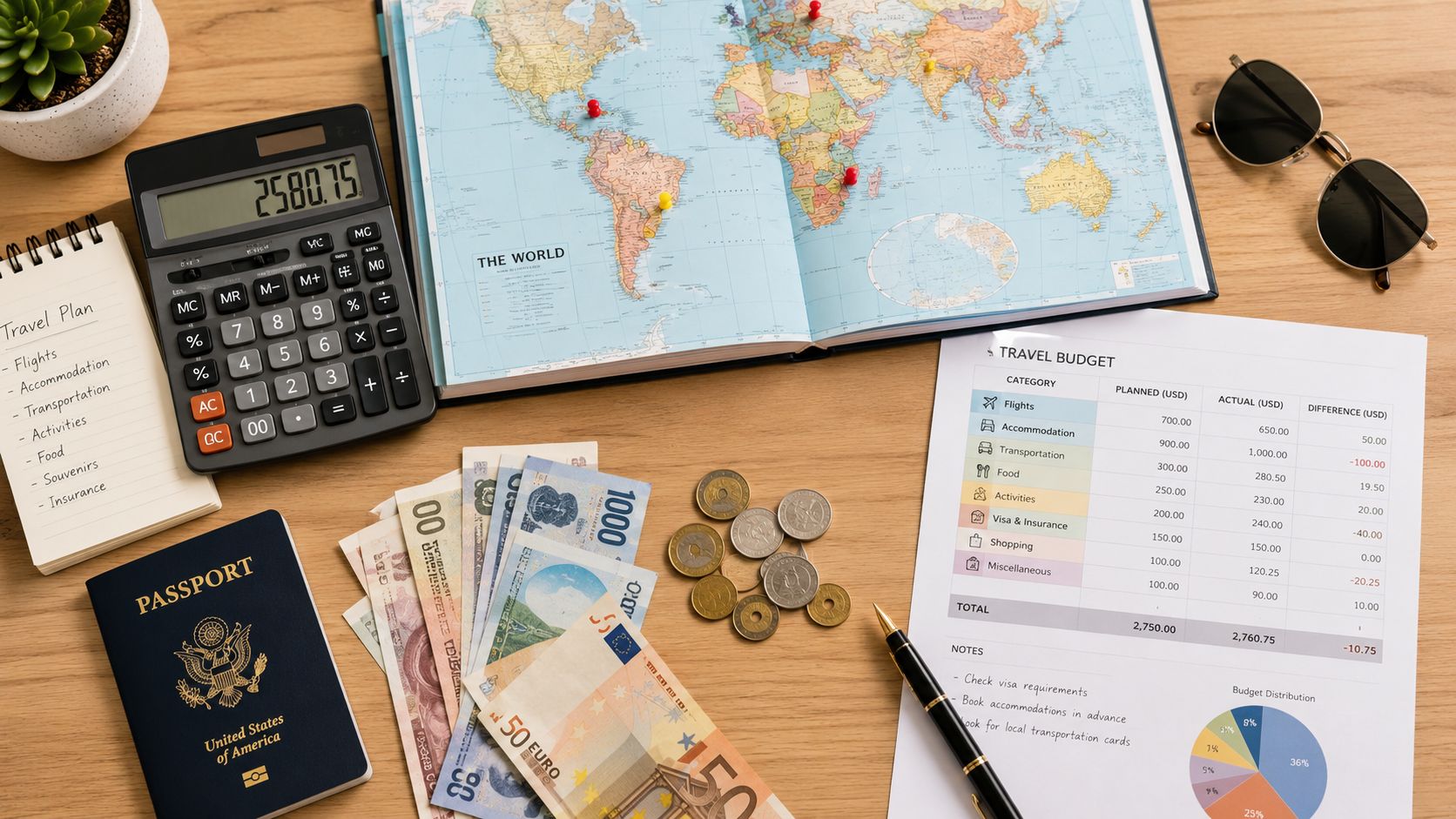
You’re probably staring at a half-open browser with too many tabs. One tab has a dreamy photo of Central Park in bloom. Another has hotel prices that make you wince. A third is telling you May is the perfect time to go, but it isn’t telling you how to make New York in May feel manageable if you care about both your wallet and your peace of mind.
That gap matters.
New York in May can feel like the city at exactly the right temperature. Sidewalks spill back to life, parks wake up, and evenings stretch long enough that you don’t feel rushed. But it’s also the month when careless planning gets expensive fast. Hotels rise, popular areas get busier, and the difference between a smart trip and a stressful one often comes down to a handful of practical choices.
This is the playbook I’d give a friend. Not just where to go, but how to move through the city well. How to save money without feeling deprived. How to plan a solo day that feels expansive instead of exposed. How to use May’s energy without getting swallowed by it.
Your New York City Spring Awakening
New York in May sells a fantasy easily. You step out in the morning and the air finally feels soft. Trees are green again. Central Park looks less like a landmark and more like a local habit. People linger outside. Even a simple coffee walk feels cinematic.
That part is real.
What most guides miss is the second half of the picture. Spring in New York also brings decision fatigue. Should you stay in Manhattan or save by sleeping farther out? Should you stack your days with famous sights, or slow down enough to enjoy the city? Should you book the rooftop reservation, or build your own budget version with takeout and a park bench?
My answer is almost always the same. Choose depth over volume. Build your trip around a few anchor experiences, then leave room for neighborhood wandering, free cultural stops, and weather pivots. That’s where New York becomes memorable instead of exhausting.
If you tend to overplan, May is a good month to experiment with a more intentional pace. The city rewards travelers who treat it less like a checklist and more like a rhythm. If that idea speaks to you, this guide to slow travel is worth reading before you lock in every hour of your itinerary.
For budget-conscious travelers and solo women especially, the goal isn’t to see everything. It’s to build days that feel smart, safe, and satisfying. New York gives you plenty to work with if you know where to look.
The Sweet Spot Weather and Crowd Dynamics
Arrive at 8 a.m. in May and New York gives you a very different city than it does at 2 p.m. The morning can still call for a light jacket. By midafternoon, you may be down to one layer, sitting in a park, and glad you planned an outdoor block before the museums fill up.
According to WeatherSpark’s New York City May climate data, average daily highs rise from 67°F (19°C) to 75°F (24°C) across the month, while lows climb from 51°F (11°C) to 60°F (16°C). Sunrise shifts from 5:54 AM to 5:27 AM, sunset moves from 7:52 PM to 8:20 PM, May averages 14.4 hours of daylight, and the daily chance of precipitation sits at 36%. For trip planning, that is the whole story in one set of numbers. You get long, usable days, moderate temperatures, and enough rain risk to justify a backup plan.
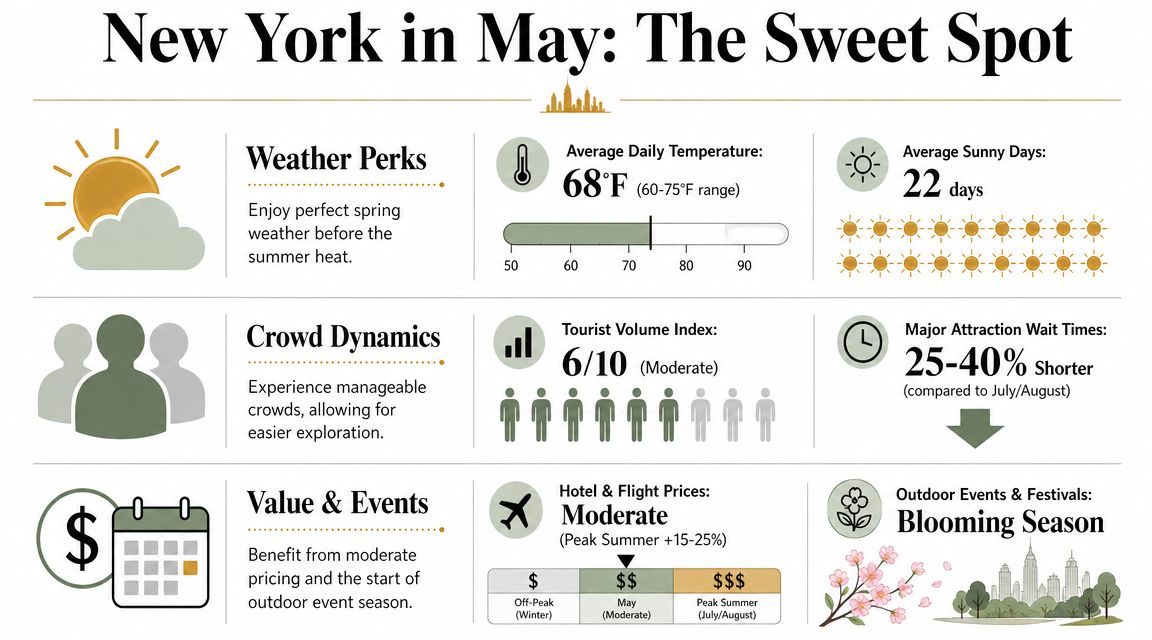
What the weather actually means for your day
For budget travelers, May rewards early starts. Those extra daylight hours give you time to front-load the free parts of the city. Walk the Brooklyn Heights Promenade before brunch crowds build. Spend the late morning in Central Park, along the Hudson River Greenway, or on a downtown ferry route with skyline views that cost far less than an observation deck. Save the paid indoor attraction for rain, fatigue, or the middle of the day when lines are longest outside anyway.
That trade-off matters more now because hotel prices often rise faster than activity costs in spring. A smart May itinerary offsets that by treating parks, waterfronts, street markets, public plazas, and free event programming as real anchors, not filler.
Solo female travelers get another practical advantage here. Longer daylight makes neighborhood exploration easier to time well. It is much more comfortable to browse Greenpoint side streets, walk from the Met to the Upper West Side, or cross back from DUMBO before dark than it is in winter. I still recommend keeping late-night wandering focused on well-trafficked areas, especially if you are staying farther out to save money, but May gives you a wider margin for relaxed daytime exploring.
A solid May formula: one outdoor plan before lunch, one indoor backup nearby, and one evening stop that is easy to skip if the weather turns or you are tired.
The trade-off you need to plan around
Rain is the price of admission.
A wet May day in New York is rarely a total loss, but it can wreck an overstuffed itinerary. The travelers who struggle most are usually the ones zigzagging across boroughs with timed reservations and no neighborhood logic. The city works better in clusters. If you are doing Prospect Park, keep your fallback in Brooklyn. If your morning is around Bryant Park or Midtown, have a museum, bookstore, food hall, or café within a short walk or a quick subway ride.
This is also where gear saves money. Wet feet make people retreat to taxis and overpriced convenience stops fast. Shoes with grip and a jacket that handles a shower let you keep moving. If you want pieces that dry quickly after rain or a sink wash, this guide to quick-dry travel clothes for city trips is useful before you pack.
Why May still feels like the sweet spot
Crowds are real in May, especially around Central Park, SoHo, the High Line, and the big museums. Still, the month usually feels manageable if you avoid the worst timing. Start earlier than the brunch crowd. Visit headline attractions on weekday mornings. Put your wandering time in neighborhoods that offer atmosphere without constant compression, such as Carroll Gardens, the Upper West Side, Morningside Heights, or Greenpoint.
That last point matters for both budget and safety. Hidden-gem neighborhoods are often calmer, cheaper for meals, and more pleasant alone than the busiest tourist zones. The practical rule is simple. Enjoy them by day or early evening, stay aware of your route back, and do not save your longest cross-borough trip for late at night just because the hotel was cheaper there.
May earns its reputation because it gives you room to make good choices. You can spend more time outside, use free city experiences to balance a higher room rate, and explore with less weather stress than summer. If you plan around daylight, neighborhood clusters, and one honest rain backup each day, the month works in your favor.
How to Pack for Four Seasons in One Day
Packing for New York in May isn’t about bringing more. It’s about bringing the right things in combinations that can handle a chilly morning, a warm afternoon, a windy rooftop, and a quick rain shower without forcing you back to your hotel.
The biggest mistake I see is packing for one version of the day. New York rarely gives you that courtesy in spring.
Build around layers, not outfits
Start with a base that feels good if the afternoon warms up. Then add one light layer you can keep on through the morning, and one outer layer that can handle wind or rain. Think in systems, not Instagram looks.
A useful May packing formula looks like this:
- Breathable base pieces: T-shirts, light long sleeves, or easy tops that won’t feel heavy once the city warms up.
- One real middle layer: A cardigan, overshirt, or thin sweater that earns its place.
- A weather layer: A waterproof or water-resistant jacket. This is the piece that saves the day.
If you want clothing that dries quickly after a shower or sink wash, this roundup of quick-dry travel clothes is a practical place to start.
Pack for movement, not photos. New York days are long, and the person who packed the “cute but annoying” layer usually regrets it by lunch.
Shoes make or break the trip
This city punishes bad footwear fast. In May, that’s even more true because you’re likely walking longer thanks to the weather and daylight.
Bring shoes you’ve already broken in. Not “mostly fine.” Not “probably okay.” Thoroughly tested. Sidewalk miles, subway stairs, uneven curbs, wet patches in parks, and long museum floors all hit differently when you’re carrying a tote, navigating solo, or trying to save money by walking instead of ridesharing.
A simple shoe strategy works best:
| Situation | Best choice |
|---|---|
| Long neighborhood days | Broken-in sneakers or supportive walking shoes |
| Light rain | Water-resistant pair with grip |
| Evening out | One compact second pair only if you’ll truly wear it |
What usually doesn’t work is packing multiple style shoes “just in case.” They eat luggage space and still don’t outperform one dependable pair.
The small accessories that do the heavy lifting
May in New York rewards practical extras.
Bring a compact umbrella or rely on a hooded jacket, but don’t skip both. Carry a power bank, because phones burn battery faster when you’re using maps, transit, tickets, and safety apps all day. A reusable water bottle is worth the bag space, especially on long walking days when buying drinks repeatedly adds up.
For solo travelers, I’d add two more things that don’t always make standard packing lists:
- a small crossbody or zip-top bag you can keep close in crowds
- headphones you can remove quickly, because awareness beats convenience when you’re navigating alone
Pack like you expect to adapt. That’s a key spring skill in New York.
May's Can't-Miss Events and Neighborhood Vibes
May is when New York starts acting like itself again outdoors. Streets feel social. Restaurant windows stay open. Parks become gathering places instead of shortcuts. You don’t just visit attractions in this month. You notice how neighborhoods use public space.
That’s what makes New York in May different from a generic city break. The city feels inhabited, not staged.
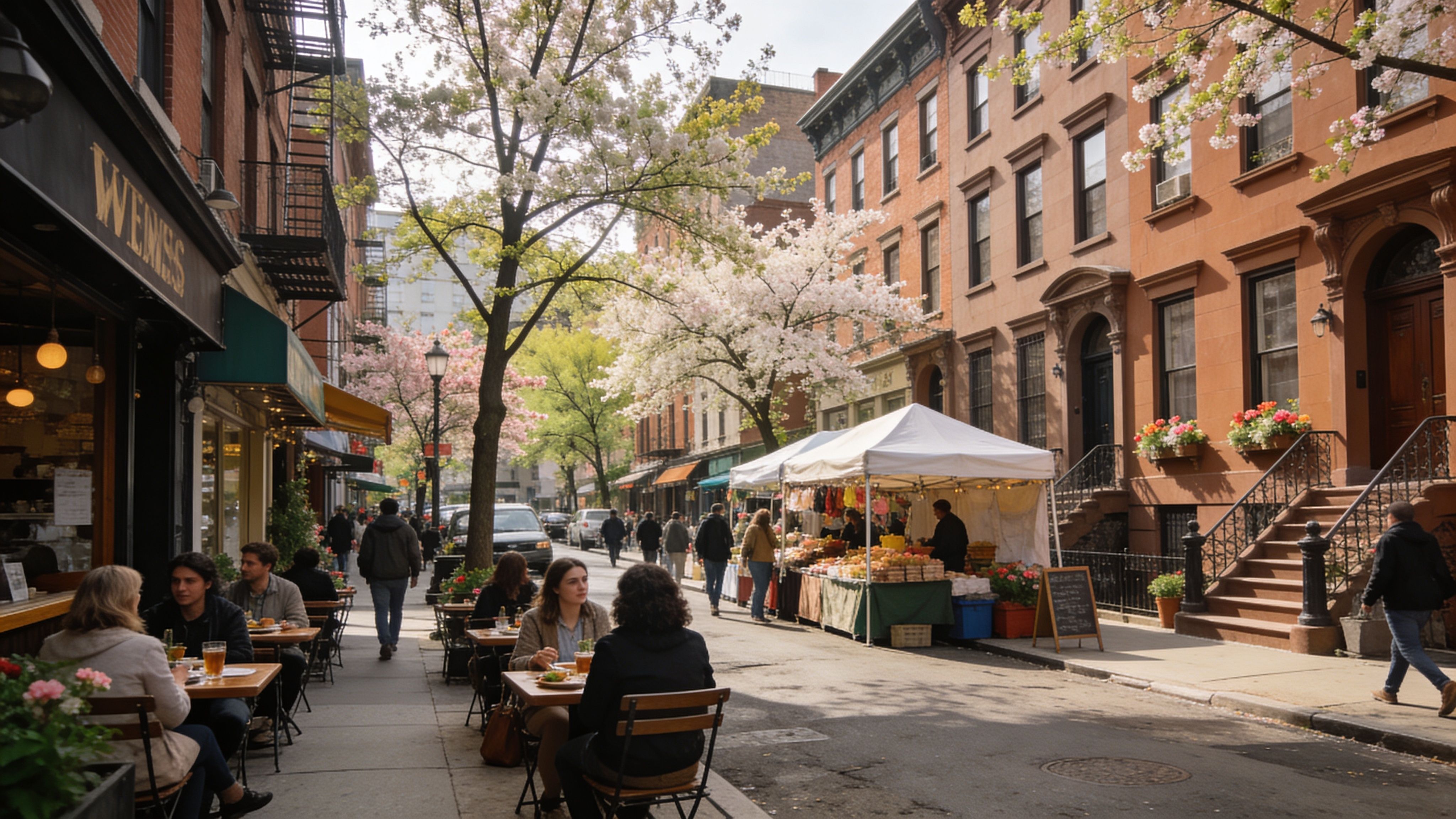
Culture feels layered in May
A lot of the city’s May atmosphere makes more sense when you remember how much New York’s public identity was built through cultural milestones. The New York City timeline notes key moments tied to this season and era, including Victoria Woodhull’s 1872 presidential nomination, plus the openings of the Metropolitan Museum of Art and Central Park. Those aren’t trivia points. They explain why May in New York feels so public-facing. Art, politics, parks, and civic life all spill into one another here.
That history still shows up in how people spend the month. You can start with a museum, pass through a park full of locals, and end up at a ballgame or a neighborhood event without feeling like you changed cities.
Where the city feels best right now
If you want New York in May to feel vivid, choose neighborhoods by mood rather than borough loyalty.
Central Park and the Upper East Side
Central Park earns its reputation in May. The trees fill in, the paths feel alive, and the surrounding blocks give you plenty of options for coffee, museum time, and low-pressure wandering. If you’re trying to save money, this is one of the easiest places to build half a day around walking, people-watching, and a simple picnic.
Pair it with the Met if you want a classic culture day that still leaves room to breathe.
West Village and nearby downtown streets
Spring feels cinematic without trying too hard. Brownstones, corner cafes, small storefronts, and streets that invite wandering all work well in mild weather. It’s a strong solo neighborhood because there’s enough foot traffic to feel comfortable, but enough side streets to feel personal.
What works here is letting yourself drift a little. Pick a few anchors, then leave room for a detour.
Chinatown and Lower Manhattan
This area is one of the best places to eat well without defaulting to expensive reservations. It’s also where New York’s density can feel most electric in May. Streets are active, sidewalks stay busy, and a short walk can take you from historic lanes to civic buildings to bridge views.
For solo travelers, it’s rewarding in daylight and early evening. It asks more awareness later on.
Brooklyn for bloom and breathing room
If Manhattan starts to feel too compressed, head into Brooklyn for a different pace. Park-heavy areas and residential blocks can make a New York trip feel more local, especially in spring. I’d pick it for outdoor time, neighborhood food, and fewer hours underground on the subway.
Some of the best May days in New York come from combining one major sight with one neighborhood that wasn’t on your original list.
Events worth shaping a trip around
May also has a festive edge. The city’s cultural calendar fills out, and even if you don’t build your trip around one event, you’ll feel the seasonal lift.
A few strong bets:
- Baseball games at Yankee Stadium or Citi Field if you want a lively evening with a built-in crowd rhythm
- Cinco de Mayo celebrations for music and food
- Outdoor dining and rooftop season, which feels less like a luxury in May than in peak summer because the weather is more forgiving
- Arts-heavy days anchored by museums and neighborhood galleries, especially when you want a rain backup
The mistake is trying to attend everything. May works best when you choose one or two citywide experiences, then spend the rest of your time in places where local life is already happening.
Three Perfect Days Curated Itineraries
You wake up in a hotel room that cost more than you expected, check the forecast, and realize you have one clear day, one mixed day, and one evening you do not want to spend figuring out where feels comfortable alone. That is New York in May for a lot of travelers. The best three-day plan is the one that protects your budget, keeps your energy steady, and uses the city’s free spring advantages well.

Lodging is usually the pressure point in May. As noted earlier, GetYourGuide reports that hotel rates often run higher than in April. That is why I build these days around free outdoor time, neighborhood clusters, and one paid highlight at most. If you save $25 to $60 a day on food, transit choices, and no-regret free activities, the room rate stings a lot less.
If you like city plans built around travel style rather than a checklist of landmarks, this guide to 3 days in New Orleans for different travel personalities uses a similar approach.
Day one for the budget explorer
Use your first day to get a lot of New York without paying admission every few hours.
Start with a deli breakfast near where you are staying, then head to Central Park early. Morning gives you open paths, good people-watching, and enough quiet to get oriented before the city speeds up. I would rather spend money later on one dinner I care about than on a $28 brunch that burns both cash and time.
Keep the middle of the day flexible. If the weather holds, stay outside and move on foot through one connected area instead of hopping all over Manhattan. Good free options include:
- a long park walk with a coffee stop
- bookstore browsing
- public plazas and street performers
- waterfront paths
- neighborhood food markets where lunch can be assembled cheaply
This is also the day to use free programming to offset May hotel prices. Bryant Park, Hudson River Park, public library branches, community arts spaces, and neighborhood conservancies often post seasonal events that cost nothing. Even one free concert, reading, or outdoor class can replace a pricey evening activity.
For dinner, choose counter service or an early special in the same area you already explored. Then give yourself one view-based finish, such as a bridge walk, riverside sunset, or lit-up avenue, instead of paying for another attraction.
Why this works: your biggest May expense is often the bed, not the day. A smart first day keeps the rest of the trip affordable.
Day two for the solo adventurer
Solo travel goes better in New York when the route is clear, the timing is smart, and the neighborhoods match your comfort level.
Start in a place that is easy to read on foot, with plenty of daytime foot traffic and simple transit options back to your hotel. The West Village, Upper West Side, and the busier edges around Central Park are strong picks. Get breakfast at a cafe with counter seating or outdoor tables. It is easier to settle in solo there than in a crowded brunch room where everyone is waiting on a larger party.
Use late morning for one famous stop. After that, shift to a smaller-area wander where you can move at your own pace. Solo travelers usually enjoy New York more when the day has two anchor points, not six.
A few places are worth timing carefully. Doyers Street is fun and photogenic, but I would go in daylight as part of Chinatown, not as an isolated late stop. Pier 57 Rooftop Park is better before dusk if you are traveling alone and want to keep the atmosphere lively around you. GetYourGuide’s analysis of past NYPD reports suggests petty theft rises in busier spring conditions, which fits what experienced travelers already know. Crowded transit hubs, scenic gathering points, and distracted-photo moments are where awareness matters most.
My solo playbook is simple:
- Cluster your stops so you are not making tired decisions across multiple boroughs late in the day.
- Keep your bag zipped and worn close in crowded areas.
- Charge your phone before dinner and download offline maps.
- Share your rough evening plan with someone.
- Head back before you feel drained, not after.
That last point matters. Confidence drops fast once you are hungry, overstimulated, or trying to improvise after dark.
An early solo dinner is often the sweet spot. Staff have more time, tables are easier, and the ride or walk back feels simpler.
Curiosity is a strength in New York. Timing is what makes it comfortable.
Day three for the photographer’s trail
May gives photographers long light, greener streets, and softer mornings than summer. Use that.
Start early at a bridge, waterfront, or broad avenue before the sidewalks fill in. Then spend late morning in a neighborhood with texture instead of chasing only skyline shots. In spring, stoops, flower stands, brownstone blocks, park edges, and street corners often say more than another observation deck photo.
A practical rhythm looks like this:
| Time of day | Best type of setting | Why it works |
|---|---|---|
| Early morning | Bridges, waterfronts, quieter avenues | Softer light and fewer people in frame |
| Late morning | Parks and residential blocks | Spring color improves otherwise hard urban lines |
| Afternoon | Museums, arcades, indoor markets | Good backup if rain arrives |
| Golden hour | Elevated paths, rooftops, west-facing streets | Warmer light and longer shadows |
Do less, but stay longer. I get better photos in New York when I commit to one area for a full light window rather than rushing between famous spots.
If you want a contrast day without another hotel night, consider a simple rail outing up the Hudson. A same-day trip can widen the trip cheaply if you pack light and return by evening. That approach works well for budget travelers who want a breather from Manhattan prices without adding another accommodation charge.
Why this works: strong city photos usually come from patience, not volume.
How to choose the right version of these days
Pick the budget day if your room rate already ate into your food and activity money.
Pick the solo day if feeling comfortable and in control matters more than fitting in every headline sight.
Pick the photographer day if you care more about atmosphere, light, and neighborhood texture than ticketed attractions.
Or combine them. My favorite May trips usually do.
Smart Booking and Money-Saving Secrets
If you want New York in May to stay affordable, win before you arrive. Once you’re in the city, spontaneous spending compounds quickly. A few “why not” choices can turn a carefully planned trip into a very expensive one.
The fix isn’t deprivation. It’s structure.
Spend on location or spend on transit
This is the first real trade-off. If you pay more to stay central, you usually save time and decision fatigue. If you stay farther out, you may save on lodging but spend more energy moving around.
Neither choice is wrong. What doesn’t work is booking a cheaper place with no plan for how you’ll use the saved money or extra transit time. If you stay farther from the core, commit to clustering your days by area. Don’t bounce from uptown Manhattan to Brooklyn to lower Manhattan and back just because each stop looked good in isolation.
Book the expensive pieces first
For a May trip, treat flights and lodging as the two pieces that deserve early attention. If you wait too long, you limit your choices and often end up paying more for less-convenient locations.
This guide on the best time to book flights is useful if you want a planning framework rather than guesswork.
After those two pieces are set, shift your focus to daily savings. In New York, those usually come from:
- public transit over rideshares
- takeaway breakfasts over restaurant brunches
- one paid highlight per day instead of several
- free outdoor time built into the itinerary
- museum timing and low-cost event planning
Public transit is the biggest saver
The subway and buses do more for a New York budget than almost anything else. They also give solo travelers more predictability than constantly weighing surge prices, pickup points, or late-night decisions.
The strongest habit is simple. Use transit for your long jumps and walking for your neighborhood exploration. That keeps costs down and helps you experience the city properly rather than only from inside vehicles.
A budget-smart day often looks like this:
| Expense category | Better May choice | Why |
|---|---|---|
| Breakfast | Deli, bakery, market pickup | Lower cost, faster start |
| Midday movement | Subway or bus | Keeps neighborhoods connected cheaply |
| Lunch | Counter service or picnic | Easier on budget and schedule |
| Entertainment | Free event or park time | Offsets rising accommodation costs |
| Evening | One intentional splurge | Feels satisfying without excess |
Don’t let food quietly wreck the budget
New York can drain a food budget through small decisions. Coffee, pastry, snack, lunch, cocktail, late-night dessert. None seems outrageous alone.
I’d use a simple rule. Pick one food splurge per day, not five mini-splurges disguised as spontaneity.
That could mean:
- a memorable solo dinner
- a classic New York bagel and smoked fish breakfast
- one rooftop drink
- one ballpark meal if you’re going to a game
Everything else can be practical and still enjoyable. Food halls, Chinatown spots, delis, and picnic supplies let you eat well while protecting the rest of the trip.
Cheap in New York doesn’t have to mean joyless. It usually means you’re paying for what matters and ignoring what doesn’t.
Navigating Confidently as a Solo and Sustainable Traveler
Solo travel in New York isn’t about acting fearless. It’s about reducing friction. The more you simplify your route, your gear, and your decision-making, the more confident you’ll feel.
That’s especially true in May, when the city is active, social, and full of distractions. Good solo habits help you enjoy that energy instead of being pulled around by it.
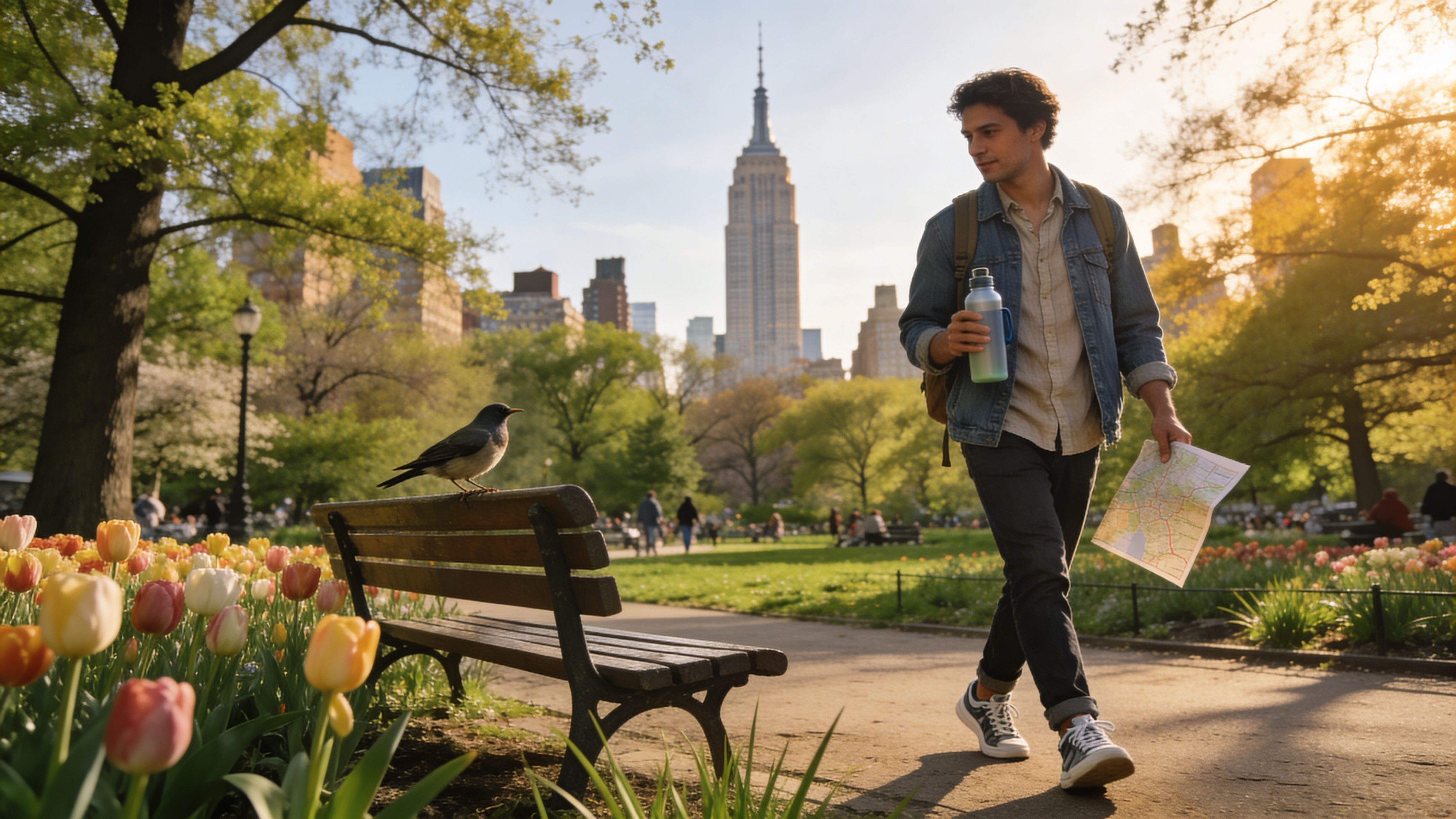
A solo safety checklist that actually helps
Skip vague advice and focus on habits you’ll really use.
- Share your broad plan: Send a friend your accommodation details and the neighborhoods you expect to be in that day.
- Use practical apps: Citizen can help with situational awareness, and offline maps are useful if service gets patchy underground.
- Keep your phone alive: A power bank matters more than a second lipstick or an extra camera accessory.
- Stay bag-aware: Use zip closures, wear your bag across your body, and avoid digging through it in dense crowds.
- Watch your timing: Daylight and early evening usually feel easier than edge-of-night transitions in unfamiliar areas.
- Trust friction: If a street, train car, or route feels off, change it. You don’t need a dramatic reason.
Solo confidence stems from not pretending nothing could go wrong, but from setting yourself up so small issues stay small.
Sustainable travel works well in New York
New York is one of the easier big cities to visit sustainably because you don’t need a car, and some of the best experiences are naturally low-impact. Walking, public transit, park time, local markets, and neighborhood businesses all fit the city well.
If sustainability matters to you, keep it practical:
- walk when distances make sense
- use public transit for longer jumps
- carry a reusable water bottle
- support neighborhood cafes and shops instead of only chains
- spend time in parks and public spaces without treating them as disposable backdrops
For more ideas that travel beyond this trip, these sustainable travel tips are worth bookmarking.
Slow down to see more
One of the best sustainable choices in New York is also one of the safest and cheapest. Stay longer in fewer places.
Spend a full stretch in one park. Sit through a coffee instead of carrying it while scrolling maps. Walk a neighborhood far enough to notice where people shop, rest, and meet. Buy lunch from a local spot and eat it nearby rather than hauling yourself across town for a trend.
That kind of travel reduces waste, cuts transportation costs, and often leads to better memories.
New York rewards attention. The traveler who slows down usually sees more than the one chasing ten landmarks in a day.
The City is Waiting
A good May trip to New York isn’t built on perfect timing or unlimited money. It’s built on smart choices. Pack for changing conditions. Use the long days well. Spend carefully where it counts. Let free spaces and neighborhood energy carry more of the trip than expensive bookings do.
That approach works especially well if you’re traveling solo or trying to keep costs under control. You don’t need to force the city into a rigid plan. You need a few strong anchors, a little weather flexibility, and the confidence to leave space for what New York does best on its own.
New York in May feels alive in a way that’s hard to fake. Parks are green, culture spills outdoors, and the city gives you long daylight hours to wander, adjust, and discover your own version of it.
Book the trip. Pack the layers. Build the smarter itinerary.
Then let the city meet you halfway.
If you want more practical trip planning like this, visit Travel Talk Today . It’s a solid resource for affordable itineraries, solo travel confidence, and thoughtful ways to explore more meaningfully.