Most advice about Paris in January stops at two selling points: it's quieter, and it's cheaper. That's only half true.
Yes, you can often find better value than in peak season. Yes, the city feels less crushed by tourism. But budget travelers run into a different problem in winter. You save on the headline costs, then find yourself spending more on staying warm, ducking into cafés, taking extra transport, and relying on indoor attractions when the weather turns gray. Paris in January can be a smart trip. It just isn't automatically a cheap one.
That's why I like this month for the right traveler. It rewards people who move slower, plan tighter, and don't expect a long, sunny sightseeing day. If you want a version of Paris that feels more local, more reflective, and less performative, January can be excellent. If you want nonstop outdoor wandering from morning to night, it can feel limiting fast.
The sweet spot is knowing how to work with winter instead of fighting it. That means building days around light, warmth, neighborhood clusters, and a realistic spending plan. Done well, Paris in January feels atmospheric, cultured, and surprisingly manageable on a budget. Done badly, it becomes a string of cold walks and expensive refuge stops.
Is Paris in January a Dream or a Dud
January rewards a specific kind of traveler. If you measure a Paris trip by long sunny walks, picnic weather, and packed days outdoors, this month will feel restrictive. If you care more about museums without crushing lines, slower neighborhood time, and a version of the city that feels less staged for visitors, January can be one of the smartest times to go.
The budget case is real, but it needs honesty. Lower room rates and lighter crowds help. So do winter sales and the quieter stretch after the holiday rush. But the savings are not automatic. Short daylight, damp weather, and the temptation to keep buying warmth in the form of coffee, taxis, and extra indoor stops can eat into a tight budget fast. January works best for travelers who plan their days with discipline instead of treating the city like a summer checklist.
That trade-off is exactly why I rate January higher than many guides do. It gives budget travelers access to a calmer Paris, but only if they build the trip around what winter does well. Think covered passages, museum-heavy afternoons, lunch menus in local bistros, and neighborhoods that still feel lived-in once the holiday crowds thin out. Used well, the season cuts noise and cost at the same time.
January also has a mood that is harder to get in spring or fall. Place de la Concorde, the former Place de la Révolution, feels less like a photo stop and more like a setting with weight when the sky is gray and the city moves at winter speed. The execution of Louis XVI on 21 January 1793 happened there, part of the broader French political upheaval, and the Bastille still anchors the story of that era, as summarized in this history of Paris and its landmarks from that period. You do not need to be a history specialist to feel that side of Paris more clearly in winter.
Paris in January pays off when you stop trying to consume the city and start using it well.
So, dream or dud? Dream for travelers who want atmosphere, structure, and better value than high season usually allows. Dud for anyone expecting summer energy at a winter price.
The Reality of a Parisian Winter
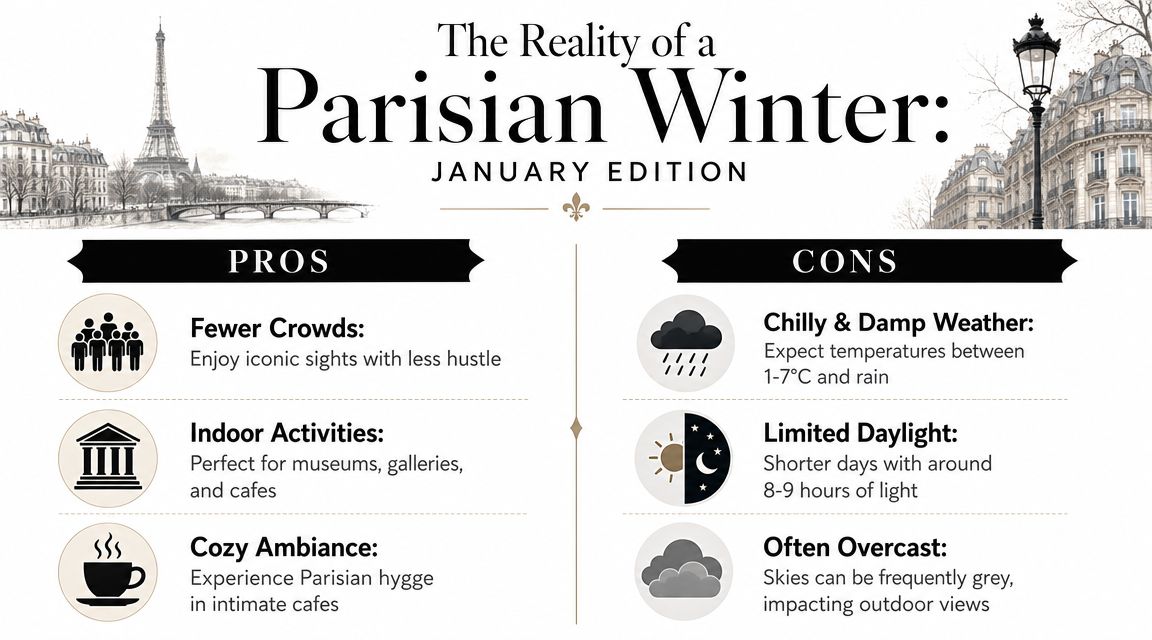
January in Paris is less about cold than friction. The city can be beautiful, calm, and surprisingly manageable on a tighter budget, but winter adds small inconveniences that pile up fast if you plan the trip like it is April.
What the weather actually feels like
Paris in January usually stays cool rather than brutally cold. Average daily highs are around 45°F (7°C) and lows around 37°F (3°C), with temperatures rarely dropping below 32°F or rising above 54°F, based on Weather Spark's January averages for Paris.
What catches budget travelers off guard is the damp. Cold air is manageable. Wet socks, slippery sidewalks, and a jacket that never quite dries are what shorten the day and push people into extra café stops they did not plan to pay for.
Pack for moisture first. A waterproof shell, shoes with decent grip, and one warm layer you can add or remove will serve you better than a bulky coat that overheats you on the Metro and still leaves your cuffs wet in the rain.
I also plan winter days in loops, not long lines across the map. That matters in Paris. If the weather turns halfway through the afternoon, being close to a covered passage, church, museum, or affordable lunch spot saves money and morale.
Short days change the value of your itinerary
The harder part of January is not temperature. It is the limited useful daylight.
Outdoor plans have a shorter window, gray skies flatten building details, and long scenic walks stop feeling romantic once your hands go numb. Many winter itineraries often fail under such conditions. They copy a spring schedule and tack on a coat.
A better approach is simple:
| Winter constraint | Smarter response |
|---|---|
| Dim morning light | Start with a neighborhood walk after breakfast, not at dawn |
| Early darkness | Put outdoor viewpoints and river walks in the middle of the day |
| Rain that comes and goes | Keep one indoor backup in the same area |
| Cold that builds over hours | Schedule a proper sit-down lunch, not just a pastry stop |
That last point saves more money than people expect. A fixed-price lunch menu can cost less than two separate warm-up breaks plus snacks. Anyone trying to cut winter trip costs should build days this way and use a few budget travel hacks for city breaks before arrival.
Winter crowds are lighter, but the city is not empty
January gives you more breathing room, especially in major sightseeing areas and on neighborhood streets outside peak hours. That has genuine value. You spend less time queueing, less time weaving through tour groups, and more time seeing the city.
Still, quieter does not mean effortless. Some places run on shorter winter schedules. A rainy afternoon can also funnel a lot of people indoors at once, which is why flexible planning matters more than chasing a perfect list.
Paris feels more local in January because daily life is easier to notice. Bakers are serving regular customers. Covered arcades feel used rather than staged. Even famous squares slow down enough for you to study them instead of just photographing them.
A quick test before you book
January suits a specific kind of traveler.
It works well for people who enjoy museums, old streets, long lunches, and a city that reveals itself gradually. It works less well for travelers who need sunshine, late evenings outdoors, and all-day wandering without paying to warm up.
Ask yourself four practical questions:
- Do gray skies bother you after two or three days?
- Can you build each day around weather and still enjoy it?
- Will you use quieter museums and neighborhoods, or just notice what is closed and dark?
- Are you willing to spend a little on the right gear to avoid spending more on bad winter decisions?
If those answers are mostly yes, January can be one of the smartest times to see Paris on a budget. If not, a shoulder-season trip may give better overall value, even at a higher room rate.
Your Guide to a Truly Budget-Friendly Trip
Cheap headline prices don't automatically create a cheap trip. That's the central mistake people make with Paris in January.
Many guides promote January as the lowest-cost month, but a more useful analysis asks whether lower hotel rates are offset by hidden winter spending, especially more indoor attraction costs and more transit use because of cold weather and early darkness, as argued in this budget-value critique of January in Paris. That's the right question for backpackers, solo travelers, and anyone trying to keep total trip cost under control.
Where budgets quietly leak in winter
In warmer months, you can spend half a day walking neighborhoods, sitting in parks, or lingering on riverbanks without paying for much. January changes that math.
Common winter budget traps include:
- Extra café stops because you need heat, seating, and a bathroom more than a coffee.
- More transport use when rain or darkness makes long walks less appealing.
- Indoor attraction stacking because outdoor plans look less tempting by midday.
- Small shopping splurges during winter sales when “just browsing” turns expensive.
None of these are wrong. They just need to be planned for.
A realistic daily budget frame
Use a range, not a fantasy number. Build your day around fixed categories, then leave room for weather-driven spending.
| Expense Category | Low End | High End |
|---|---|---|
| Accommodation | Budget bed in a hostel or simple room | Well-located private budget hotel |
| Transport | Mostly walking with limited public transport | Frequent metro or occasional taxi use |
| Food | Bakery breakfast, simple lunch, grocery dinner | Café breaks plus one sit-down meal |
| Sightseeing | Free or low-cost self-guided days | Paid museums and indoor attractions |
| Weather buffer | Minimal | Added spending for rain, warmth, or convenience |
That framework matters more than chasing a single number. January trips become affordable when you reduce decision fatigue. Stay in a neighborhood that lets you walk to several sights. Pair one paid indoor activity with free wandering. Buy bakery food before you're hungry and cold enough to make expensive choices.
What works better than bargain hunting
I've found winter savings come less from finding the absolute cheapest booking and more from removing costly friction.
Try this approach:
- Stay central enough to cut transport. A slightly higher room rate can save money if you walk more and avoid frequent rides.
- Build each day by area. Don't crisscross Paris in bad weather.
- Use lunch strategically. A fuller midday meal often stretches the day better than multiple emergency snack stops.
- Keep one low-cost indoor backup ready. That keeps you from panic-buying your itinerary when it rains.
For broader planning ideas, these budget travel hacks for stretching a trip further fit Paris especially well in winter.
The cheapest January trip isn't the one with the lowest nightly rate. It's the one where cold, rain, and darkness don't keep forcing you to spend.
Best value versus best price
There's a difference between “cheapest month” and “best value month.” January often wins on price. It doesn't always win on value for every traveler.
If you love museums, old streets, seasonal food, and quiet mornings, the value can be excellent. If you need long days outdoors to feel satisfied, the lower costs may not compensate for the reduced flexibility. Budget travel isn't about spending the least. It's about spending where the trip still feels good.
Crafting Your Perfect Winter Itinerary
A good January itinerary in Paris is built around heat, daylight, and walking distance. Travelers who try to do Paris the same way they would in May usually end up tired, wet, and spending more than planned on transport, coffee stops, and last-minute indoor fixes.
January still has useful seasonal hooks, but they are short-lived and timing matters. Early in the month, you may catch the last of the holiday atmosphere. Bakeries roll out galette des rois around Epiphany. Winter sales also shape the rhythm of the city once they begin. Use those as bonuses, not as the whole reason for the trip.
A one-day version that doesn't feel rushed
For one day, keep the plan tight and local. One outdoor priority is enough. Add one indoor anchor, a proper lunch, and a neighborhood worth wandering after dark.
A winter day that works usually looks like this:
- Start outside with purpose. Go early to the one big view or monument you care about most.
- Move indoors before your energy drops. A museum, church, covered passage, or department store saves the middle of the day.
- Take a real lunch break. In January, sitting down for an hour often costs less than grazing all afternoon.
- Use late afternoon for browsing. Arcades, bookshops, food streets, and small shops suit winter better than long scenic walks.
- End near your base. Evening feels better when you are not crossing the city in the cold.
That structure gives you a day with shape instead of a checklist.
A two-day plan with mood and variety
With two days, split the trip by pace rather than by famous sights. Make one day classic and one day personal.
Day one should cover the Paris you came to see. Stay central. Walk a manageable loop through historic areas, then spend the coldest hours indoors. If you are still deciding on a base, this guide on where to stay in Paris by neighborhood and travel style helps cut long winter commutes that drain both time and money.
Day two should slow down. Pick one neighborhood with texture and stay there. A market street, a cluster of cafés, a few bakeries, a church, a passage, maybe one small museum. January rewards that kind of focus because you spend less time in transit and notice more.
Themed days that fit January best
The revolutionary history walk
Cold weather suits Paris's harder history. Place de la Concorde feels different when you remember what happened there during the Revolution. The city looks more severe in winter, and that helps this theme land.
Build the day around a few meaningful stops rather than every related landmark. Read plaques. Step into churches. Walk slowly enough to connect the spaces. It is cheaper than stacking ticketed attractions, and in January it often feels more memorable.
The cozy reader's day
This is one of the smartest low-cost winter itineraries in Paris. Start with a bakery. Claim a café table for an hour with a book or notebook. Move on to a passage, a museum, or an old department store. Stop again later for tea or hot chocolate instead of forcing another long walk.
I recommend this kind of day to budget travelers for a reason. You spend on a few high-pleasure stops and avoid the nickel-and-dime costs that show up when you are cold and wandering without a plan.
The January traditions day
Seasonal food gives January more shape than many guides admit. Around Epiphany, bakeries offer galette des rois, and trying one is an easy way to give the day a local rhythm. Early January can still feel festive. Later in the month, the sales change the mood and bring more locals into shopping streets.
That shift matters. Paris in January is not one experience from start to finish. The first week and the third week can feel like different trips.
What to do for three to five days
Extra days should add recovery room, not just more landmarks.
A strong winter sequence looks like this:
- Day 1 for orientation and one or two major sights
- Day 2 for a museum-focused day in a compact area
- Day 3 for passages, cafés, shops, and slower neighborhood time
- Day 4 for a theme day such as history, food, or a market district
- Day 5 for weather recovery, repeats, or a half-day trip with an easy return
That final flexible day often saves the trip. Rain, closures, and low energy hit harder in January than many first-time visitors expect. Leave room to swap things around without feeling that the whole plan has gone wrong.
Best use of a January afternoon: choose one arrondissement, one indoor anchor, one bakery, and one café, then stay in that zone.
What doesn't work
January exposes bad planning fast.
These are the mistakes I see most often:
- Stacking outdoor monuments back-to-back
- Treating evening as prime sightseeing time
- Booking every hour before checking weather and opening days
- Saving indoor stops for emergencies
- Crossing the city for single cheap deals that are not worth the transit time
The best winter itineraries are not the busiest ones. They are the ones that keep you warm enough, fed enough, and close enough to your next stop that the city still feels generous by day three.
How to Photograph Paris in Low Winter Light
January is not the month for postcard Paris. It is often better for something more interesting.
Winter strips the city down. You get softer contrast, wet pavement, early streetlamps, and fewer people blocking your frame. The trade-off is obvious. Light disappears fast, and if you waste the bright part of the day on transit or lunch, you lose your best shooting window.
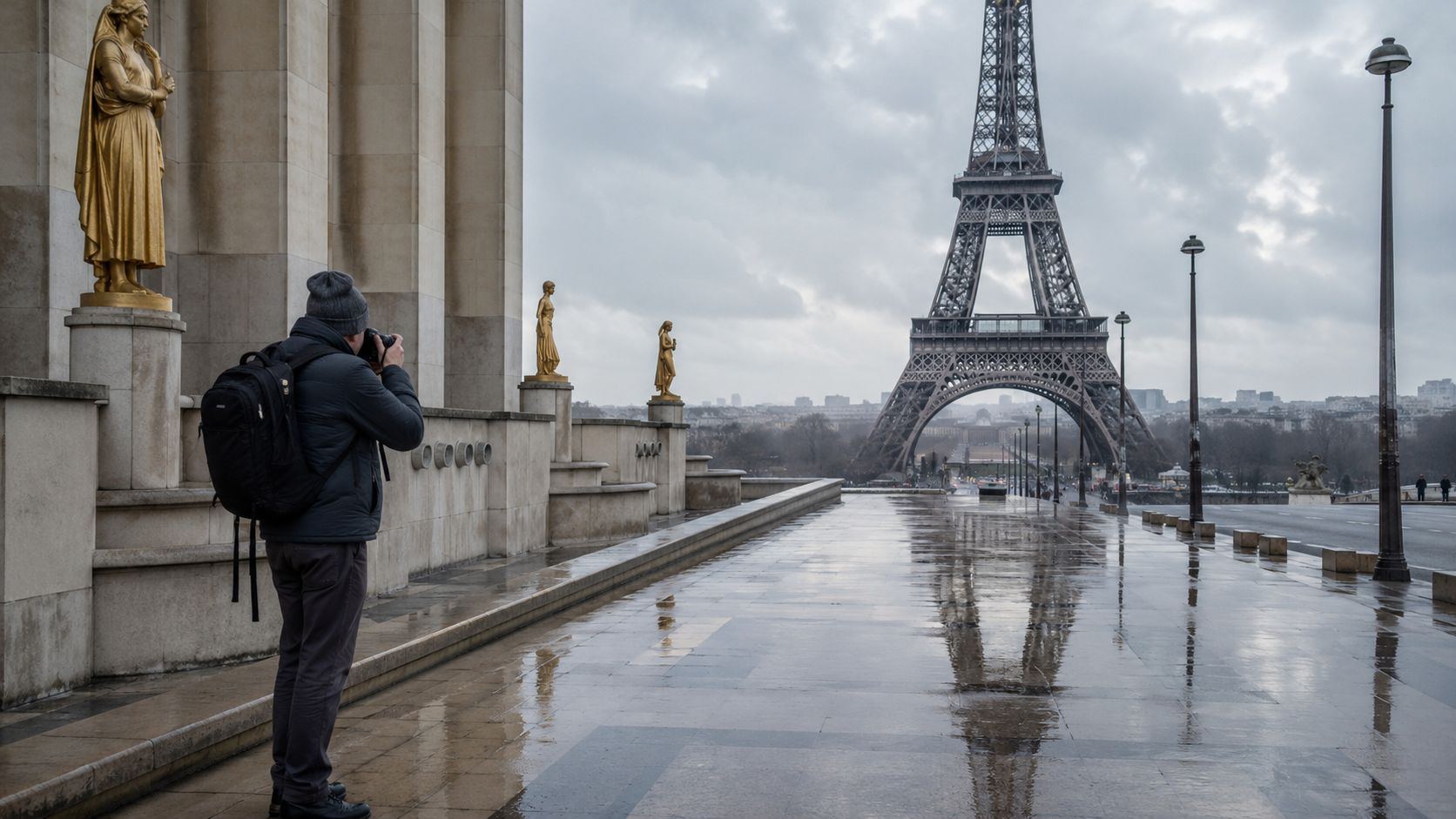
Use January for mood, not postcard color
Gray skies flatten big skyline shots. They also make smaller scenes look better. Café windows glow more warmly. Bridges pick up mist and depth. Rain gives the streets reflections that summer rarely does.
The best winter subjects are usually close, textured, and a little sheltered:
- Rain-slicked streets with reflections from lamps and traffic
- Cafés, bookshops, and window scenes where warm interiors contrast with the cold outside
- Covered passages where filtered light is easier to work with
- Monuments in fog or drizzle when atmosphere matters more than sharp blue sky
- Details such as doors, signs, pastries, Metro entrances, and booksellers along the Seine
This is a key January advantage for budget travelers with a phone or a modest camera. You do not need perfect weather or expensive gear to get memorable images. You need timing, a compact route, and realistic expectations.
Plan your photo stops around daylight
In winter, the route matters more than the camera.
Start with the outdoor view you care about most, early. Save museums, passages, department stores, and long café breaks for the dimmest stretch of the day. Then head back outside for the period when the sky turns blue-gray and the streetlights come on.
A practical rhythm looks like this:
- Morning outdoors for riverbanks, bridges, courtyards, and monument views
- Midday indoors for museums, arcades, cafés, and shop interiors
- Late afternoon on smaller streets where reflections and window light do the work
If you want to tighten your technique before the trip, these travel photography techniques for low light and city scenes are a useful refresher.
Small habits that save winter shots
Low winter light exposes sloppy habits fast. I keep the shooting plan simple.
- Stay in one area longer. Crossing Paris for one photo burns daylight and transit money.
- Shoot short sessions. Cold hands and damp weather wear you down faster than expected.
- Use shelter on purpose. Arcades, café awnings, and museum courtyards let you keep shooting when rain starts.
- Expose for highlights. Bright windows and lamps blow out easily against dark streets.
- Clean your lens often. Drizzle and condensation ruin more shots than low light does.
Phone photographers should watch for another trade-off. Night mode helps, but moving people and buses can smear the frame. Brace the phone against a railing, doorway, or lamppost when possible, and take two or three versions of the same scene.
The right mindset for January photos
Do not chase summer images in winter. January rewards restraint, texture, and atmosphere.
Look for glow, reflection, steam, silhouettes, and stone after rain. Those are the frames that usually feel like Paris in January, not the wide sunny monument shot that belongs to another season.
The Art of Packing for a Parisian Winter
Bad packing turns Paris in January into a test of endurance. Smart packing turns it into a comfortable walking trip.
The key is not packing heavier. It's packing smarter. January in Paris calls for a layering system that handles cool air, damp conditions, and frequent transitions between outdoors and heated interiors.
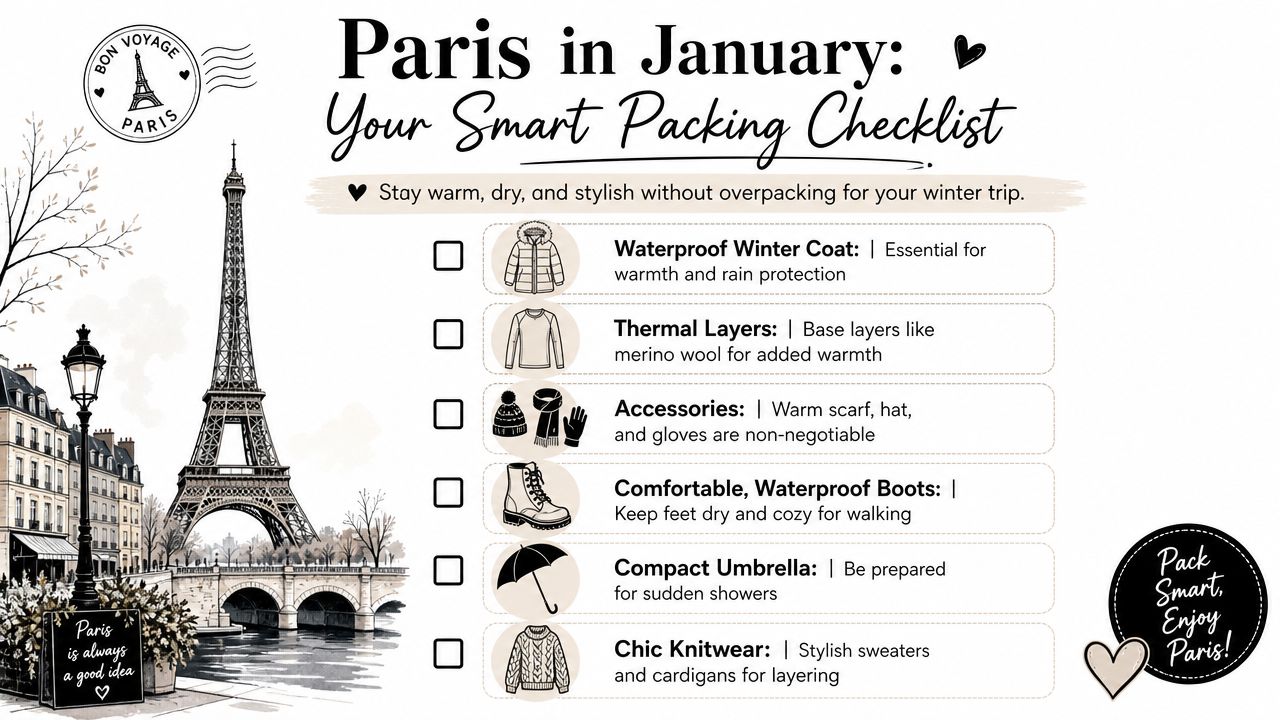
Build your outfit from the inside out
Start with a thin base layer that adds warmth without bulk. Merino wool is especially useful because it regulates temperature well and doesn't take much room in a bag. Over that, wear a sweater or knit you can remove indoors.
The outer layer matters most. A water-resistant or waterproof coat does more work than a purely stylish wool coat if rain shows up. If you can combine warmth and water protection in one piece, even better.
What earns space in your bag
A practical January packing list looks like this:
- Waterproof coat that works for daily walking
- Thermal or merino base layers for flexible warmth
- Knitwear that layers easily
- Comfortable waterproof boots or shoes with grip
- Scarf, gloves, and hat for exposed mornings and evenings
- Compact umbrella for passing showers
If you're packing for carry-on travel, this backpacking essentials checklist for efficient, versatile packing is a useful companion.
What not to bring
This matters just as much as what to pack.
Skip the items that only work in one scenario. Thin fashion sneakers can fail fast in wet weather. Heavy outfits that can't layer become annoying on metro rides and in museums. Clothes that only suit dinner but not daytime walking rarely justify the luggage space on a winter city break.
A few things I'd leave out unless you have a very specific reason:
- Shoes that aren't weather-resistant
- Bulky coats with no layering flexibility
- Too many “nice” outfits
- Anything that assumes dry pavements all day
Pack for repeated city walking, not for a single perfect photo.
Style still matters, but function wins
Paris doesn't require a costume. Clean, simple layers work well. Neutral sweaters, a good scarf, dark trousers or jeans, and practical boots will fit in almost anywhere.
You're not trying to look like a local stereotype. You're trying to stay comfortable enough to enjoy the city from morning to night. In winter, that's the more stylish move anyway.
A Guide for Safe and Confident Solo Travel
Paris in January can be excellent for solo travel because the city invites independence. A quiet museum, a café table for one, an evening walk through a well-lit central area, a self-guided history route. None of that feels out of place here.
Winter does change the logistics. Darkness arrives earlier, so solo travelers need to think about route choice sooner in the day. A simple habit helps a lot: decide before leaving your afternoon stop how you're getting back, especially if rain starts or the temperature drops.
For many solo women, confidence comes from reducing avoidable friction. Choose accommodations in an area where you'll feel comfortable returning in the evening. Use busy, well-trafficked streets after dark. If a walk feels too long in cold weather, take the easier transport option and call it money well spent. For broader preparation, these solo travel safety tips for confident independent trips are worth reviewing before you go.
A solo January day can provide great satisfaction when it has structure. Start with one clear destination, then allow room for drift. Join a walking tour if you want company early in the trip. Spend your independent hours in museums, churches, covered passages, and cafés where being alone feels natural, not awkward.
There's also something powerful about doing the city's historical routes solo in winter. Standing in Place de la Concorde with the knowledge that Louis XVI was executed there on 21 January 1793 changes the atmosphere. Paris feels less like a backdrop and more like a place that has survived enormous political and human upheaval. In that setting, solo travel can feel reflective rather than lonely.
The trick is simple. Stay aware, stay warm, and don't confuse independence with having to do everything the hard way. Paris rewards solo travelers who move confidently, not hurriedly.
Travel should feel exciting, not chaotic. For more practical, budget-aware trip planning from Travel Talk Today , explore their guides for affordable itineraries, smarter packing, and confident solo adventures that help you see more while spending more intentionally.