I still remember staring at the booking page for my first solo Europe trip, finger hovering over “confirm,” already imagining both the freedom and every possible thing that could go wrong. I booked it anyway, and that decision taught me something important. Fear doesn't disappear before you go. Confidence grows because you go prepared.
Your European Adventure Awaits
I know that moment before a first solo trip. The tab is open, your card is in your hand, and your brain is running two films at once. In one, you are drinking coffee in a sunlit square and feeling gloriously free. In the other, you are hauling your bag down a dark street wondering why you thought this was a good idea.
Both reactions are reasonable.
Europe suits a first solo trip because the basics are often easier to handle than people expect. Distances between major cities are manageable. Public transport is usually clear once you learn the local system. In many places, you can build a trip around walkable centers, frequent trains, and accommodation options at several price points. That combination gives solo travelers room to practice independence without solving ten hard problems before breakfast.
What matters, though, is not the postcard version of Europe. It is the version you meet at 9:30 p.m. after a delayed flight, with 8% phone battery and a suitcase that suddenly feels twice as heavy.
That is why “Europe is safe” is only a starting point. A city can look great on paper and still feel stressful if your hostel is far from transit, your arrival is after midnight, or the route from the station is badly lit. The women who have the smoothest trips are rarely the ones chasing perfect destinations. They are the ones making smart, boring decisions early.
A good first trip usually includes a few habits:
- Choose places that are easy to read on arrival. Clear transit, central stations, and active streets reduce decision fatigue.
- Pay attention to the block, not just the city. A cheaper room can cost you more in taxi fares, time, and peace of mind.
- Protect your first and last day. Daylight arrivals and simple airport transfers lower stress fast.
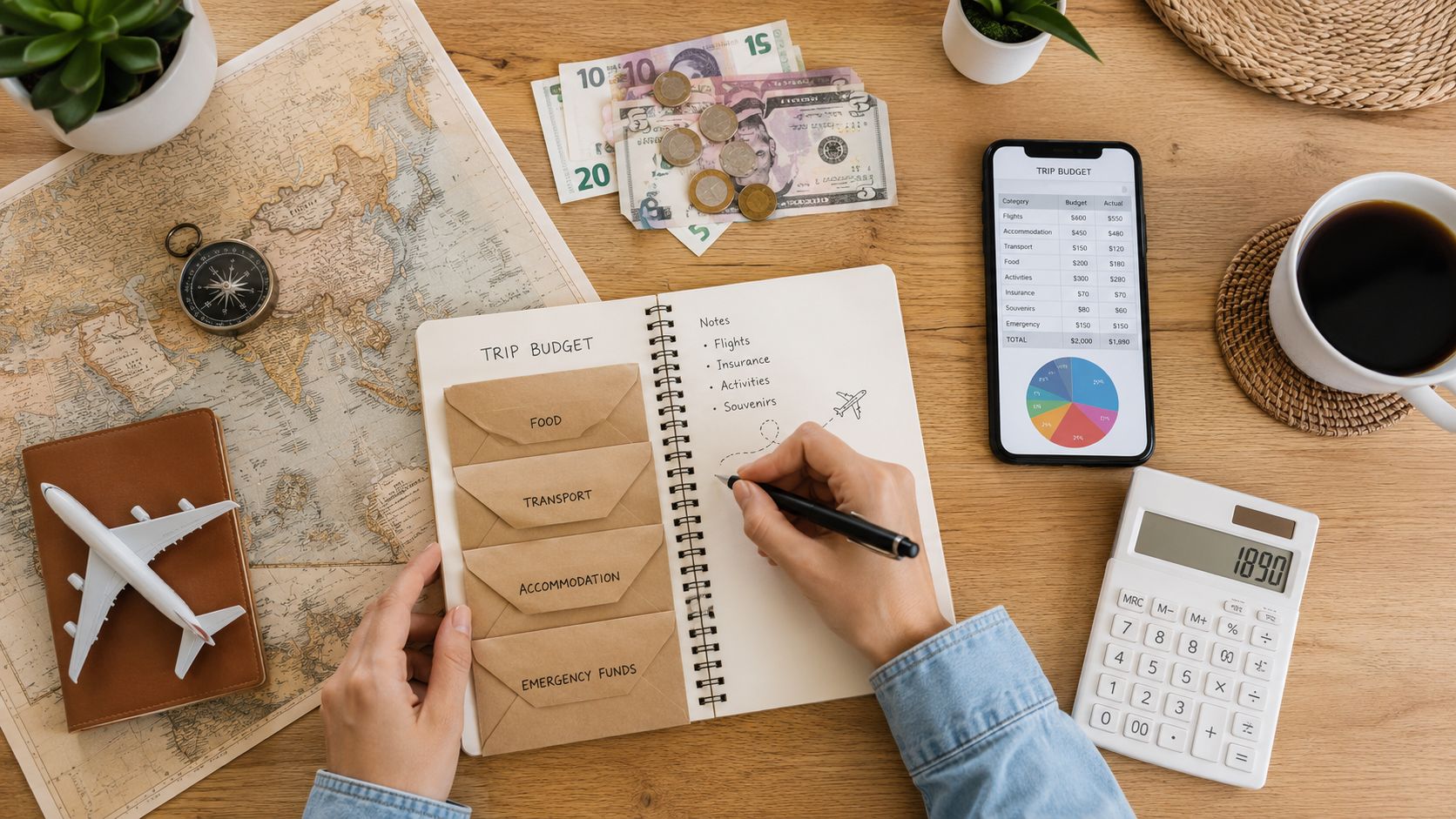
- Leave margin in your budget. A little backup money gives you options if a train is missed or a neighborhood feels off.
- Build your own safety routine. These solo female travel safety tips for Europe and beyond matter more in practice than any generic “safe country” ranking.
This is how a dream becomes a real trip.
Solo female travel in Europe can be exciting, social, restful, challenging, and confidence-building. It can also feel tiring if you try to do it on pure optimism. The better approach is to pair curiosity with judgment. Book the charming city, yes. Also check the night bus, the station area, the hostel reviews, and how you will get back if your plans change.
That mix of freedom and foresight is what makes a first trip feel good, not just look good in photos.
The Solo Traveler Mindset Safety and Confidence First
Safety isn't a side note in solo female travel. It's the frame around every decision. Rick Steves' guidance for solo women in Europe highlights theft and harassment as the two main concerns affecting solo women more than men, and AFAR reporting cited there notes that women now make up 71% of solo travelers. That tells you two things at once: your concern is valid, and you're not unusual for thinking about it first.
What helps most isn't paranoia. It's pattern recognition.
Country safety is not enough
A city can sit inside a country with a strong reputation and still contain pockets that feel uncomfortable, badly lit, or awkward to get around with luggage. A broader Women on the Road discussion of solo Europe travel points to a useful distinction using EU data: 11.6% of EU residents reported being affected by crime, violence, or vandalism in their local area in 2024. The bigger lesson is that risk varies by neighborhood and level of urbanization.
That's why “Is this country safe?” is the wrong first question.
Ask these instead:
- What is the walk from the station to my lodging like?
- Will I arrive while shops are open and streets are active?
- Do recent reviews mention noise, isolation, or sketchy surroundings?
- Can I get back easily by metro, tram, or a registered taxi if I'm tired?
How to build a safety-first mindset
A strong safety mindset looks calm from the outside. It's mostly a collection of small habits.
Read the street, not just the map
Maps tell you distance. They don't tell you whether that “easy 12-minute walk” crosses an empty underpass, a nightlife strip you don't want to handle alone at midnight, or a steep backstreet with no one around. When I book a place, I check the route from the station, then I check what's nearby: pharmacies, cafés, grocery stores, and major roads. Those everyday anchors matter.
Use reviews strategically. Don't just scan the overall rating. Search for words like “dark,” “quiet,” “unsafe,” “station,” “late,” “female,” and “walk.”
Arrive by day whenever you can
This is one of the simplest habits that pays off over and over. A city that feels straightforward at 2 p.m. can feel disorienting at 10 p.m. with a dead phone battery and a backpack digging into your shoulders.
Practical rule: If you can choose between saving a little money and arriving in daylight, choose daylight.
That doesn't mean you can never arrive late. It means late arrivals should be intentional. Pre-book your route, know the entrance situation, and have a backup if your train is delayed.
Project certainty before you feel it
You don't need to perform toughness. You do need to look like you know what you're doing. Walk with purpose. Stop inside a café or shop if you need to check directions. Don't stand on a curb swinging your phone around while looking confused.
Small signals change how people treat you:
- Head up: You notice more and invite less attention.
- Bag placement: Crossbody in front, especially in stations and crowded transit.
- Voice and tone: Polite, short, clear.
- Boundaries: “No, thank you” works better than apologetic explanations.
Trust discomfort early
Women are often taught to gather more evidence before acting on a bad feeling. Traveling alone is a great time to stop doing that. If a hostel common room feels off, leave. If someone is too interested in where you're staying, get vague fast. If a street suddenly feels wrong, step into a lit business and reroute.
That isn't overreacting. It's good judgment.
For a deeper breakdown of practical habits, this guide on solo female travel safety tips is worth bookmarking before you leave.
Confidence comes from decisions, not slogans
Real confidence on the road has very little to do with being fearless. It comes from handling one small moment well after another. You choose the better-lit route. You move hotels if the area feels wrong. You pay a bit more for the room near transit. You say no without smiling if that's what the moment requires.
That's the version of solo female travel in Europe that feels good. Not safe on paper. Safe in your body.
Choosing Your Europe Best Destinations by Vibe and Budget
The right destination is the one that lets you relax without switching off your instincts. That usually comes down to a mix of atmosphere, price, and how easy the place is to handle on your own after dark, with a suitcase, on a tired day, or when a plan falls apart.
That is the part glossy lists miss.
A city can rank well for safety and still feel draining if every museum queue is packed, your hostel is far from transit, and dinner means a 25-minute walk back alone at night. Another place can feel far more comfortable because the streets stay active, the transport is simple, and you do not have to stretch your budget so hard that you start making shaky decisions.
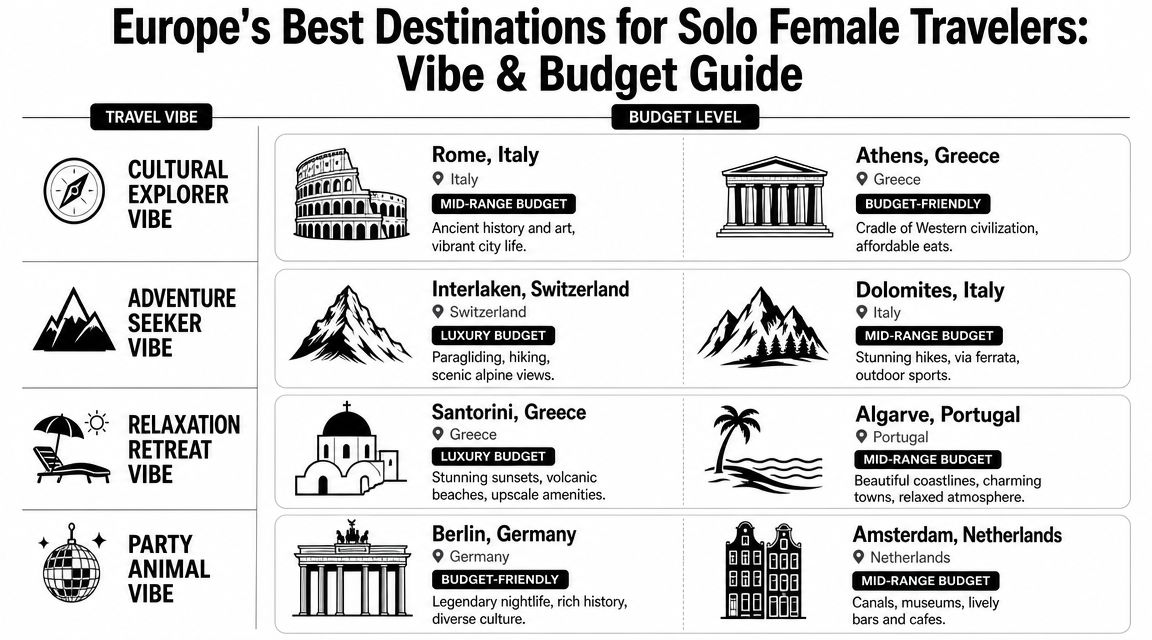
A quick comparison by travel style
| Vibe | Destination | Budget feel | Why it works solo |
|---|---|---|---|
| Cultural explorer | Rome | €€ | Big sights, easy to fill your days, lively streets |
| Cultural explorer | Athens | € | Ancient history, casual dining, good value |
| Adventure seeker | Interlaken | €€€ | Mountain access, outdoor activities, organized excursions |
| Adventure seeker | Dolomites | €€ | Nature-focused trip with scenic bases |
| Relaxation retreat | Santorini | €€€ | Easy island reset, slower pace, beautiful stays |
| Relaxation retreat | Algarve | €€ | Coastline, smaller towns, calmer rhythm |
| Party and culture | Berlin | € | Nightlife, museums, neighborhoods with personality |
| Party and culture | Amsterdam | €€ | Compact center, canals, easy walking and transit |
If you want art and history all day
Rome and Athens
Rome gives you constant momentum. You can fill a full day without much planning, which is useful when you are traveling alone and want structure around you. The trade-off is crowd pressure. Busy transit hubs, tourist zones, and long walking days mean you need good bag habits and a hotel or guesthouse in an area you will feel fine returning to in the evening.
Athens is often easier on the wallet, and that changes your options. You can afford a more central base, eat well without overthinking every meal, and leave room in the budget for taxis when you do not want to figure out a route late at night. It is less polished in places, but many solo travelers find it more forgiving for exactly that reason.
If nature is the point
Interlaken and the Dolomites
Interlaken is for the traveler who wants mountain scenery without a lot of friction. Transport is clear, excursions are straightforward to book, and solo activity does not feel unusual. You pay for that convenience. Switzerland can turn a careful budget into a stressful one very fast, especially if you leave lodging and rail bookings too late.
The Dolomites can cost less, but they ask more from you. Base selection matters. Bus frequency matters. The difference between a charming village and an inconvenient one is whether you can still get dinner, buy basics, and get back safely without depending on a car. If you choose the Dolomites, pick a town with regular transport and enough life in the evening that you are not isolated once the day-trippers leave.
Choose the place where your daily logistics feel manageable, not just the place that looks best in photos.
If you want coast and calm
Santorini and the Algarve
Santorini works best as a shorter, slower trip. It is beautiful, easy to enjoy alone, and good for travelers who want rest with a side of scenery. The weak point is value. If your budget is tight, it is easy to overspend on views and then cut corners on transport or room location, which can leave you stranded on steep roads or paying for more taxis than you planned.
The Algarve gives you more breathing room. You can build a trip around beach towns, scenic walks, and quiet dinners without the same luxury markup. It is a better fit for solo women who want a calm pace but still want practical options nearby, like grocery stores, buses, and town centers that do not go silent too early.
If you want nightlife, people, and city energy
Berlin and Amsterdam
Berlin suits travelers who like freedom and do not need a polished city to enjoy themselves. It can be social, creative, and affordable by Western Europe standards, but only if you book the right area. Saving money by sleeping far outside the neighborhoods you will use often stops being a bargain after midnight.
Amsterdam is easier to read at first glance. The center is compact, walking is simple, and solo wandering feels natural there. The challenge is cost. Budget beds go fast, and cheap rooms are not always in places that make a solo arrival feel smooth. Book earlier than you think you need to.
If country-level safety is your first filter, start with this guide to the safest countries for solo female travelers, then choose a city that fits your pace and spending style.
The best Europe destination for a solo woman is rarely the cheapest or the most famous. It is the one where you can afford a decent base, get around without confusion, and end the day feeling steady instead of wrung out.
Crafting Smart Itineraries and Timing Your Trip
The easiest mistake in Europe is trying to do too much because everything looks close on a map. The smartest itineraries give you breathing room. They use trains, keep transfers simple, and avoid that exhausted feeling of packing up every other morning.
That matters because Grand View Research notes Europe held 37.4% of the global solo travel market in 2024, helped by its dense rail infrastructure. For solo women, that's more than convenience. It means city-center arrivals, less dependence on night driving, and easier movement between well-connected urban bases.
Three sample routes that work
The 10-day Iberian sun chaser
Start in Lisbon, move to Seville, then finish in Madrid.
This route works because each move feels logical rather than forced. Lisbon gives you a gentle start: hills, trams, neighborhoods, and enough solo-friendly dining that eating alone doesn't feel awkward. Seville slows the pace. Madrid brings the bigger-city finish with museums, parks, and transport that's easy to decode.
Best for: first-timers who want culture, food, and a warm-weather rhythm.
The two-week first-timer classic
Try London, Paris, and Amsterdam.
This is not the cheapest route, but it's highly legible. Airports, train stations, English-language access, and constant traveler traffic make it forgiving. If you're nervous, there's a lot to be said for places where asking for help feels easy.
Best for: travelers who value convenience and famous sights over bargain hunting.
The three-week Central Europe loop
Berlin, Prague, Vienna, Budapest.
This route rewards women who want city variety without changing travel style every few days. Berlin gives you scale and creativity. Prague is compact and atmospheric. Vienna adds polish and ease. Budapest closes with baths, cafés, and long walks by the river.
Best for: budget-aware travelers who still want rich city experiences.
Timing changes everything
Weather matters, but timing is also about mood, crowds, and how hard your daily logistics feel.
Shoulder season is usually the sweet spot
May, June, September, and October often give solo travelers the best balance. Cities are active, transit runs smoothly, and you can still enjoy long walking days without the full crush of peak season. If you're balancing safety and budget, this is usually where things feel most manageable.
Peak season raises the friction
Summer can be wonderful, especially for islands and coastlines, but it comes with packed stations, fuller hostels, and more competition for central rooms. That changes the feel of solo travel. When you're tired and the city is crowded, even simple tasks become more draining.
Off-season needs a different mindset
Winter city breaks can be fantastic if your priorities are museums, cafés, and slower sightseeing. But smaller beach towns and seasonal destinations may feel too quiet, especially if you're traveling alone and want easy social energy.
Fewer cities and better timing usually create a better trip than an ambitious route and constant scrambling.
A few practical planning rules help:
- Book long rail days early: Popular routes and favorable times go fast.
- Protect arrival days: Don't stack a late train, a complicated transfer, and a new hotel on the same evening.
- Leave white space: One unscheduled afternoon often gives you more than another checkbox attraction.
If you're trying to line up flights around your train route, this guide on the best time to book flights helps keep the bigger transport puzzle under control.
Your Home Base Accommodation and Transport Deep Dive
Your room is not just where you sleep. It's where you reset your nervous system, charge your phone, regroup if a day goes sideways, and feel the door lock behind you. That's why accommodation choices matter so much in solo female travel Europe.
This has also become harder for budget travelers. An Arrivals Hall discussion referencing Eurostat data notes that 854.1 million nights in EU short-stay rental accommodations were booked via major platforms in 2024, while tightening rules in some cities are pushing prices up and affecting availability. In practice, that means the old advice to “just book something cheap and central” often isn't realistic anymore.
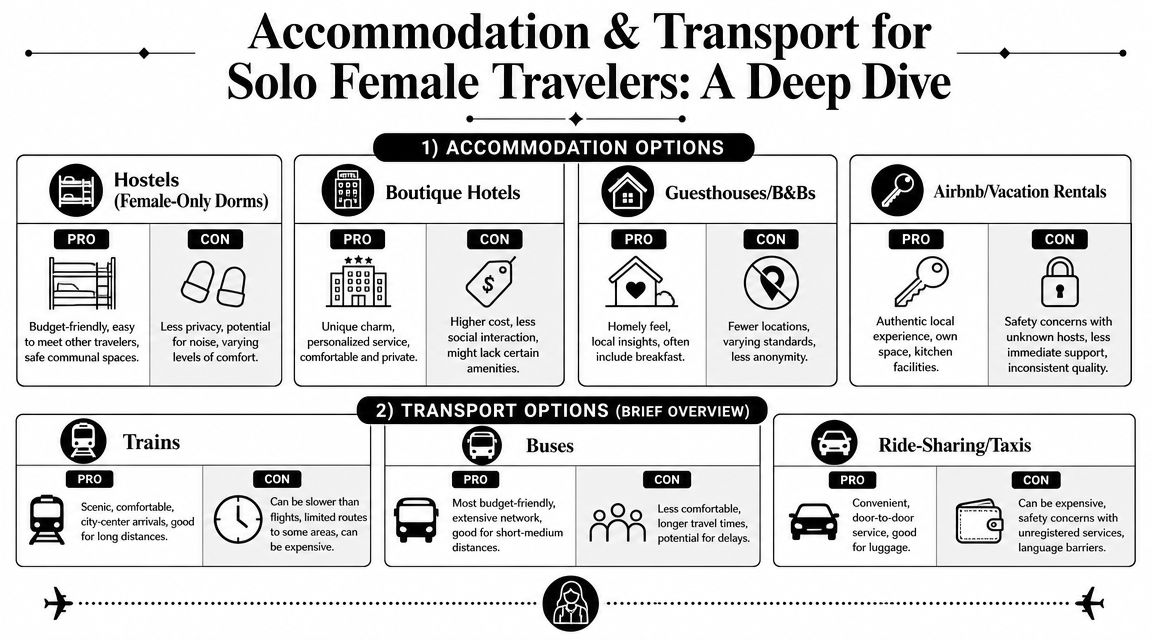
Where to stay when budget and safety are both non-negotiable
Female-only hostel dorms
These are often the best-value option when you want central location and built-in social contact. A good hostel can solve several solo travel problems at once: reception staff, communal kitchens, activity boards, and other women around.
What works:
- Central neighborhoods: You're paying for walkability and easier late returns.
- Female-only rooms: Worth considering if it helps you sleep better.
- Large locker setup: Bring your own lock if needed.
What doesn't:
- The cheapest hostel on the outskirts.
- Places with weak review language around cleanliness, security, or night access.
- Party hostels if you want actual rest.
Budget hotels and small guesthouses
These are often underrated for solo women. A staffed front desk, private bathroom, and quieter room can make a huge difference if you're doing long days. I especially like hotels for first nights in a new city because they reduce friction when I'm tired.
Look for:
- 24/7 reception or clear self-check-in instructions
- Location near a metro or major station
- Review mentions of safety and street activity
Rentals and apartment stays
These can be great for longer trips, laundry access, and having a kitchen. They can also create more uncertainty if check-in is awkward, the building entrance is isolated, or communication with the host is poor.
Rentals work best when:
- You've read recent reviews carefully.
- The building entrance and neighborhood are well understood.
- You're staying long enough to justify the trade-off.
How to read reviews like a solo traveler
Don't read reviews for charm. Read them for friction.
Search for clues such as:
- “A bit far” often means annoying at night.
- “Lively area” can mean noisy or uncomfortable after dark.
- “Authentic neighborhood” might mean great, or it might mean you need stronger city confidence.
- “Easy from the station” is gold.
A mediocre room in the right area beats a beautiful bargain that makes you dread getting home after dinner.
Transport choices that reduce stress
In most European cities, trains, trams, and metros are your best friends. They're predictable, visible, and usually drop you where you need to be. They also remove the solo-travel headache of figuring out parking or driving unfamiliar roads after dark.
Best use cases by transport type
| Transport | Best for | Watch out for |
|---|---|---|
| Train | Intercity travel, scenic routes, city-center arrival | Late-night connections if you're unfamiliar with the station |
| Metro or tram | Daily city movement | Crowded rush hours and pickpocket zones |
| Bus | Budget connections and secondary routes | Longer travel times and occasional awkward arrival points |
| Registered taxi or app ride | Airport arrivals, late returns, heavy luggage | Higher cost and the need to verify the vehicle |
For city navigation, practical tools matter. Apps like Citymapper, Google Maps, and local transit apps make a big difference, especially if you save routes before leaving Wi-Fi. For a broader overview of movement options, this guide on the best ways to travel Europe is a useful planning companion.
Packing Tech and Money Essentials for a Seamless Journey
The bag you pack in your bedroom feels very different from the one you drag up a hostel stairwell at 10 p.m. after a delayed train. Pack for that version of the trip.
For solo travel in Europe, lighter usually means safer and cheaper. You move faster through stations, you are less distracted when you arrive, and you are less likely to pay for a taxi just because your luggage has become a problem. If you can carry everything yourself without strain, you have more control over every transfer, check-in, and last-minute plan change.
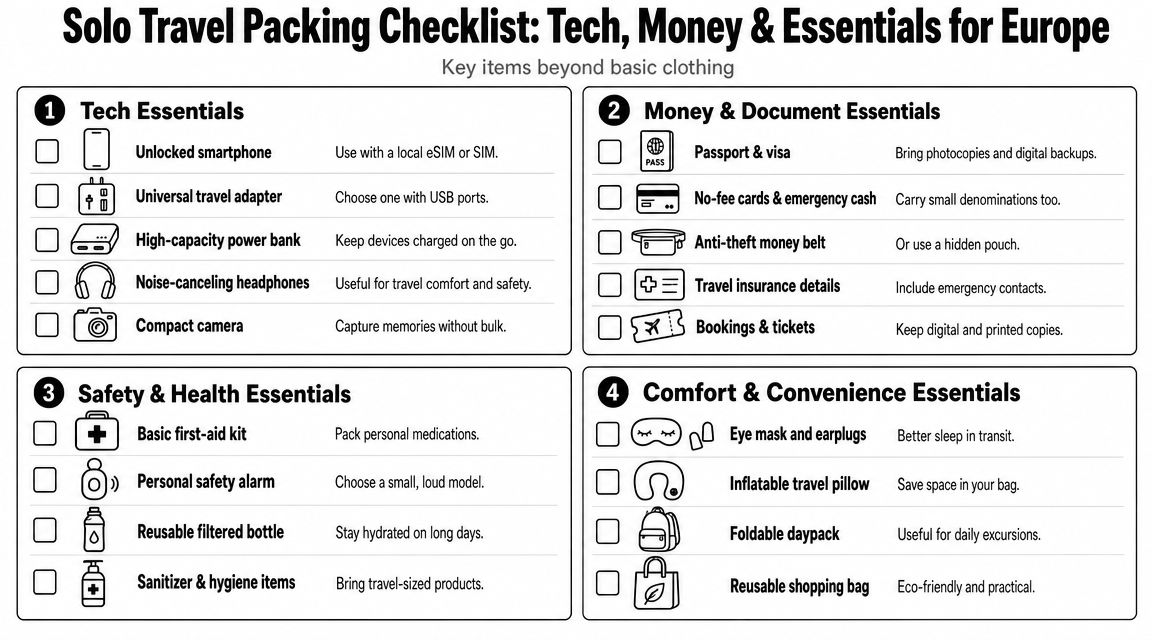
Tech that earns its place
Your phone does a lot of heavy lifting on a solo trip. It gets you back to your room, pulls up a train platform, translates a pharmacy question, and holds your booking details when reception asks for them. Set it up before you leave, not while standing on the pavement outside arrivals.
The core setup
- SIM-free smartphone: Gives you the freedom to use an eSIM or local SIM.
- Universal travel adapter with USB ports: Cuts down on charger clutter.
- Power bank: Low battery can turn a normal transfer into a stressful one.
- Offline maps: Download them before travel days and day trips.
- Translation app: Useful for menus, transit notices, and medical basics.
An eSIM is often the simplest option for shorter trips or multi-country routes. You land with data ready to go. A local SIM can still make better financial sense if you are staying longer in one country. The right choice depends on your route, phone compatibility, and how much hassle you want on arrival.
If you tend to overpack “just in case” items, use a travel planning checklist for solo trips before you zip the bag. It helps separate real needs from things that only feel useful at home.
Safety gear that is worth carrying
A lot of packing lists for women drift into gimmicks. Good gear should make your day easier, not make your bag heavier.
What I pack
- Personal safety alarm: Small, light, and easy to reach.
- Crossbody bag with a secure closure: Better control in stations, markets, and packed trams.
- Small lock: Handy for hostel lockers or securing a bag in a shared space.
- Basic medication kit: Include your regular medication and a few simple basics you trust.
- Photocopies and digital backups: Passport, insurance, transport bookings, accommodation details.
The test is simple. Can you reach it fast, and will you use it more than once? If not, leave it behind.
Money strategy matters as much as budget
Feeling secure on a solo trip often comes down to one question. If something goes wrong right now, can I still pay for what I need tonight?
That is why I never rely on one card or one place to access money.
A simple money setup
- Primary card for daily spending
- Backup card stored separately
- Small emergency cash stash
- Digital copies of bank contact details and key bookings
Keep the backup card away from your main wallet. Split your cash. If your wallet is lost or lifted, you want enough separation that you can still get back to your accommodation, buy food, and sort the problem calmly. This strategy marries budget and safety. A little redundancy costs very little and can save you from an expensive panic decision.
Build a first-night kit
This habit pays off every time a travel day goes sideways.
Keep one easy-to-reach pouch with:
- Passport
- Phone charger
- Adapter
- Medication
- Toothbrush
- One clean change of basics
- Accommodation entry details
If your main bag is delayed, your room is not ready, or you arrive exhausted, you can still function without tearing everything apart in a lobby.
Clothing works best when it is simple and repeatable. Pack layers, one weatherproof outer piece, shoes you can walk in for hours, and outfits that work in more than one setting. Looking good matters. Feeling comfortable, alert, and able to move through the day matters more.
Your Solo Trip Blueprint Final Tips and a Pre-Trip Checklist
The best solo trips leave room for both structure and surprise. You book the basics, learn the route from the station, and keep your first nights easy. Then you leave enough space for the café you stumble into, the walking tour that turns into dinner plans, or the quiet museum afternoon you hadn't planned at all.
Traveling alone also changes how you handle social moments. Dining solo gets easier fast once you stop treating it like a performance. Sit outside if you want energy. Sit at the bar or near a window if that feels more comfortable. Bring a book for the first few meals if it helps, then notice how quickly you stop needing it.
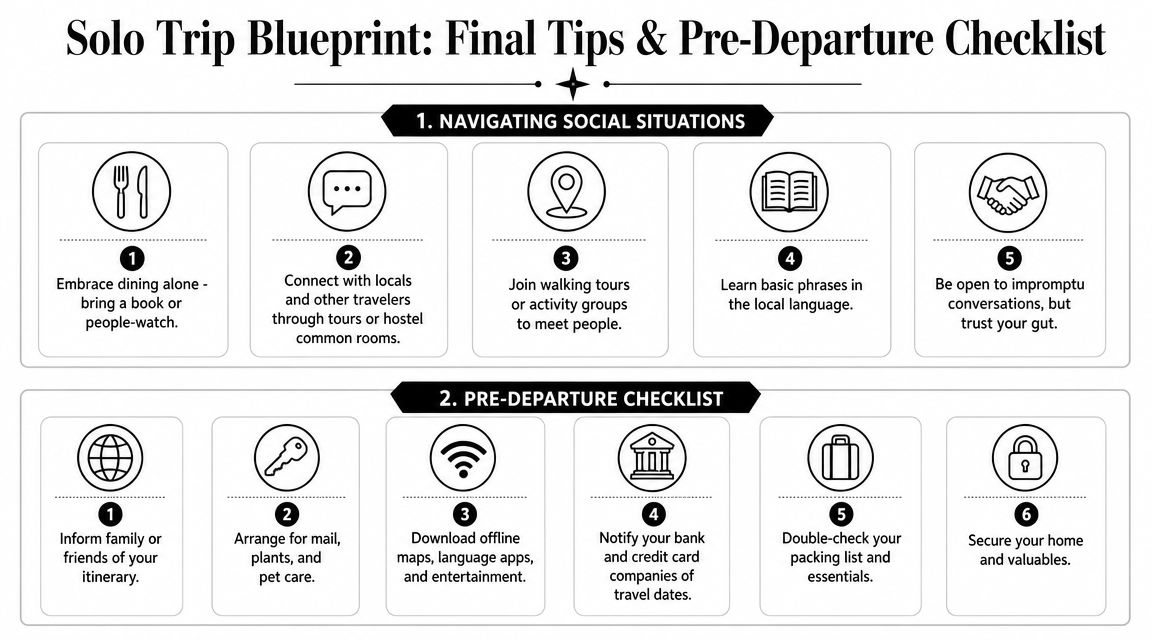
Handling people well without dropping your guard
Meeting people is part of the joy. You just need good filters. Walking tours, cooking classes, day trips, hostel common rooms, and small group excursions are usually the easiest ways to connect without forcing anything.
A few simple rules help:
- Share selectively: Don't tell strangers exactly where you're staying.
- Meet in public: Especially if you've just met.
- Keep your own route home: Independence is part of safety.
- Trust the quick no: If a person or plan feels off, decline and move on.
Your pre-trip checklist
Three months before
- Choose your route: Fewer stops, better pacing.
- Check passport validity: Don't leave this late.
- Set your trip budget: Build in a buffer for transport changes and pricier central lodging.
- Book key flights and high-priority stays: Especially for popular cities or shoulder-season weekends.
One month before
- Book trains or major transfers: Lock in sensible arrival times.
- Confirm accommodation details: Save addresses, check-in method, and nearest transit.
- Buy insurance and save documents: Keep digital copies where you can access them offline.
- Plan your phone setup: Decide on eSIM or local SIM.
One week before
- Download offline maps: Include station areas and your hotel neighborhood.
- Build your first-night pouch: Charger, adapter, medication, essentials.
- Notify your bank if needed: Avoid card disruption.
- Share your itinerary: Send it to someone you trust.
The day before
- Charge everything: Phone, power bank, headphones.
- Check your arrival route one last time: Don't land guessing.
- Pull out your travel outfit: Comfortable, layered, secure pockets or bag.
- Re-check documents and cards: Passport, primary card, backup card, emergency cash.
For a broader planning framework you can reuse on future trips, keep this travel planning checklist handy.
Solo female travel Europe isn't about proving anything. It's about moving through the world on your own terms, with enough skill and awareness that freedom feels spacious instead of stressful. Once you learn that, Europe stops feeling intimidating and starts feeling like what it is. A place full of trains to catch, streets to wander, meals to linger over, and versions of yourself you only meet when no one else is setting the pace.
If you want more grounded, budget-smart travel advice after this guide, Travel Talk Today is a strong next stop. It's packed with practical planning help, safety-focused solo travel resources, and realistic ways to travel more thoughtfully without spending like you're on a luxury press trip.