Picture this: you’re floating in the deep blue, and a shadow slowly materializes from the depths. It’s a whale shark, the ocean’s largest fish, its back a galaxy of stars gliding silently past you. It’s a moment that stays with you forever. This guide is your map to making that incredible experience a reality.
To swim with whale sharks, you don’t have to go to the ends of the earth. Incredible, ethical encounters are waiting for you in places like Mexico, the Philippines, and Australia, where a simple bucket-list item can transform into a profound connection with the wild.
Your Adventure with the Ocean's Gentle Giants
This isn’t just about ticking a box. It's for the traveler who wants their journey to mean something more. We've gathered practical, real-world advice to help you plan a trip that’s not only breathtaking but also responsible—one that respects these animals and supports the communities that protect them.
Your journey starts with a simple choice: where and when to go. Whale sharks are always on the move, chasing massive blooms of plankton across the globe. Picking the right destination at the right time is the key to an unforgettable encounter.
Top Whale Shark Destinations At a Glance
To give you a head start, we’ve put together a snapshot of the world's most reliable hotspots. Think of this as your cheat sheet for narrowing down the options that fit your travel style, timeline, and budget.
Every year, whale shark tourism generates millions of dollars for local communities, providing a powerful economic incentive for conservation. Choosing a licensed, ethical operator ensures your money directly contributes to protecting these magnificent creatures and their habitats.
Whether you dream of seeing hundreds of sharks gather in Mexico or prefer a quieter, off-the-grid encounter in Tanzania, each place offers something unique. Exploring these options is the first step toward finding one of those truly authentic travel experiences.
| Destination | Peak Season | Avg. Tour Cost (USD) | Why It's Great |
|---|---|---|---|
| Isla Mujeres, Mexico | June - September | $125 - $200 | Largest annual gathering of whale sharks in the world, easily accessible. |
| Ningaloo Reef, Australia | March - August | $300 - $500 | World-class ecotourism with extremely strict conservation rules and clear water. |
| Donsol Bay, Philippines | November - June | $50 - $100 | Community-based ecotourism with a focus on "wild" encounters without feeding. |
| Mafia Island, Tanzania | October - March | $80 - $150 | A resident population offers reliable sightings in an off-the-beaten-path location. |
| South Ari Atoll, Maldives | Year-round | $100 - $250 | A year-round population found in a luxury resort setting, great for divers. |
This table should help you see how much the experience can vary. A trip to the Philippines is a fantastic, community-run option for backpackers, while Ningaloo Reef offers a highly regulated, conservation-first experience for those with a bigger budget.
Now, let's dive into what makes each of these amazing destinations so special.
Finding Your Perfect Whale Shark Encounter
This is where the dream starts to take shape. Choosing where you'll swim with whale sharks is the first, and most exciting, part of the journey. These gentle giants are true wanderers, chasing seasonal plankton blooms across the globe, which means your perfect adventure is waiting for you somewhere spectacular—whether that’s in the vibrant Caribbean, a remote Philippine archipelago, or off the pristine coast of Australia.
The real secret is finding the spot that matches your travel style. Are you a photographer hunting for crystal-clear water and that perfect, sun-dappled shot? Or maybe you're a backpacker on a budget, looking for a life-changing moment that won't empty your wallet. Each destination has its own vibe, its own rules, and its own unique experience.
Mexico: The Caribbean Powerhouse
For a sheer spectacle, it's hard to beat Mexico. Picture yourself slipping into the warm, turquoise water off Isla Mujeres, where the world's largest known gathering of whale sharks happens every summer. From June to mid-September, hundreds of these massive fish converge here to feast. It's a true bucket-list paradise.
This incredible natural event has turned a once-quiet corner of the Caribbean into a major destination, now welcoming over 12,000 visitors a year. The boom is a powerful example of what this kind of tourism can do for a local economy. You can dive deeper into the science behind this massive aggregation by checking out the Natural History Museum’s research on whale shark populations.
The Philippines: A Tale of Two Encounters
The Philippines presents a fascinating choice, offering two completely different philosophies on whale shark tourism. On one side, you have Donsol Bay, widely celebrated as a model for community-based ecotourism. Here, the experience is completely wild. Spotters scan the horizon, and you get in the water only when a shark is found on its natural migration path—no feeding, no baiting. It’s pure, unpredictable magic.
Then there's Oslob. Here, sightings are guaranteed because local fishermen feed the sharks to keep them in the area. This practice has sparked a lot of debate. While it gets you undeniably close, it also fundamentally changes the sharks' natural behavior. This contrast forces a real gut-check: do you want the thrill of the chase, or the certainty of a zoo-like encounter?
This is about more than just seeing a whale shark. It’s a chance to decide what kind of traveler you want to be. Are you drawn to a highly regulated, conservation-first experience? Or does a more accessible, budget-friendly trip that directly supports a local community feel right?
This decision guide can help you figure out which path lines up best with your own priorities, whether your main concern is your budget or the ethics of the encounter.
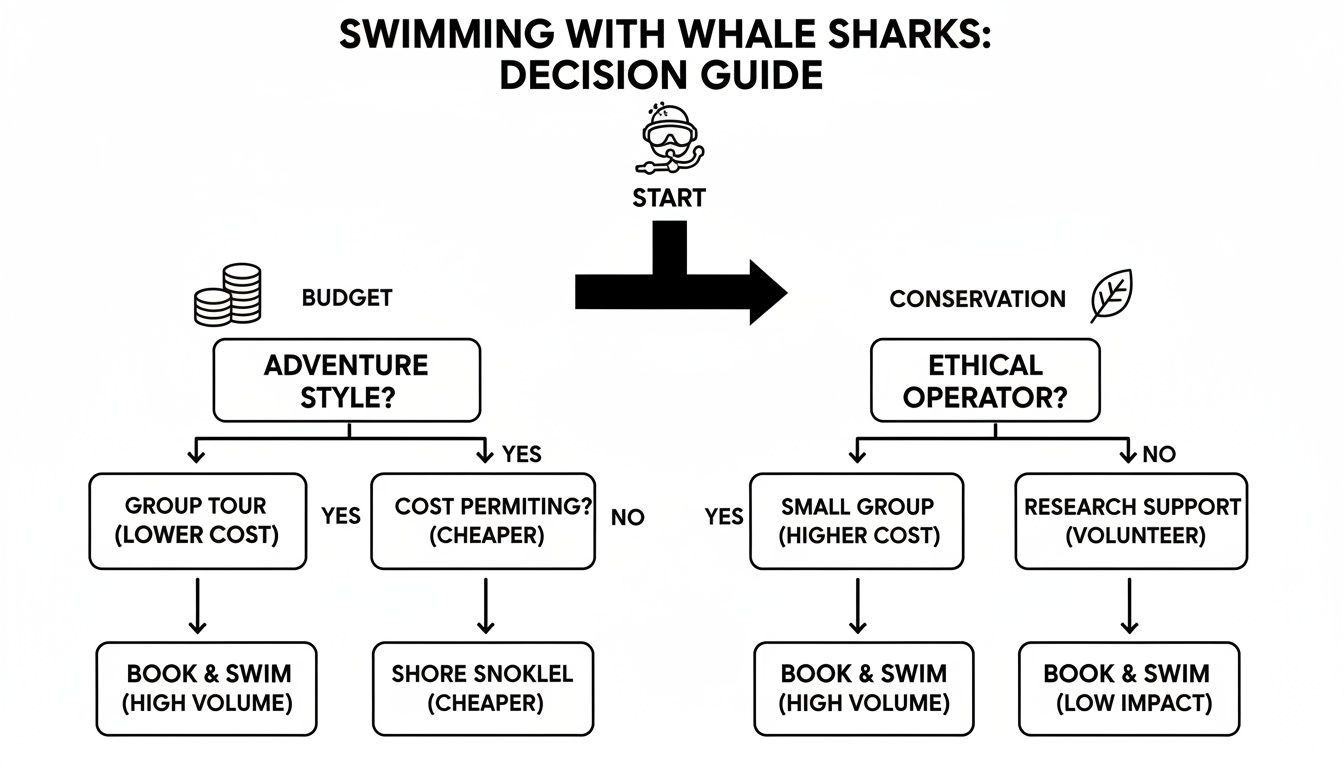
As you can see, the path you choose often involves a trade-off between the guarantee of seeing a shark and the reward of a more natural, ethical experience.
Africa and Australia: Wild, Remote, and Pristine
If you're looking for an adventure that feels a little more off-the-grid, other corners of the world offer incredible rewards. Take Mafia Island in Tanzania. It's home to a resident population of whale sharks, which means reliable sightings from October to March, all within a protected marine park. It’s perfect if you want to escape the crowds and just soak it all in. Mafia Island is one of those places that feels truly special, and you can get more ideas for unique trips like this in our guide to off-the-beaten-path travel destinations.
Meanwhile, Australia's Ningaloo Reef is considered by many to be the gold standard for sustainable whale shark tourism. The rules here are some of the strictest on the planet, all designed to put the animals' well-being first.
- Strict Distancing: Boats and swimmers must always maintain a respectful distance.
- No Feeding: All interactions are 100% natural. The sharks are there because they want to be.
- Limited Group Sizes: Only a handful of snorkelers are allowed in the water at any given time.
While it’s one of the pricier options, that cost funds a deep commitment to conservation. What you get in return is a truly unparalleled and pristine experience, knowing you're part of the solution. Your choice of destination really does set the tone for the entire adventure.
Choosing a Tour That Protects Both You and the Sharks

Alright, you’ve picked a spot on the map. Now comes the single most important decision you’ll make for this entire adventure: choosing your tour operator. This choice ripples out, touching the well-being of the whale sharks and the local people whose lives are intertwined with them.
A truly great company makes your trip a force for good. A bad one, even without meaning to, can harm the very creatures you’ve traveled halfway around the world to see.
Think of it this way: your tour fee is an investment. When you choose an ethical operator, you're not just buying a boat ticket. You're funding conservation, supporting scientific research, and helping a community build a future around protecting their natural treasures.
Finding the Good Guys
Finding the right tour company takes a little detective work, but it's work that pays off. Responsible operators are proud of what they do and are usually upfront about their practices.
First things first, check for official licensing. Are they registered with the local tourism board or marine park authority? This isn't just paperwork; it means they're accountable and follow regional rules designed to protect the very ecosystem you're there to enjoy.
Next, look for a trained professional on the boat—ideally a marine biologist or a certified naturalist guide. These experts do more than just point and say, "There's a whale shark!" They give you incredible context about the animal's behavior, enforce the rules, and ensure every single encounter is respectful. They turn a good trip into an unforgettable one.
Key Questions to Ask Before You Book
Don't be shy about asking some direct questions before you hand over any money. A company with nothing to hide will welcome your curiosity.
- What's your group size? Smaller is always better. It means a more personal experience for you and, crucially, less stress on the sharks. Boats packed to the gills creating a chaotic free-for-all in the water is a huge red flag.
- Do you have an onboard biologist or naturalist? Having an expert on board elevates the trip from a simple swim-along to a genuine learning experience. It's a game-changer.
- How do you find the sharks? The answer you want to hear involves spotter planes (like in Ningaloo Reef) or patient, respectful searching. You don't want a company that aggressively chases or corners the animals, as this causes them immense stress.
- What are your interaction guidelines? They must have clear, non-negotiable rules. Expect a mandatory briefing covering things like maintaining a safe distance (usually 3-4 meters), absolutely no touching, and no flash photography.
Look at the success story of Mafia Island, Tanzania. The local whale shark population there grew from about 100 individuals in 2012 to 206 by late 2019—a stunning 106% increase. This incredible comeback is driven by community-led conservation, where locals see these gentle giants, which can live up to 130 years, as a precious and sustainable resource. You can learn more about how community efforts are saving these creatures through the WWF's fascinating research.
Red Flags to Watch Out For
Just as there are green flags, some warning signs should make you walk away immediately. Learning to spot them is critical. And if you want to go deeper on this, our guide on what sustainable tourism truly means is a great place to start.
The Ultimate Deal-Breaker: Any operator that "guarantees" you can touch a whale shark. Run, don't walk. Touching a shark can strip away its protective mucus layer, leaving it vulnerable to dangerous infections. This is about respectful observation, not an amusement park ride.
Here are a few other red flags to keep on your radar:
- Baiting or feeding the sharks: This practice creates a circus-like atmosphere and can make the sharks dependent, altering their natural feeding and migration patterns.
- Overcrowded boats: Too many people in the water at once creates a stressful, chaotic scene for both the animals and the swimmers. It’s unsafe and unethical.
- No pre-swim briefing: If they're not taking the time to explain the rules of engagement before you hit the water, they don't take those rules seriously.
- Rock-bottom prices: If a price seems too good to be true, it is. Cutting corners often means compromising on safety, guide expertise, and ethical practices that protect the sharks.
Mastering Your Moment in the Water

This is it. After all the research and travel, you're perched on the edge of the boat, about to slip into the water with the ocean's largest fish. Being in the presence of an animal the size of a school bus is one of the most humbling moments you can have. It’s an experience that truly shifts your perspective.
This is where the trip becomes more than just an activity—it becomes a genuine connection. To do it right, you have to become a silent, respectful observer. Every move you make matters, not just for your own safety, but for the well-being of these gentle giants.
The Unspoken Rules of the Ocean
Your guide will absolutely walk you through the rules before you get in, but think of them less as a checklist and more as a code of respect. The biggest rule of all is simple: never, ever touch a whale shark. Their skin is coated in a delicate layer of mucus that protects them, and a simple touch can strip it away, leaving them open to nasty infections.
Just imagine you’re a guest in their home. You wouldn’t just start poking their furniture, right? The same idea applies here. Your goal is to be a ghost, a fleeting shadow they barely notice as they filter-feed through the water.
Beyond the "no touching" mandate, a few other guidelines are key:
- Give Them Space: You need to stay at least 3 meters (10 feet) from the shark’s sides and 4 meters (13 feet) away from its tail. That powerful tail fin can create a serious current, and this buffer zone keeps both of you safe.
- No Flash Photography: A sudden, bright flash can startle a whale shark and even harm its sensitive eyes. Just switch the flash off on your camera or phone before you even think about getting in the water.
- Slide in Quietly: Forget the big, splashy cannonball. Gently slide into the water from the side of the boat to keep noise to a minimum and avoid spooking any sharks nearby.
Following this code of conduct is more important than ever. Ever since a 4.6-meter specimen was harpooned off South Africa in April 1828, bringing the species to the world's attention, our fascination has only grown. Today, that fascination helps fund their protection, which is critical. The global whale shark population has plummeted by 50% in the last 75 years from threats like illegal fishing and ship strikes. By following these rules, you're helping a species that can live for over 100 years. You can dive deeper into the history and biology of these amazing creatures to see why your responsible behavior is so vital.
How to Get the Perfect, Respectful View
Once you’re in the water, the secret is to anticipate the shark's path, not chase it. Frantically trying to keep up with a moving whale shark is a fool's errand—you'll just end up exhausted with a great view of its tail.
Instead, listen to your guide. They have an almost sixth sense for this. They’ll tell you where to position yourself so the shark swims past you. The sweet spot is to swim parallel to the shark, just off to its side. This gives you that jaw-dropping, full-body view you’ve been dreaming of, from its massive, spotted head to the graceful sway of its tail.
Never swim directly in front of a whale shark or try to cross over its back. You'll block its path, which often causes them to dive deep to get away from you—ending the encounter for everyone on your boat. The whole point is to let the shark lead the dance.
Leaving the Ocean Better Than You Found It
Your responsibility doesn't end with the shark. The entire marine ecosystem is a fragile, interconnected world, and our goal should always be to leave no trace.
One of the easiest and most impactful things you can do is wear reef-safe sunscreen. The chemicals in most common sunscreens are incredibly toxic to coral reefs and the creatures that depend on them. Even better? Ditch the lotion and cover up with a long-sleeved rash guard and leggings. They offer fantastic sun protection without leaking any harmful chemicals into the shark's home.
Ultimately, mastering your time in the water comes down to being mindful. Be aware of your fins, your camera, and the other people around you. When you act like a calm, respectful guest, you’re doing your part to ensure that future generations of people—and sharks—can share these same magical moments.
Gearing Up and Budgeting for Your Whale Shark Trip
Here’s where the dream starts to become reality. A little thoughtful planning now is what separates a good trip from an unforgettable one. When it comes to swimming with whale sharks, packing the right gear and setting a smart budget will have you feeling comfortable, confident, and ready for that moment you finally slip into the water.
This isn’t just about tossing a swimsuit and some sunscreen in a bag. We're focused on gear that not only makes your swim better but also respects the fragile world these gentle giants call home. A few key items can make all the difference.
What to Pack for Your Whale Shark Adventure
Your packing list for a trip like this is all about function, not fashion. The goal is to protect yourself and the marine environment you’re so lucky to be visiting.
One of the most important pieces of gear I recommend is a long-sleeved rash guard. It's far more effective than sunscreen. Not only does it provide total sun protection on your back and arms without slathering on chemicals, but it also keeps you surprisingly warm on the boat between swims.
Next up is your snorkel gear. I know most tours offer rentals, but trust me on this one: bring your own mask and snorkel. A quality mask that actually fits your face won't leak or fog up. You'll be able to focus completely on the whale shark gliding by instead of fiddling with a bad seal.
I’ve seen it happen too many times: someone’s once-in-a-lifetime moment is ruined because they're wrestling with a leaky rental mask. Investing in your own gear is the single best pre-trip decision you can make. It guarantees comfort and a crystal-clear view when it counts.
These are the absolute must-haves for your whale shark pack:
- Your Own Snorkel and Mask: Test it at home before you go. It should create a soft seal on your face without feeling tight.
- Long-Sleeved Rash Guard: Your number one defense against the sun and a great way to stay warm.
- Underwater Camera: A GoPro or similar action camera is perfect. Just make sure it’s on a short wrist strap or handle—long selfie sticks are a major no-go.
- Reef-Safe Sunscreen: For the bits your rash guard doesn't cover, like your face, neck, and hands. Look for sunscreens free of oxybenzone and octinoxate.
- Quick-Dry Towel: A lifesaver on the boat and way more compact than a regular cotton towel.
- A Reusable Water Bottle: Stay hydrated on the water and help cut down on single-use plastic.
For a more comprehensive look at what to bring for the land-based parts of your journey, our full backpacking essentials checklist will get you sorted.
Budgeting for Your Whale Shark Trip
The price tag for a whale shark encounter can vary wildly depending on where you go. But don't let that intimidate you—this bucket-list dream is within reach for almost any budget if you plan it right.
Let's look at what a day might cost in two of the most popular, budget-friendly hotspots.
Sample 1-Day Budget: Mexico (Isla Mujeres)
| Item | Estimated Cost (USD) | Notes |
|---|---|---|
| Whale Shark Tour | $150 | Mid-range operator, includes lunch. |
| Local Hostel/Guesthouse | $30 | One night's stay. |
| Food & Drinks | $25 | Eating at local spots. |
| Ferry & Local Transport | $20 | Ferry from Cancun, local taxis. |
| Total Daily Cost | ~$225 | Excludes flights to Cancun. |
Sample 1-Day Budget: Philippines (Donsol)
| Item | Estimated Cost (USD) | Notes |
|---|---|---|
| Whale Shark Tour | $75 | Assumes sharing a boat. |
| Local Guesthouse | $20 | Basic, locally-owned stay. |
| Food & Drinks | $15 | Very affordable local cuisine. |
| Local Transport | $10 | Tricycle rides around town. |
| Total Daily Cost | ~$120 | Excludes flights to Legazpi. |
As you can see, the Philippines is a significantly more affordable option, thanks to its community-based tourism and lower overall cost of living. Mexico, while pricier, is incredibly easy to get to and offers a nearly guaranteed experience in peak season.
Money-Saving Secrets from the Field
A tight budget doesn't mean you have to compromise on the experience. With a few insider tricks, you can make your money go further and have an incredible adventure.
- Travel Mid-Week: Tours are almost always busiest (and sometimes more expensive) on weekends. Book for a Tuesday or Wednesday and you'll likely share the water with fewer people.
- Choose Local: Stay in locally-owned guesthouses and eat at small, family-run restaurants. You'll save a ton compared to international chains and your money will directly support the community you're visiting.
- Embrace the Shoulder Season: Peak season promises the most sharks, but the "shoulder season" (the month right before or after) is a hidden gem. You'll find cheaper flights, less crowded boats, and still have a fantastic chance of amazing encounters.
- Book Directly: Whenever you can, book your tour straight from the operator's website or office. This cuts out the middleman, which often means a better price for you and more profit for the local business running the show.
Your Whale Shark Questions, Answered
Planning an adventure this big always brings up a few last-minute questions. It’s completely normal! After helping countless travelers prepare for this exact trip, I've heard them all.
Let's walk through the most common concerns so you can feel completely at ease and ready for the water.
Is Swimming with Whale Sharks Actually Safe?
Yes, it is incredibly safe. I know it's hard to imagine when you see their sheer size, but there’s a reason we all call them “gentle giants.” Whale sharks are filter feeders, meaning their diet is strictly plankton and krill—humans aren't on the menu. They are calm, curious, and pose no threat to us.
The real safety focus on these trips is simply being smart in open water. You'll be swimming in the ocean, often far from shore, so you need to be comfortable in that environment.
The biggest risk isn’t from the shark, but from accidentally getting too close. A swish of that powerful tail fin, even by accident, can pack a punch. This is exactly why guides are so strict about maintaining a safe distance—it protects both you and the shark.
Every responsible operator provides life vests for extra buoyancy and peace of mind. Plus, you’ll always have experienced guides in the water with you, keeping a watchful eye on everything.
Do I Need to Be a Great Swimmer or Scuba Certified?
You don't need to be a competitive swimmer, but you do need to be confident in the water. Most encounters involve swimming from the boat to the shark, which could be 50-100 meters through ocean swells. The goal is to keep a calm, steady pace to swim alongside them, not to race them.
And no, you don't need to be scuba certified. In fact, most whale shark tourism is exclusively for snorkelers, and for good reason:
- It's Less Intrusive: The bubbles and noise from scuba gear can stress the sharks, who are often feeding peacefully near the surface.
- It’s More Accessible: Snorkeling opens up this incredible experience to almost anyone, without needing specialized training.
- It’s Often the Law: Many protected areas, like the famous ones in Mexico and the Philippines, actually prohibit scuba diving near whale sharks to ensure all encounters are respectful and on the surface.
Again, life jackets are always on hand. I recommend wearing one even if you’re a strong swimmer—it lets you save your energy and focus completely on the amazing creature swimming below you.
What Are My Chances of Actually Seeing a Whale Shark?
This is the million-dollar question when you're dealing with wild animals. In any ethically-run location, like Ningaloo Reef or Donsol Bay, there's no 100% guarantee. These are not theme parks; sightings depend on weather, ocean currents, and the natural migration of the sharks.
That said, you can stack the odds dramatically in your favor by traveling during the peak season. Your chances are incredibly high if you head to Mexico between June and September or visit Tanzania from October to March.
Be wary of places like Oslob in the Philippines, which do offer "guaranteed" sightings. They achieve this by feeding the sharks, a controversial practice that disrupts their natural behavior and migration. For most of us, the magic lies in a truly wild and unpredictable encounter.
How Can I Take Photos and Videos Without Harming the Sharks?
Of course you want to capture this moment! It’s a memory you’ll want to relive. But your first job is to be a respectful guest in their world. The shark’s well-being always comes before getting the perfect shot.
Keep these three key things in mind:
- Absolutely No Flash. A camera flash is startling and can damage a whale shark’s sensitive eyes. This is a hard and fast rule on every ethical tour.
- Keep Your Gear Small. A GoPro on a short wrist mount is perfect. Leave the long selfie sticks behind—they’re clumsy, make it easy to accidentally touch the shark, and get in everyone else's way.
- Look Up From the Lens. It’s so easy to get lost in framing the shot. You have to constantly be aware of your surroundings to make sure you aren't drifting too close to the shark or another swimmer.
Your guide’s instructions are the final word. A great photo is wonderful, but it’s nothing compared to the feeling of being truly present in the moment with such a magnificent animal. And speaking of being prepared, don't forget to look into travel insurance. Our guide to comparing different travel insurance plans can help you find coverage that fits your unique adventure.
At Travel Talk Today, we believe the best adventures are the ones that are both thrilling and thoughtful. We're here to give you the tools and confidence to explore the world on your terms, creating journeys that are as meaningful as they are memorable. Ready to plan your next trip? Visit us at https://www.packlight-journeys.com to get started.