You're packing for a short city break, but the forecast has changed. Your carry-on needs comfortable walking shoes, a layer for cool evenings, and clothes suitable for a museum or restaurant. A different trip, perhaps a humid backpacking route, calls for quick-drying fabrics, protection from rain, and a laundry plan. A solo journey with limited access to washing facilities adds another constraint: every item needs to earn its space.
That's why the best travel packing checklist isn't a fixed inventory. It's a compact core of documents, medication, clothing, personal care items, power, and safety essentials, adjusted with filters for luggage type, climate, activities, cultural expectations, budget, security, and environmental impact. This approach prevents the two most common failures, leaving behind something important and bringing far more than you'll use.
A checklist also protects your budget. A 2024 travel packing report found that travelers forget an average of two essential items each time they pack, while replacing forgotten belongings during a trip costs an average of $53. The same report found that 72.9% of travelers make a packing list, and 77.1% say a list makes them less likely to forget things. Thoughtful packing has become a practical form of trip planning, not a perfectionist exercise.
Use the system below to build a list that fits the trip you're taking. You'll find guidance on rolling and layering, laundry planning, carry-on resilience, printable checklist design, and choosing less wasteful options. Travel Talk Today also offers practical ideas for affordable, meaningful travel, so you can spend less energy managing luggage and more time experiencing the place.
1. Clothing and Footwear
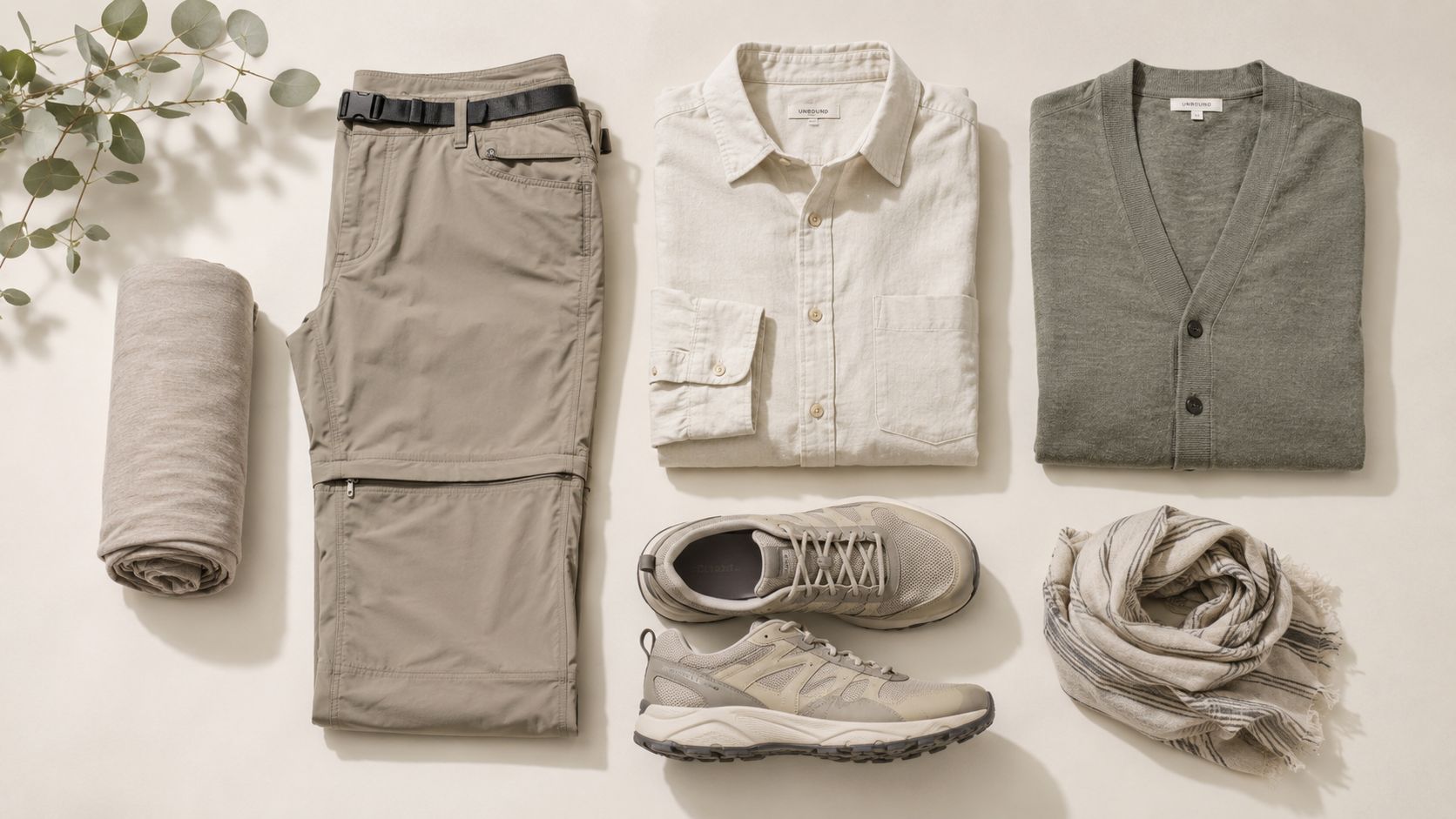
Start with outfits, not individual garments. Choose a small group of pieces that can work together across your itinerary, then remove anything that serves only one narrow purpose. Neutral linen shirts, dark trousers, a lightweight cardigan, and a comfortable pair of walking shoes can move from daytime sightseeing to a casual dinner with a simple change of accessories.
Your destination sets the boundaries. Check expected weather, but also research local dress customs, especially if you'll visit religious sites, rural communities, or conservative neighborhoods. A lightweight cardigan or scarf can provide warmth on transport and additional coverage when required. Convertible trousers from brands such as Craghoppers or REI can be useful on mixed activity trips, although they're less attractive than a dedicated pair of trousers in a dressier setting.
Practical rule: Every garment should work in at least two situations, or solve a problem you're genuinely likely to face.
For longer journeys, pack roughly five to seven days of clothing and plan to wash and repeat rather than carrying a separate outfit for every day. That strategy works particularly well with merino wool base layers, breathable shirts, and quick-drying underwear. The trade-off is simple: fewer clothes require a little routine, but they keep your bag lighter and make daily decisions easier. These quick-dry travel clothing ideas can help you choose fabrics that support that plan.
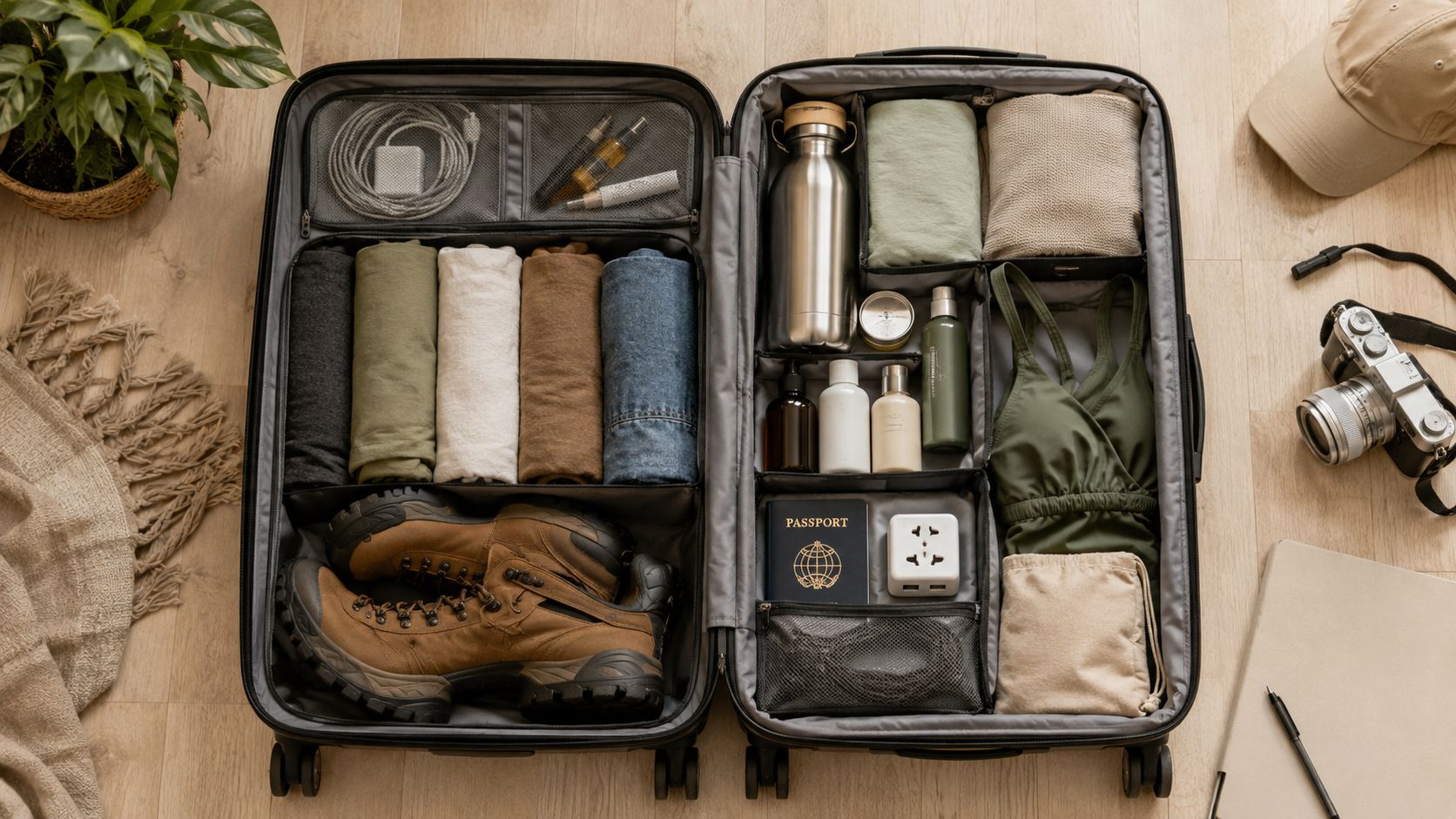
Roll soft garments to use gaps efficiently and reduce wrinkles. Wear your bulkiest shoes, jacket, or trousers during transit. For footwear, prioritize one pair that handles both city walking and light outdoor activity, then add a second pair only when the itinerary clearly demands it.
2. Documents and Valuables Protection
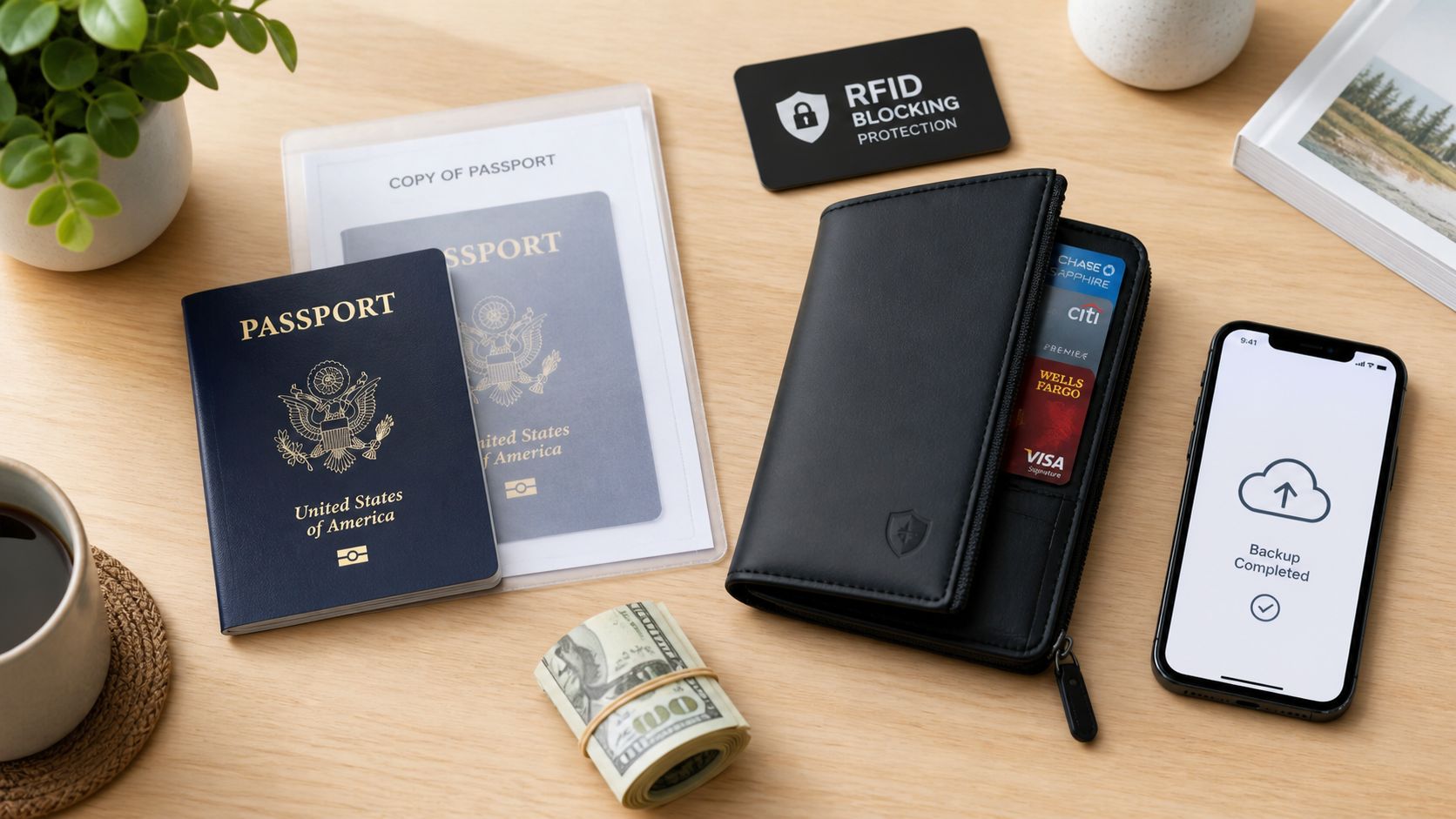
A missed connection, lost bag, or stolen wallet can disrupt an itinerary quickly. Store your passport, required visas, payment cards, insurance information, transport confirmations, identification, and emergency contacts in a secure place that remains easy to reach without displaying everything in public.
Before departure, create protected digital copies of the identification page of your passport, relevant visas, prescriptions, insurance details, and reservations. Save them to an account you can access online, using a strong password and two-factor authentication where available. These files cannot replace originals at a border, but they can help you communicate with an insurer, airline, accommodation provider, or embassy.
Keep a paper copy of your passport in a separate compartment from the original. Record emergency information offline as well, so you can access it without a signal or a charged phone. Solo travelers should tell a trusted person where key documents are stored and share the broad itinerary.
Build a layered valuables system
Separate the money and cards you use each day from backup cash and payment cards. A discreet neck pouch or money belt can help on crowded transport, while ordinary awareness remains important. Choose security gear that feels comfortable and blends into your routine. Equipment that is conspicuous or difficult to wear is unlikely to stay in use.
- Original documents: Keep your passport and required travel papers secure and available for official checks.
- Copies: Store paper copies separately from the originals.
- Digital backups: Save documents in a location you can retrieve from another device.
- Emergency contacts: Record embassy details, insurer contacts, and policy numbers offline.
- High-value equipment: Check whether cameras or laptops require customs registration before departure.
Keep documents, medication, and irreplaceable valuables in your carry-on rather than checked baggage, consistent with the U.S. Department of Transportation's baggage guidance. Give your personal item a clear role: hold the items you would need during a delay, bag loss, or urgent change of plan. For broader preparation, review these travel safety tips.
3. Toiletries and Personal Care
Toiletries are where good intentions become excess weight. Pack the products that protect your health, comfort, and established routine, then question everything else. A toothbrush, toothpaste, deodorant, essential skincare, prescription care, sunscreen, and any personal hygiene products should form the starting point.
Solid products can reduce leaks and simplify packing. Shampoo bars, toothpaste tablets, and a sunscreen stick take less room than several liquid bottles, though they aren't automatically better for every traveler. A shampoo bar may not suit your hair, and a solid product that irritates your skin is a poor bargain. Test alternatives at home before relying on them abroad.
Multi-purpose products can also work well. A mild soap may serve for hands, body, or a small laundry wash, but don't assume one formula will meet every need. People with sensitive skin, specific hair routines, or medical requirements should prioritize dependable products over theoretical minimalism.
Pack for the first part of the journey, not an imaginary version of your entire life abroad.
Travel-sized containers are useful for products you know you need. For longer trips, carry only a reasonable supply and replenish locally when the product is widely available. Buying shampoo or soap at your destination can save bag space and support local shops, but this approach doesn't suit remote routes, arrival nights, or destinations where a familiar product is difficult to find. Hotel toiletries can cover basic needs, although travelers with allergies or skin sensitivities should bring their own.
Make the wash kit adaptable
Separate liquids from dry items and place them where you can remove them easily during security checks. Reusable containers allow you to buy bulk products at local markets without repeatedly purchasing small packages. A compact laundry soap or detergent can be more useful than extra clothes, especially when accommodation offers a sink but no formal laundry service.
Pack a small comb, nail clippers, tweezers, menstrual products if needed, glasses supplies, and hand sanitizer according to your actual routine. Don't add beauty products for a hypothetical night out unless your plans support them. These healthy travel habits can help you decide what belongs in the kit and what can stay at home.
4. Electronics and Power Solutions
Treat electronics as a support system, not a collection of backup gadgets. For many travelers, a smartphone can handle navigation, communication, bookings, translation, photography, and entertainment. That may eliminate the need for a dedicated camera, tablet, laptop, and multiple guidebooks.
Start with the devices that solve a real problem on your itinerary. A phone, charging cable, wall plug, power bank, and destination-appropriate adapter cover most basic needs. Content creators may justify a GoPro or camera, while readers may prefer a Kindle to carrying several physical books. Each addition brings benefits, but also charging demands, theft exposure, and more items to protect.
Download before you leave. Save offline maps, accommodation addresses, transport confirmations, translation resources, tickets, and emergency information. Don't depend on hotel Wi-Fi at the exact moment you arrive without service. A small cable organizer can prevent the familiar scramble through tangled cords, but keep the cable selection disciplined.
Match the power kit to the route
A universal adapter is convenient for multi-country travel, though a small destination-specific adapter can be simpler and lighter for a single-country trip. If you're visiting Japan, check the outlet and voltage requirements before choosing equipment with this guide to an adapter for Japan. Never assume an adapter changes voltage. Devices with incompatible voltage requirements may need a converter.
Keep your power bank and phone in your personal item, not checked luggage. Charge the power bank before departure and test every cable with your devices. A backup battery matters most on long transit days, remote excursions, or when your phone is your only way to contact accommodation or emergency services.
Pack protective cases for fragile equipment, but don't turn every item into a padded brick. A lightweight pouch may be enough for cables and small electronics, while cameras deserve more structured protection. Your technology should remain reachable, charged, and replaceable without compromising the rest of the trip.
5. Health and Medications
A delayed flight, lost luggage, or an unexpected clinic visit can turn a small omission into a serious problem. Keep medication in your carry-on, in its original labeled packaging. This helps with inspections and lets medical staff identify your treatment. Store it separately from toiletries so a leaking shampoo bottle cannot damage it.
Check destination rules well before departure with a doctor or pharmacist. Some countries restrict particular medicines, while controlled substances may require supporting documents. A doctor's letter should state the medication, dosage, and medical need. Carry a prescription copy and relevant health records with your document backups.
Build the medical kit around your own health, then adjust it to the route. A compact first-aid pouch may cover blister treatment, tweezers, bandages, antiseptic supplies, and remedies for common minor complaints. Add electrolytes or other supplies when the climate, altitude, activities, or limited access to shops justify the space. A clinician should guide decisions about antibiotics, preventive medication, and travel health.
Set the health plan before packing
Research destination health risks six to eight weeks before travel. That gives you time to arrange professional advice, required vaccinations, and prescriptions. Depending on the destination and route, you may need to review vaccination records or discuss protection against Hepatitis A, Typhoid, or malaria. Requirements change, so check current medical and government guidance instead of copying an old checklist.
- Daily medication: Pack enough for the itinerary, plus a sensible contingency advised by your clinician.
- Documentation: Carry prescriptions, doctor's letters, and vaccination records when relevant.
- Storage: Keep medicines cool and dry, away from bathroom humidity and direct sunlight.
- Access: Place treatment you may need during transit where you can reach it quickly.
- Insurance: Keep policy details with your documents and know how to contact the provider.
Use the destination, your medical history, and your transport days to decide what belongs in the core kit. A short city break may need only regular medication and basic blister care, while hiking, remote travel, or difficult climate conditions can justify additional supplies.
Insurance cannot replace preparation, but it can help with unexpected care or disruptions. Review this guide to the best travel insurance for backpackers, then confirm that the policy covers your activities, destinations, and existing conditions.
6. Safety and Security Items
Safety gear should support good judgment, not create a false sense of protection. Research local travel advisories, understand common risks, and choose a few items that address the places and situations on your itinerary. A headlamp can help on an unlit path or during a power outage. A personal alarm may add another layer of attention in an uncomfortable situation. Neither replaces route planning or leaving early when circumstances feel wrong.
Solo travelers benefit from redundancy in communication. Share your itinerary with someone you trust, agree on a check-in routine, and keep embassy and accommodation details accessible offline. If you change plans, update the person who's expecting to hear from you. This small habit reduces uncertainty without forcing you to report every movement.
A portable door lock or door-stop alarm can offer reassurance in some hostel or rental settings, but check whether the device fits the door before buying it. Heavy security equipment can be awkward, prohibited, or ineffective on a particular door. Select compact tools that match the accommodation you've booked.
The most useful safety item is often the decision to leave a situation before you need rescue.
Keep protection practical
Carry document copies separately from originals and avoid displaying expensive equipment in crowded areas. A crossbody bag worn toward the front can make access more visible to you. A small flashlight with a strong clip may be more useful than a collection of specialized gadgets because you can find it quickly and use it for ordinary tasks.
Learn basic local norms, transport patterns, and emergency procedures. A self-defense course may improve confidence, but don't treat physical confrontation as the default response. Distance, visibility, trusted contacts, and prompt assistance usually offer better options.
Before departure, write down local emergency numbers where relevant, identify your accommodation's location, and tell someone when you expect to arrive. Pack a safety system that keeps you connected and observant without turning every ordinary interaction into a threat.
7. Navigation and Information Tools
Arriving after a delayed flight with no signal can turn a simple transfer into guesswork. Set up the offline version of your route before departure. Download maps for each destination, save accommodation details, and keep transport confirmations available as screenshots.
Use your phone for maps, bookings, and translation, while keeping a small backup outside it. A paper note with your accommodation name, address, and local contact details remains readable if the battery dies or the device is lost. Write only what you may need during arrival, transfers, or excursions with weak connectivity.
Translation apps work better when language packs are downloaded in advance. Save phrases for transport, food allergies, medication, directions, and emergencies. A few local words can also make routine questions easier and reduce dependence on a screen.
Build the folder around your route
Create one folder or note system that opens quickly. Arrange information in the order you will use it:
- Arrival details: Airport or station instructions, accommodation address, and check-in information.
- Transport records: Tickets, reservations, route numbers, and departure times.
- Local navigation: Offline maps, neighborhood names, and saved points of interest.
- Communication aids: Translation resources and important phrases.
- Research notes: Saved articles, walking routes, and cultural guidance.
Tailor the folder to your luggage and itinerary. A phone-first setup suits light travelers, while a printed backup adds little weight for remote routes, older devices, or long travel days. Keep sensitive booking information protected if your device is shared or accessible to others.
Local advice can fill gaps in generic route planning. Hostel staff, guesthouse owners, and local businesses may know about transport changes, useful walking routes, opening customs, or neighborhoods worth exploring. Ask focused questions, then update your saved route if the answer changes your plans.
Before leaving Wi-Fi, capture booking confirmations and addresses. Test every screenshot and downloaded map in airplane mode. A compact information system weighs almost nothing and can prevent a stressful arrival.
8. Clothing Accessories and Layers
Build this part of the checklist around repeat use, not the number of possible weather conditions. A scarf can provide warmth on a bus, coverage at a religious site, shade in strong sun, or a light blanket during an unexpected wait. A packable rain jacket protects against sudden weather without taking the space of a heavy coat. A merino base layer can handle changing temperatures and reduce the need for several specialized tops.
Layering gives you more control than packing one outfit for an imagined forecast. Start with a breathable base, add an insulating middle layer when needed, and finish with a protective outer layer. In a warm destination, that may be a lightweight shirt with a rain shell. On a cooler route, add a cardigan or thin fleece. Keep one light layer even on warm-weather trips if you expect air-conditioned transport or cooler evenings.
Match accessories to the route
Choose neutral colors so each accessory works with the rest of your wardrobe. A compression bag can reduce volume, but it cannot reduce weight. Use one to separate dirty clothing or contain bulky layers, rather than treating the extra space as room for duplicates.
A compact travel towel earns its place on hostel, beach, or swimming itineraries when it dries reliably. A hat and sunglasses suit bright environments, while gloves or a warm layer belong on colder routes. If the itinerary stays in one climate, leave seasonal backups at home.
Use this quick test before packing:
- Rain protection: Choose a shell that fits over your clothing and folds small.
- Temperature control: Add one adaptable layer instead of several single-purpose pieces.
- Cultural coverage: Carry a scarf or cardigan when local customs require more coverage.
- Laundry support: Use a lightweight laundry bag to separate worn items.
- Storage: Keep small accessories together so they remain easy to find.
Budget also affects the choice. A dependable layer that works across several outfits may cost more initially, but it can replace multiple limited-use pieces. The trade-off is worthwhile only if you will wear it repeatedly.
A stylish accessory that stays buried contributes little. A plain scarf that solves several daily problems is usually the better choice. Review the final selection against your luggage space, climate, planned activities, and laundry access before leaving.
9. Practical Carrying Solutions
The right bag depends on movement, surfaces, transport, and how often you'll unpack. A wheeled case suits airports, paved streets, and trips with a stable base. A backpack is more adaptable across stairs, cobblestones, buses, and uneven paths. A wheeled backpack offers flexibility, but the combined frame and straps may add bulk and weight.
Try the loaded bag before departure. Adjust the hip belt so the pack sits securely, keep heavy items close to your back, and place lighter belongings toward the outer or lower areas without making the bag unstable. A pack with a proper hip belt can transfer weight away from your shoulders, but only if it fits your torso and you adjust it correctly.
Organize for access, not appearance
Packing cubes help separate clothing, toiletries, and accessories. They're especially useful when you move frequently because you can lift out one category without scattering the rest of the bag. They don't make an overloaded pack comfortable, and compression can make it easy to exceed airline limits, so use them as an organization system first.
A removable daypack or compact personal bag can make a large pack more practical. It lets you leave the main luggage at accommodation while carrying water, a camera, documents, and a light layer. For urban exploration, a crossbody anti-theft bag may offer easier access and better visibility than a large backpack.
Avoid choosing capacity based on the longest possible trip. A bag that's too large invites unnecessary packing and becomes harder to protect. The PackPoint Travel Packing List app has 52.4K App Store ratings and an average score of 4.7 out of 5, while Packr has 57.1K ratings and an average score of 4.6 out of 5. Those adoption signals show that many travelers use digital tools to plan, but the tool can't make the physical bag fit your route.
10. Entertainment and Mental Wellness
A delayed flight, long train transfer, or quiet evening can drain your energy when you have nothing suitable to do. Build a small entertainment kit around your route and luggage limits. Download books, podcasts, music, or films before departure, and keep headphones, a charging cable, and one offline option in your personal item so they remain available if checked baggage is delayed.
Frequent readers may save space with a Kindle or another e-reader instead of carrying several physical books. Paper still makes sense if you want to avoid charging and screen fatigue. Choose one compact book, then exchange it or buy another locally rather than filling your bag with reading material. The trade-off is simple: digital content reduces bulk, while paper works without battery power.
Entertainment can also support social connection. A deck of cards or a compact travel game is light, inexpensive, and easy to introduce in a hostel, on a train, or during a shared meal. Choose something with short instructions and flexible play, especially if you are traveling alone.
Protect space for reflection
A pocket journal and pen give you a place to record addresses, useful observations, and experiences that photographs may not capture. Keep the routine small. A few lines about what surprised you, what felt difficult, or what you want to remember are enough to make the trip more deliberate.
Use entertainment to support the journey rather than filling every quiet moment. Podcasts can make solo transit more comfortable, while a walk without headphones may help you notice local sounds and interactions. Adjust the kit to your habits:
- Transit comfort: Downloaded audio, an e-reader, or one compact book.
- Social connection: Cards or a small game that is easy to explain.
- Reflection: A pocket journal and pen.
- Rest: An eye mask or earplugs if they improve your sleep.
- Boundaries: Offline content that works without a signal or roaming data.
Packing for mental wellness supports better travel decisions. A rested, calmer traveler can handle delays with more patience and preserve energy for meaningful experiences. Keep only the items you will use, since a thoughtful kit should reduce stress, not create another category to manage.
10-Item Travel Packing Checklist Comparison
| Item | Complexity (🔄) | Resources & Efficiency (⚡) | Expected outcomes (📊) | Ideal use cases & Effectiveness (⭐) | Key advantages & Tips (💡) |
|---|---|---|---|---|---|
| Clothing & Footwear | 🔄🔄 (planning layers, cultural research) | ⚡⚡ (moderate cost for versatile, lightweight gear) | Lighter luggage, adaptable outfits, fewer fees | Long-term/budget travel, solo trips, ⭐⭐⭐⭐ | Reduces volume; pack 5–7 days, roll clothes, wear bulkiest items |
| Documents & Valuables Protection | 🔄🔄🔄 (organize, backup, distribute) | ⚡⚡ (low hardware cost, cloud access needed) | Faster recovery from loss, lower theft impact | Solo travelers, high-theft urban areas, ⭐⭐⭐⭐ | Use digital/cloud backups and separate physical copies; photograph docs |
| Toiletries & Personal Care | 🔄 (choose solids/TSA items) | ⚡⚡ (low cost; solid items pricier upfront) | Less weight, TSA-compliant, eco benefits | Backpackers, communal facilities, ⭐⭐⭐ | Favor solid/multi-use items; buy replenishments locally |
| Electronics & Power Solutions | 🔄🔄 (compatibility, battery mgmt) | ⚡⚡⚡ (power banks, adapters, device costs) | Reliable connectivity, documentation, safety | Digital nomads, creators, solo travelers, ⭐⭐⭐⭐ | Pack minimal cables, download offline maps, protect devices |
| Health & Medications | 🔄🔄🔄 (prescriptions, insurance prep) | ⚡⚡ (meds and insurance cost variable) | Prevents emergencies; smoother customs/medical care | Remote travel, chronic conditions, ⭐⭐⭐⭐ | Carry original bottles + doctor letter; research health needs early |
| Safety & Security Items | 🔄🔄 (legality, training considerations) | ⚡⚡ (affordable alarms/locks) | Increased personal security and confidence | Solo travelers, hostels, higher-risk areas, ⭐⭐⭐ | Check local laws, prioritize awareness, use portable door locks |
| Navigation & Information Tools | 🔄 (download and organize) | ⚡ (mostly free apps, minimal cost) | Lower roaming costs, improved wayfinding | Budget travel, limited-connectivity areas, ⭐⭐⭐⭐ | Download offline maps/guides before arrival; screenshot bookings |
| Clothing Accessories & Layers | 🔄 (select multipurpose pieces) | ⚡⚡ (moderate spend on merino/packables) | Extended clothing functionality, space savings | Variable climates, ultralight travelers, ⭐⭐⭐⭐ | Choose neutral colors, merino for odor control, use compression bags |
| Practical Carrying Solutions | 🔄🔄 (choose right capacity/design) | ⚡⚡⚡ (quality packs cost more) | Mobility, organization, fewer baggage fees | Long trips, carry-on-only strategies, ⭐⭐⭐⭐ | Use hip straps, packing cubes, aim for 40–50L carry-on packs |
| Entertainment & Mental Wellness | 🔄 (prepare downloads/compact items) | ⚡ (low cost; requires charged device) | Better wellbeing, reduced boredom on transit | Long journeys, solo travel downtime, ⭐⭐⭐ | Download audiobooks/podcasts, journal daily, bring compact games |
Turn the List Into Your Personal Packing System
A useful checklist begins with the items that are hardest to replace. Put your passport, visas, payment cards, insurance information, medication, and essential contact details at the top. Add enough clothing for your planned laundry cycle, then build around the destination's climate and your actual activities.
Choose luggage after you understand the route. A carry-on may suit a city break with reliable laundry and easy transport, while checked luggage can make sense for specialized equipment, colder clothing, or a longer stay with limited access to washing facilities. The decision should reflect the itinerary, not a general belief that one luggage type is always superior.
Checked baggage creates a resilience problem. The U.S. Department of Transportation advises travelers to avoid placing essentials in checked bags because luggage can be delayed, lost, or damaged. A later industry summary estimated 33.4 million mishandled bags worldwide, with a mishandling rate of 6.3 per 1,000 passengers, while a UK survey found 34% of respondents had experienced luggage going missing or being left behind. These figures make the carry-on layer of your checklist especially important. Keep medication, documents, electronics, valuables, basic toiletries, and a change of clothes with you whenever possible.
Use filters instead of adding everything
Create a printable master checklist with a core section and optional filters. The core should include documents, medication, payment methods, basic clothing, personal care, power, and a communication plan. Optional sections can cover:
- Climate: Rain shell, sun protection, cold-weather layers, or humidity-friendly fabrics.
- Activities: Hiking footwear, swimwear, camera equipment, or formal clothing.
- Solo safety: Door alarm, headlamp, offline contacts, and check-in details.
- Sustainability: Reusable containers, refillable water bottle, repair items, and laundry supplies.
- Budget: Items to buy locally, baggage fees to avoid, and products worth bringing from home.
Overpacking deserves a deliberate final review. Recent survey coverage reported that 38% of experienced international travelers identified overpacking as their biggest travel mistake, compared with 32% in 2025 and 35% in both 2024 and 2023. The travel packing checklist survey coverage supports a useful shift in mindset: the goal isn't to fill available space. It's to choose what earns a place.
Lay everything out before it enters the bag. Remove duplicates, test combinations, and reserve room for laundry and a small number of local purchases. If you're bringing three pairs of shoes, explain what each pair does that the others can't. If you're packing a second jacket, check whether one layer and a rain shell solve the same problem.
Finally, carry the packed bag around your home or on a short walk. Notice pressure points, awkward weight, and items you can't reach without unpacking everything. Repack until documents, medication, power, and a first-day outfit are easy to access. A thoughtful system leaves you prepared without making your luggage the center of the trip.
Travel Talk Today's approach fits this style of preparation. Its travel resources combine budgeting guidance, safety planning, cultural awareness, sustainable choices, and destination ideas for travelers who want meaningful experiences without unnecessary expense. Pack less, prepare intelligently, and leave more room for the people, places, and unexpected moments that make travel worth remembering.
Travel Talk Today offers practical travel planning, budgeting ideas, safety guidance, and destination inspiration for thoughtful, affordable journeys. Use its resources to refine your travel packing checklist, reduce unnecessary luggage, and plan a trip that fits your priorities by visiting Travel Talk Today .