You open your budget spreadsheet on a Sunday night and try to make the dream fit. The gorilla permit is the big line item, but the key question is whether the full trip can work without turning into a luxury safari by accident.
Uganda gives budget-conscious travelers a real shot at that. The permit sets the baseline cost, then the rest of the trip comes down to choices you can control: how you get to Bwindi, how many nights you stay, whether you join a group transfer or book a private car, and how simple you are willing to keep your lodging.
That is where many travelers overspend. They focus so hard on the permit that they miss the smaller costs that stack up around it, or they book the kind of itinerary designed for travelers who want fly-in convenience and upscale lodges.
A lower-cost gorilla trip is still a serious purchase. It is also far more achievable than many first-time visitors assume, especially if you plan it the way careful independent travelers plan any big trip, with a savings target, a firm ceiling, and a few compromises picked in advance. If you are still putting the money together, these practical ways to save money for travel help make a gorilla permit feel much more reachable.
The goal here is simple. Build a trip that protects the experience in the forest while trimming the parts around it that matter less to budget travelers. That usually means a modest room, shared transport when it makes sense, and a shorter itinerary built around the trek rather than around extras.
Your Dream Trip and What It Really Costs
You save for months, finally start pricing the trip, and the first totals look rough. Then you realize something useful. Uganda gorilla trekking is expensive, but it is not automatically a luxury safari unless you build it that way.
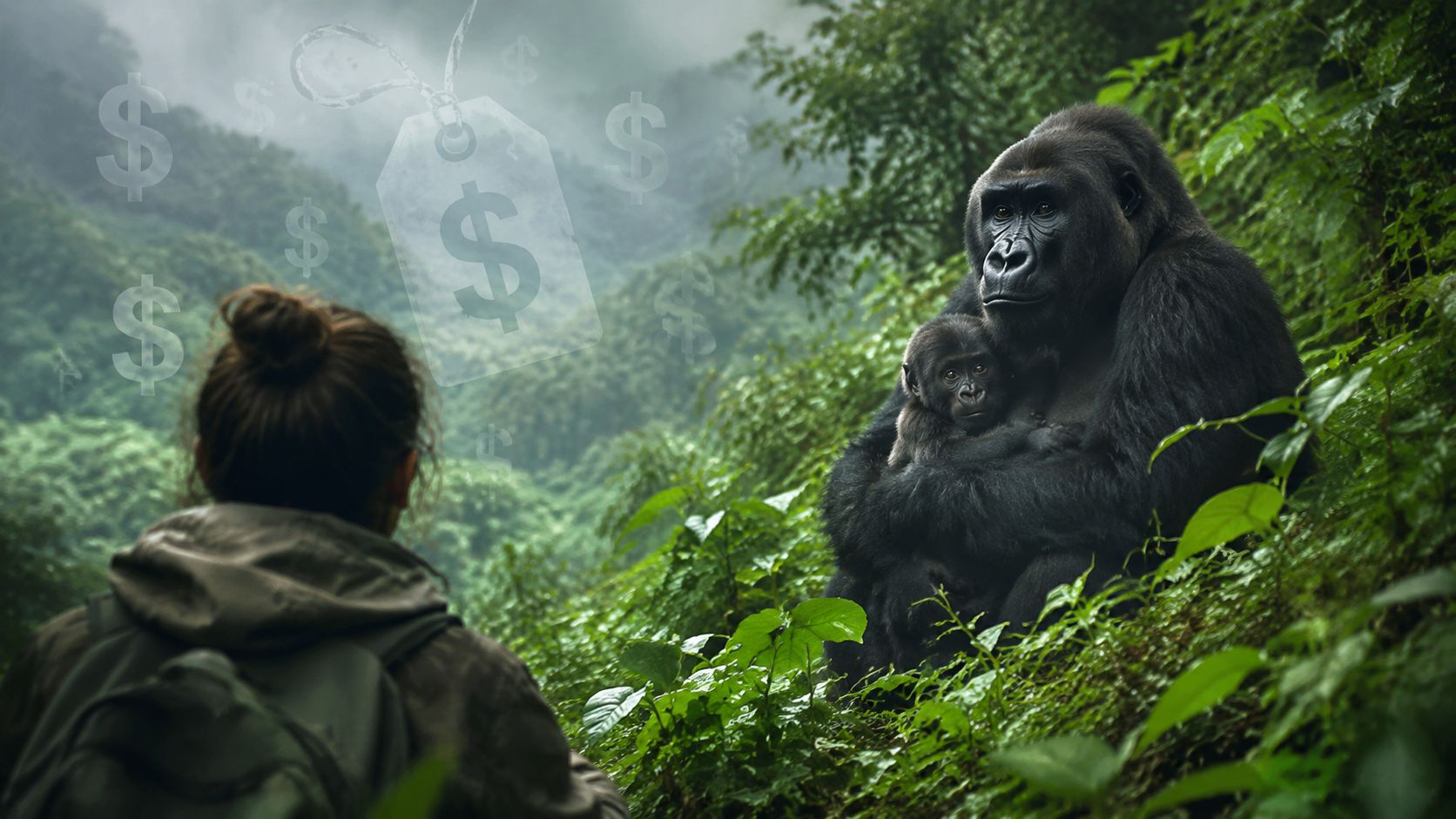
That distinction matters for budget travelers. The final price can swing from a stripped-down trip built around one trek and simple lodging to a polished itinerary with flights, private transfers, and high-end lodges. The permit sets the floor, but your transport, room standard, and trip length decide whether the total stays manageable or starts drifting into premium territory.
I have found that at this stage, people either keep the trip realistic or lose control of the budget.
What budget travelers get wrong
The common mistake is treating every part of the trip as equally important. It is not. The forest experience is the reason to go. The smartest budget usually protects that and cuts comfort upgrades that add cost far faster than they add value.
A lower-cost plan often looks like this:
- Keep the trek at the center: Build the trip around the gorilla day, not around extras.
- Choose simple accommodation: A clean, well-located room does the job if you are leaving early and coming back tired.
- Share the expensive logistics: Group transfers, shared safaris, or joining a small tour can reduce the per-person cost a lot.
A good Uganda gorilla trekking budget is not the one with the smallest total. It is the one that keeps the permit secured, gets you to the park reliably, and avoids paying for comfort you do not care much about.
If you are still saving, start with a firm target and work backward from the trip you can afford. A practical plan like these ways to save money for travel fits this kind of trip well because gorilla trekking rewards early planning and punishes last-minute booking.
A realistic way to price the trip
The total becomes much easier to manage once you separate it into the main spending buckets.
- Your permit
- Transport to and from the trekking area
- Accommodation and meals around the trek
That breakdown helps you make better trade-offs. You might keep the permit and transport fixed, then save money by choosing a basic lodge. Or you might spend a little more on easier transport if it lets you shorten the trip by a night and come out ahead overall.
That is how budget travelers make this trip work. They do not chase the absolute cheapest option in every category. They decide where comfort matters, where it does not, and build a trip they can pay for without losing the experience they came for.
The Core Cost Understanding Your Gorilla Permit
As mentioned, the required starting point is the permit. Everything else in your budget can flex. This part cannot.
For budget planning, that matters more than the headline price alone. The permit is the cost you secure first, then you build the rest of the trip around it without guessing.
What the permit costs by traveler type
Uganda uses different permit rates depending on residency status:
- Foreign non-residents: US$800
- Foreign residents: US$700
- Other African residents: US$500
- East African citizens: UGX 300,000
If you are flying in from Europe, North America, Asia, or Australia, you will almost always be budgeting under the foreign non-resident rate. Travelers living in Uganda or elsewhere in the region should check which category they qualify for before paying, because that difference can materially change the trip total.
Why the permit needs to sit at the top of your spreadsheet
A lot of safari costs can be traded up or down. You can choose a simpler room, share a vehicle, or cut a night from the itinerary. The permit does not work that way.
That is why experienced budget travelers treat it as the anchor cost. Once it is booked, the rest of the planning becomes clearer. You know how much money is left for transport, lodging, tips, and buffer. You also avoid a common mistake. Spending too much time comparing hotels before confirming the one item that controls your travel date.
What the permit gives you
The standard permit covers one gorilla trek and up to one hour with the gorillas after your group finds them. The full outing is much longer. You may hike for a short time or for several hours depending on the assigned family, the terrain, and where the gorillas moved overnight.
That distinction matters for budgeting because the permit is not paying for luxury. It is paying for park access, ranger support, conservation funding, tracking, and a tightly managed wildlife encounter that very few trips on earth can match.
There is also a habituation experience permit at US$1,500, which allows about four hours with a semi-habituated group alongside researchers and rangers (Follow Alice on habituation permits and timing). It is a strong fit for serious photographers, wildlife travelers who want more field time, and return visitors. For a lower-cost first trip, the standard permit is usually the better buy.
The practical budget call
If your goal is to keep Uganda gorilla trekking within reach, choose the standard permit unless you know why the habituation experience is worth the extra spend to you.
I have found that budget trips work best when you protect the experience that cannot be replaced and cut costs in the parts that can. The permit is the part to protect. Accommodation style, room category, and transfer setup are where you make the trip fit your number. If you want a clean way to map those trade-offs, this travel budget category breakdown for planning trips without overspending is a useful template.
Building Your Trip Budget Beyond the Permit
A lot of travelers hit the same moment after buying the permit. The hardest part feels done, then the rest of the trip starts adding up through hotel choices, road transfers, meals, and extra nights.
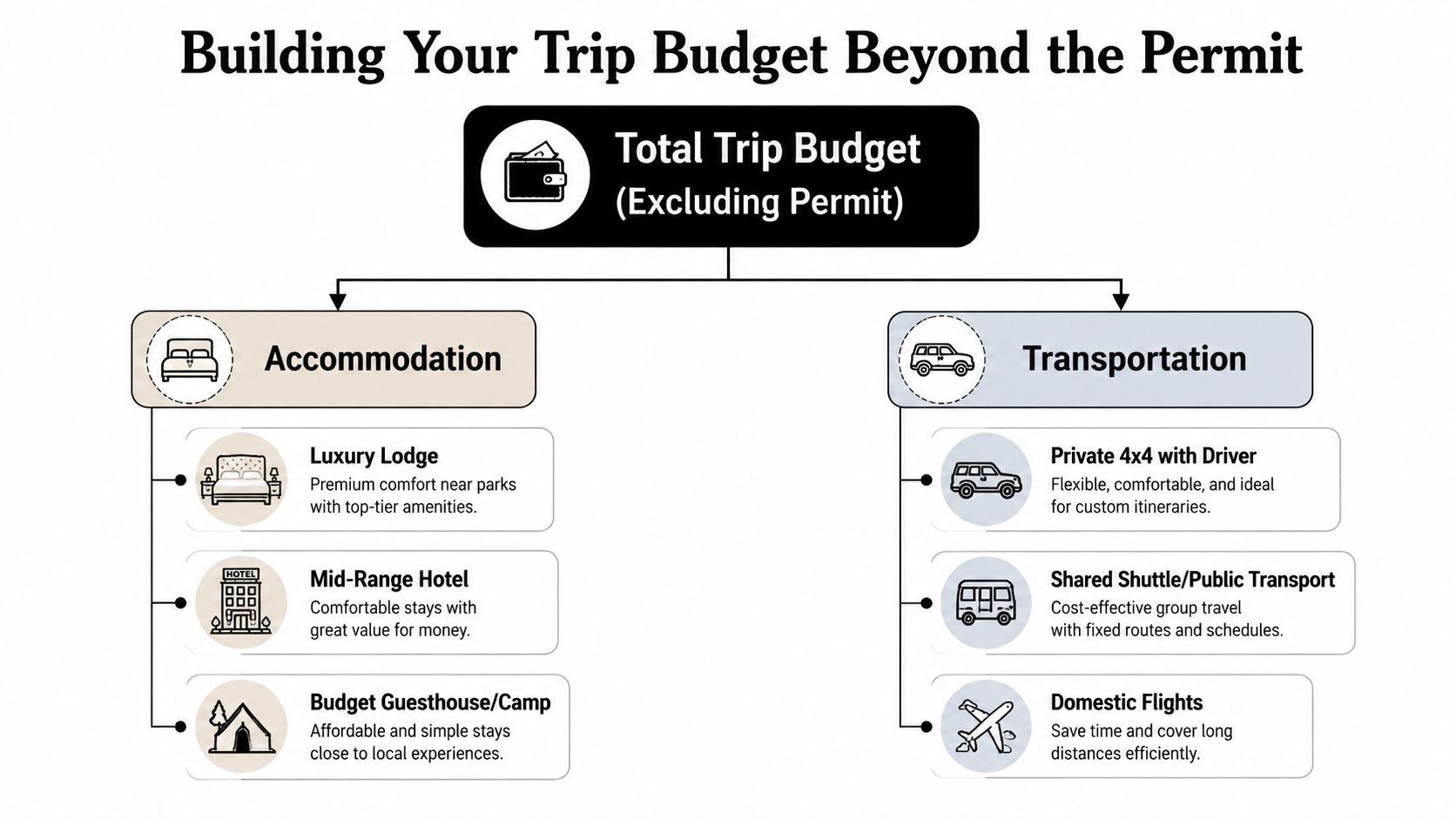
The good news is that this part is flexible. If you are trying to keep Uganda gorilla trekking affordable, this allows the trip to be shaped to fit your number.
Accommodation is usually the biggest variable
Once the permit is fixed, lodging tends to decide whether the trip stays controlled or drifts upward. The range in Uganda is wide, from simple guesthouses and basic safari lodges to high-end properties with big views, polished service, and full board setups.
I usually advise budget-conscious travelers to ask one practical question first: how close does the lodge put you to your trek sector check-in point? A cheaper room can stop being cheap if it adds a long early-morning transfer on rough roads.
A sensible way to judge accommodation is by what you get for the extra money:
- Budget stay: A clean room, a bed net, basic meals, and a functional base before and after the trek.
- Mid-range stay: Better sleep, more reliable hot water, stronger meal service, and less hassle around early departures.
- Luxury stay: The higher rate covers the setting, service, privacy, and views. The permit and gorilla experience remain the same.
For a short gorilla-focused trip, many travelers do best by keeping the room simple and putting their money into dependable logistics. If you are adding other parks later, then a more comfortable lodge can make sense because those extra nights affect the trip more.
Transport changes the budget and the feel of the trip
Transport is the second big cost driver, and it also shapes how tiring the trek feels before you even reach the forest.
Road transfers are usually the lower-cost route. They take time, but they can work well if your schedule is tight and your expectations are realistic. Shared transfers or small-group tours often give the best value because the vehicle cost is split across several travelers.
Private transport costs more, but there are cases where it is worth it. Couples, families, travelers carrying camera gear, and anyone landing on a tight schedule often benefit from having a driver handling timing, stops, and route changes.
Fly-in setups save time. They do not usually save money.
The expensive mistake is choosing the cheapest transfer without checking what it includes. A low headline price can mean awkward connections, long waits, an overnight you did not plan for, or arrival times that make the whole trip more stressful.
Extra nights change the math quickly
A gorilla trek can stay fairly compact if you keep it focused. Add a safari circuit, another national park, or a buffer night on each end, and the total rises fast because every extra day brings another room, more meals, and more transport.
That is why budget travelers usually get the best value from a short plan with tight logistics. Go in, trek, recover, and leave. A longer Uganda trip can be excellent, but it belongs in a different budget category from a simple gorilla-first itinerary.
A practical low-cost build
For many travelers trying to keep the trip achievable, the strongest combination looks like this:
- One standard permit
- A budget lodge near the correct trekking sector
- Shared road transport or a budget-focused small group
- As few extra nights as possible
- Enough buffer to avoid risky same-day connections
That mix protects the part of the trip you cannot replace and trims the parts you can scale up later. If you want to compare this with other lower-cost wildlife trip styles, this affordable African safari guide for budget travelers is a useful next read.
Sample Itineraries and Budgets for 2026
You have found a cheap flight to Uganda, cleared a few days off work, and decided this is the year you finally see mountain gorillas. The next question is the one that usually decides whether the trip happens at all. What does a realistic itinerary look like once you strip away the glossy safari version and build it around a lower budget?
Using the budget ranges established earlier, here is how those numbers play out in real trip designs. The point is not to repeat a price chart. It is to show what you get, where the money goes, and which version gives the best value for a cost-conscious traveler.
Three practical trip styles
| Trip style | Typical length | How it keeps costs in check | Best for |
|---|---|---|---|
| Gorilla-first budget trip | 3 days | Shared transport, basic room, no extra park add-ons | Travelers focused on getting the trek done at the lowest realistic total |
| Budget-smart comfort trip | 4 days | One extra night, more reliable transfers, better recovery after the trek | Travelers who want to keep spending controlled without making the trip feel rushed |
| Fly-in or safari add-on trip | 3 to 6 days | Saves time, not money | Travelers pairing gorillas with a wider East Africa itinerary |
1) Gorilla-first budget trip
This is the build I would start with for anyone saying, "I want the gorillas, but I cannot let the trip sprawl."
Day 1: Travel to Bwindi or Mgahinga using a shared transfer or a budget small-group arrangement. Check into a simple room close to your trekking sector.
Day 2: Gorilla trek. Return to the same lodge.
Day 3: Travel back out.
This version works because every choice supports the main goal. You are paying for one exceptional wildlife experience and cutting the extras that do not change that core moment.
The trade-off is comfort. Road time can feel long, the room may be basic, and there is less margin for delays. For budget travelers, that is often still the best deal in the whole article because it keeps the trip achievable without turning it into a stressful ultra-cheap gamble.
2) Budget-smart comfort trip
This is usually the strongest value option for travelers who can spend a bit more and want fewer things to go wrong.
Day 1: Travel to the park area with a private transfer, semi-private arrangement, or better-timed road setup.
Day 2: Gorilla trek. Sleep in the same lodge again.
Day 3: Keep a buffer day for resting, shifting sectors, or handling onward travel without pressure.
Day 4: Depart.
That extra day changes the feel of the trip more than people expect. Gorilla trekking can be muddy, steep, and tiring. A better bed, a hot shower, and no need to rush straight into a long transfer the same day can be money well spent.
I have seen travelers cut this buffer to save cash, then lose those savings to messy transport timing or an extra unplanned night. A controlled, slightly longer plan often protects the budget better than an over-tight one.
3) Fly-in or safari add-on trip
This is the version built around time, not thrift.
Day 1: Fly in, or use a high-comfort transfer.
Day 2: Trek.
Day 3 and after: Continue to another safari destination or stay near the park.
It makes sense for honeymoon trips, photographers carrying more gear, or travelers fitting gorillas into a larger itinerary. It is a weaker fit for anyone whose main goal is keeping Uganda gorilla trekking cost down. The convenience is real, but the savings are not.
Which itinerary gives the best value?
For strict budget control, the gorilla-first 3-day plan usually wins.
For actual value, I would give the edge to the budget-smart comfort trip. It costs more on paper, but it often reduces the expensive mistakes that come from rushing: bad transfer timing, exhaustion, and last-minute changes. The premium version belongs to a different spending mindset altogether.
If you are still deciding how far to trim, use a simple trip-planning framework before you book anything. This guide to planning a trip on a budget without missing the big expenses is a good reality check.
Uncovering Hidden and Optional Costs
The permit and accommodation get most of the attention. The budget surprises usually come from everything around them.
Costs people forget to add
A complete trip often includes more than the obvious headline items:
- Meals and drinks: Sometimes bundled into a lodge or package, sometimes not.
- Porter fees: Optional, but many trekkers end up glad they hired one.
- Tips: Common for the people who help make the trek run smoothly.
- Visa and insurance: Easy to forget when you're focused on the park booking.
- Small practical purchases: Snacks, extra water, rain gear, and cash for local payments.
None of these line items are huge on their own compared with the permit. Together, they can still push a careful budget off course.
Why porter money is often money well spent
If you're strong and travel light, it might be tempting to skip a porter. Sometimes that's fine. But many trekkers decide the extra help is worth it once the trail gets steep, muddy, or tiring.
There's also an ethical argument for it. Porter support isn't just about convenience. It's a direct way to put money into the local economy around the parks. For many travelers, that makes it one of the easier optional expenses to justify.
Travel insurance is not the line to cut
This is not the budget category to trim first. Gorilla trekking involves remote areas, physical exertion, fixed prepayments, and travel coordination that can get expensive when something changes.
A good policy matters for trip interruption, medical issues, and lost prepaid arrangements. If you're comparing options, use a framework like this travel insurance comparison guide and make sure the activity level fits what you're doing.
Skip a nicer room if you have to. Don't skip insurance and assume you'll improvise.
Build a small cushion
My rule on trips like this is simple. Leave room in the budget for things that aren't technically required but make the experience smoother. A porter. Extra snacks. A more convenient transfer. A recovery meal after the trek.
A budget that has zero margin looks disciplined at home and fragile on the ground.
Smart Strategies to Reduce Your Gorilla Trekking Cost
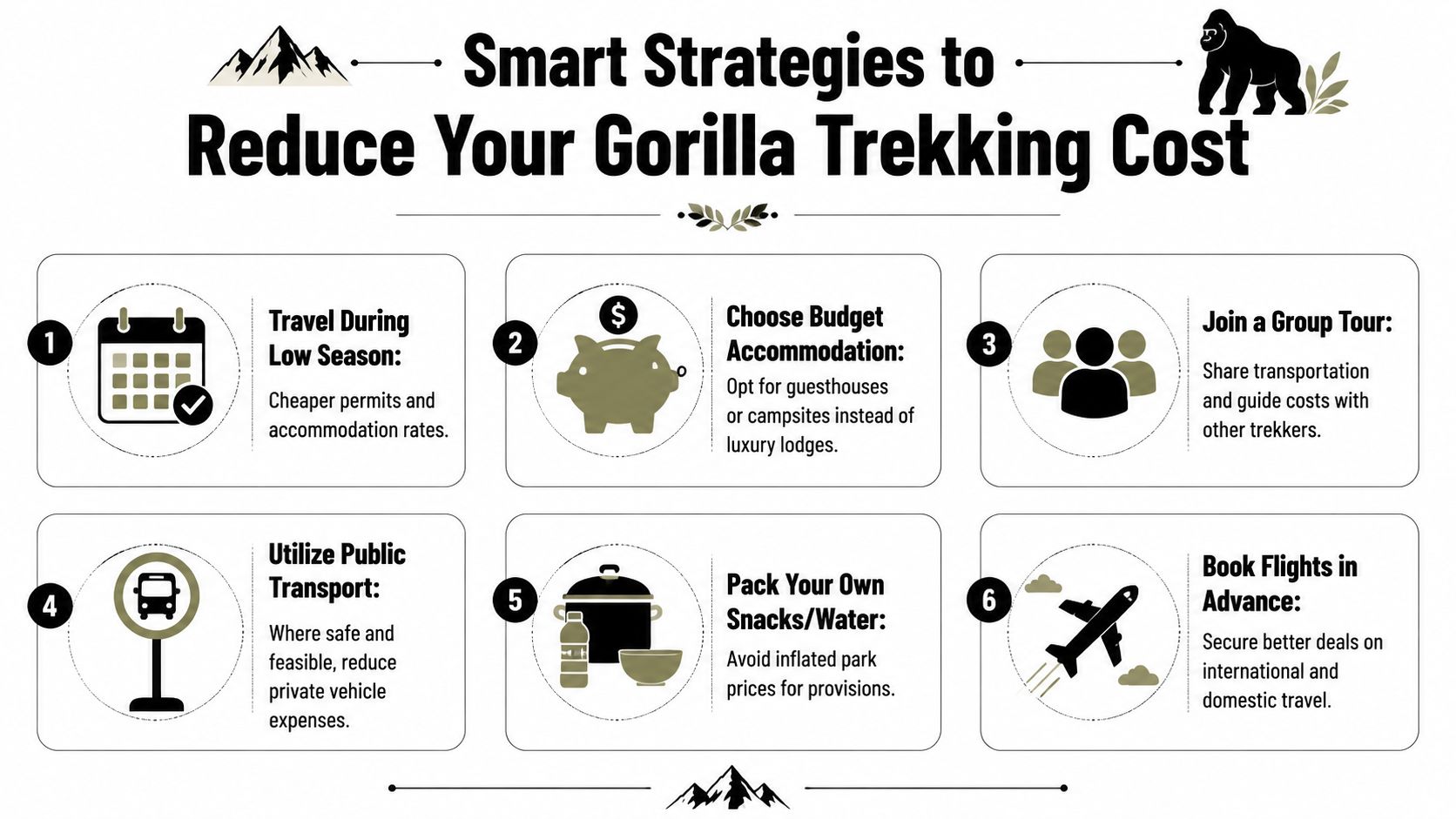
The best way to lower your Uganda gorilla trekking cost isn't to chase unrealistic bargains. It's to make a series of small, smart decisions that all lean in the same direction.
Save on the parts you control
The permit stays fixed. The rest of the trip doesn't.
- Join a group tour: Shared transport is one of the cleanest ways to cut costs without damaging the core experience.
- Choose budget lodging near the trek: Paying less per night matters quickly on a short trip.
- Keep the itinerary tight: A focused gorilla trip is usually cheaper than adding extra parks just because they look good in a brochure.
- Prioritize road travel over premium transfers: More time, lower cost. That's often the trade.
Book in the order that protects your budget
Travelers often do this backward. They browse lodges, daydream about add-ons, and only later realize the permit date controls everything.
A better booking sequence is:
- Secure the permit date
- Match your lodge to the correct trekking area
- Choose the cheapest reliable transport that still gets you there without stress
- Add extras only if the base trip still fits your target budget
That order keeps you from spending on convenience before the main event is locked in.
Know what doesn't work
A few cost-cutting ideas look smart but usually aren't:
- Booking too late and hoping for a deal
- Choosing awkward transport that creates extra overnight stops
- Picking a lodge far from your trekking point just because the room is cheaper
- Trying to DIY every detail when a shared package would cost less
Budget travel works best when you remove friction, not when you add three complicated moving parts to save a small amount.
The best low-cost mindset
Think in terms of value density. Spend on the pieces that directly protect the trek day. Cut the decorative extras.
That usually means modest lodging, practical clothing, shared logistics, and one unforgettable permit instead of a padded safari package. For the right traveler, that combination makes Uganda gorilla trekking feel expensive but still reachable.
How to Book Your Permit and Plan Your Trip
There are two common ways to arrange a Uganda gorilla trek. You can book the permit more directly through the Uganda Wildlife Authority framework, or you can use a licensed tour operator who bundles permit handling with transport and lodging.
Direct booking versus operator booking
Direct-first planning works best for experienced travelers who are comfortable piecing together transfers, lodge reservations, and timing on their own. It can give you more control, but it also creates more room for logistical mistakes.
Operator booking is usually the easier path for most travelers, especially on a short gorilla-focused trip. It reduces admin, makes timing simpler, and can bundle transport in a way that protects the overall plan.
For budget-conscious travelers, the cheapest-looking route isn't always the best route. If a local operator offers a straightforward package with the permit, the right lodge location, and shared transport, that often beats a DIY plan assembled from separate pieces.
A practical planning timeline
The key is to work backward from the permit.
- First: Decide whether you're traveling on a tight budget, mid-range, or luxury setup.
- Next: Lock your permit date before building the rest of the trip.
- Then: Book lodging that matches the trekking area, not just the nicest photos.
- Finally: Confirm your ground logistics and keep your pre-trek day as low-stress as possible.
What usually works best
For most readers of this guide, a reputable operator with transparent pricing is the smoothest choice. Not because DIY can't work, but because gorilla trekking rewards coordination more than improvisation.
The goal isn't to win a planning contest. It's to arrive on trek morning rested, on time, and with your permit sorted.
Frequently Asked Questions About Gorilla Trekking
Is gorilla trekking physically difficult
Yes, it can be. Trails can be muddy, steep, and uneven, and the length of the hike varies with where the gorillas are that day. That doesn't mean you need to be an elite hiker. It does mean you should take the terrain seriously, wear proper footwear, and be honest about your fitness.
Hiring a porter can make the day much easier, especially if you carry camera gear or struggle on steep descents.
Is it safe
For most travelers, the experience feels well managed. Treks are guided, organized, and closely structured. The bigger practical risk is usually the terrain rather than the gorillas themselves.
Solo female travelers often ask this for good reason. Uganda gorilla trekking is one of those experiences where being in a guided setting helps a lot. You aren't wandering into the forest independently. You're part of a controlled visitor process, which tends to feel more reassuring than many travelers expect.
When should I go
The best timing depends on your priorities. Some travelers prioritize easier conditions and high-demand dates. Others care more about availability, lower lodging pressure, and keeping the budget in check.
If you're cost sensitive, flexibility helps. The more fixed and narrow your dates are, the harder it can be to keep the rest of the trip affordable.
Are sightings likely
People book gorilla trekking because the encounter is the point, and the system is built around guided tracking. No wildlife experience is something you should treat as automatic, but this is not a casual game drive where you might spend hours scanning the horizon and see nothing.
That said, the exact quality of the encounter varies. Terrain, weather, vegetation, group movement, and positioning all affect how the hour feels.
Is it worth the money
For travelers who value wildlife and meaningful travel, yes. The better question is whether it's worth the money for your style of trip.
If you want luxury for luxury's sake, the bill climbs quickly. If you want one unforgettable core experience and you're happy to keep the rest practical, Uganda offers one of the clearest value cases in African travel.
Can I do this on a backpacker mindset
Yes, with the right definition of backpacker. This isn't a cheap activity, but it can fit a disciplined, lower-cost trip style. Think simple rooms, shared transport, short itinerary, and careful planning. Don't think spontaneous budget bus adventure with everything decided on arrival.
If you're mapping out a gorilla trek and want more practical, budget-focused trip ideas, Travel Talk Today is a strong next stop. It's built for travelers who want meaningful adventures without wasting money, with grounded advice on affordability, timing, and planning trips that feel ambitious but still doable.