You’re probably on the Amtrak booking screen right now, staring at two fares that look close on one trip and absurdly far apart on another. Coach gets you there. Business class sounds nicer. The question isn’t “which one is better?” It’s which one is worth your money on this specific route.
That’s where most amtrak business vs coach advice falls apart. People talk about “more comfort” as if Amtrak runs one universal product. It doesn’t. The upgrade can be a smart little splurge on one route and a laughably overpriced add-on on another. Same brand name, very different value.
The blunt version: don’t buy business class because the label sounds better. Buy it when the route, fare gap, and seat policy make it useful.
Your Amtrak Ticket Choice The Journey Beyond Price
You don’t need a luxury mindset to think about upgrading. You just need to hate wasting money.
That’s why the amtrak business vs coach decision should start with value, not status. The seat itself may not transform your trip. In one Business Insider comparison of Amtrak business and coach, the writer said “the seats themselves felt pretty much the same to me.” Yet that same review points to fare gaps that swing wildly by route, including a 356% markup on New York to Boston and only a $19 difference on Los Angeles to San Diego.
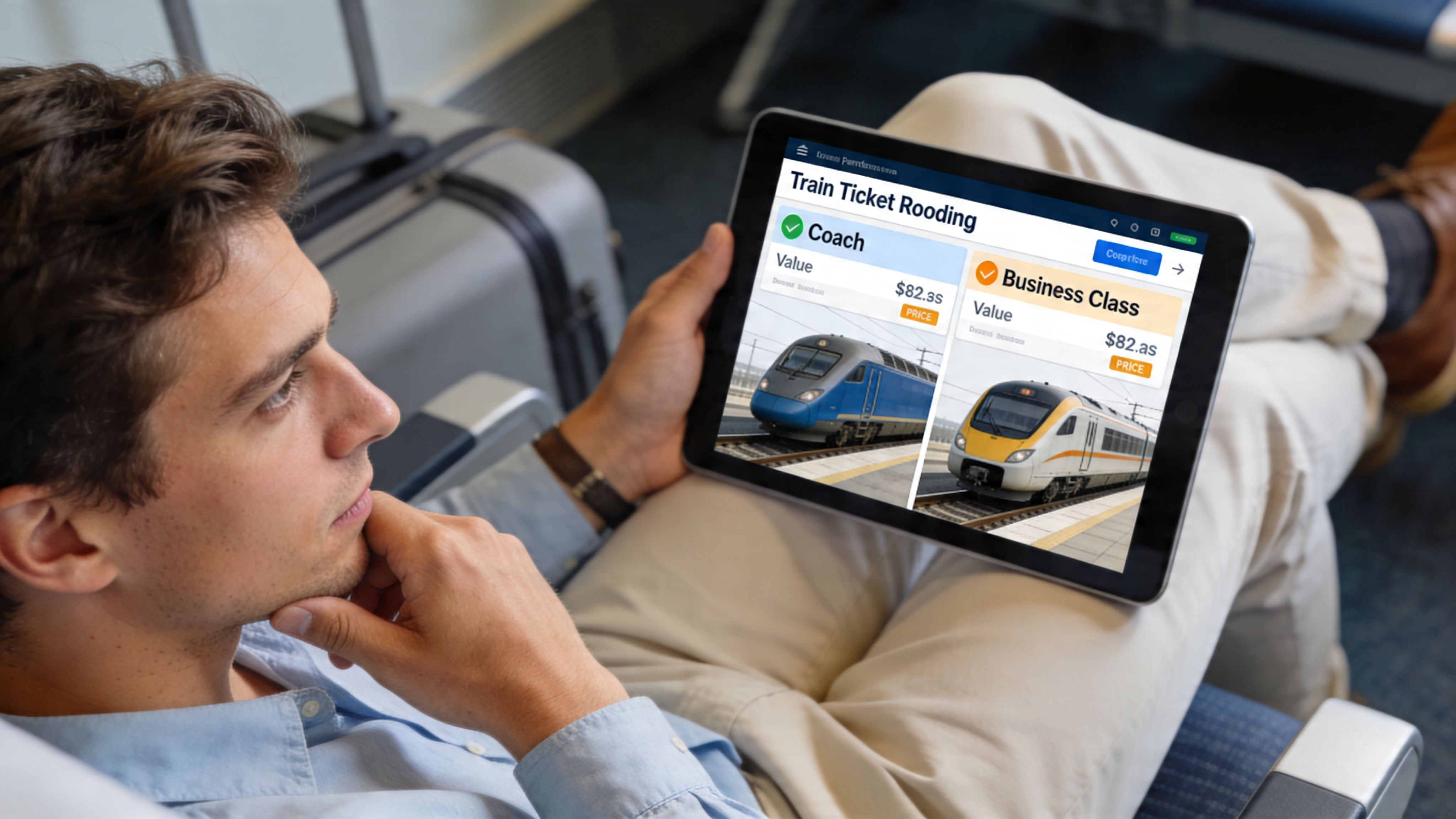
That’s the whole story in one snapshot. You’re often paying for the same broad category of trip, but not getting the same level of value in return. Sometimes business class buys calm, space, and convenience at a fair price. Sometimes it buys a slightly nicer vibe for a fare jump that makes no sense.
What actually matters
When I look at a ticket, I care about four things:
| Factor | Coach | Business Class | My advice |
|---|---|---|---|
| Base value | Usually the cheapest way to ride | Can be reasonable or wildly overpriced | Start here, not with amenities |
| Seat comfort | Already solid by travel standards | Better on paper, not always dramatically better in practice | Don’t assume a huge leap |
| Atmosphere | Busier, more casual | Quieter, less crowded | Worth paying for if you need calm |
| Route rules | Can be fine, but policy matters | Can include practical advantages | Check the route before booking |
My opinion
If you’re a budget traveler, coach should be your default. Not because business class is bad, but because Amtrak coach is already decent enough that the upgrade has to earn its keep.
If you want to get better at making calls like this across your whole trip, not just your train ticket, these travel budgeting tips for smarter trip planning will help you stop overspending on upgrades that sound better than they feel.
Bottom line: On Amtrak, business class isn’t automatically better value. It’s only better when the route makes the price make sense.
The Standard Amtrak Coach Experience
Coach on Amtrak isn’t punishment. That’s the first thing people get wrong.
If your frame of reference is flying economy, coach often feels refreshingly human. You’re not squeezed into a cramped row with your knees jammed against the seat ahead of you. You can settle in, look out the window, plug in your phone, and travel without feeling like the trip itself is a battle.
Why coach is the default pick
Coach works because it covers the basics well. You get a practical seat, room to relax, and the kind of onboard setup that suits travelers who care more about getting from one city to another than playing fare-class games.
A lot of backpackers and city hoppers don’t need more than that. They want a seat, a charger, access to the cafe car, and enough comfort to read, nap, or watch downloaded shows. Coach handles that just fine.
Where coach already feels generous
One reason I’m comfortable recommending coach so often is simple. Amtrak isn’t competing with some idealized luxury rail fantasy. It’s competing with buses, budget flights, and the general misery of travel logistics.
Here’s what coach usually does well:
- Stretch-out comfort: You can sit for a longer ride without feeling folded in half.
- Easy practicality: You’re not overthinking every snack, bag, and charger the way you might at an airport.
- Relaxed vibe: Coach feels less stiff and more flexible, which a lot of travelers prefer.
- Better value ceiling: If the upgrade price is steep, coach lets you keep money for food, lodging, and the rest of your trip.
Coach is often the smarter buy because the baseline is already good enough.
That last point matters. “Good enough” is a compliment in travel. A ticket doesn’t need to feel premium. It needs to feel fair.
Who coach suits best
Coach is the right call if any of these sound like you:
- You’re watching every dollar. Save the difference for another night in a hostel, a museum pass, or better food when you arrive.
- You’re taking a short daytime ride. You don’t need to pay extra for minor improvements on a quick trip.
- You don’t mind a livelier car. Some travelers like the looser, less buttoned-up energy in coach.
- You’d rather spend on destination experiences. That’s often the smarter move, especially for urban explorers.
If your broader travel style leans toward stretching your money while staying mobile, these best ways to travel Europe on a budget-minded itinerary follow the same principle. Spend where the experience changes meaningfully. Skip the upgrades that mostly flatter the booking page.
What a Business Class Upgrade Really Offers
Business class on Amtrak does give you more. The mistake is thinking it gives you dramatically more on every route.
What you’re really buying is a bundle of small upgrades. Some are tangible. Some are about how the trip feels.
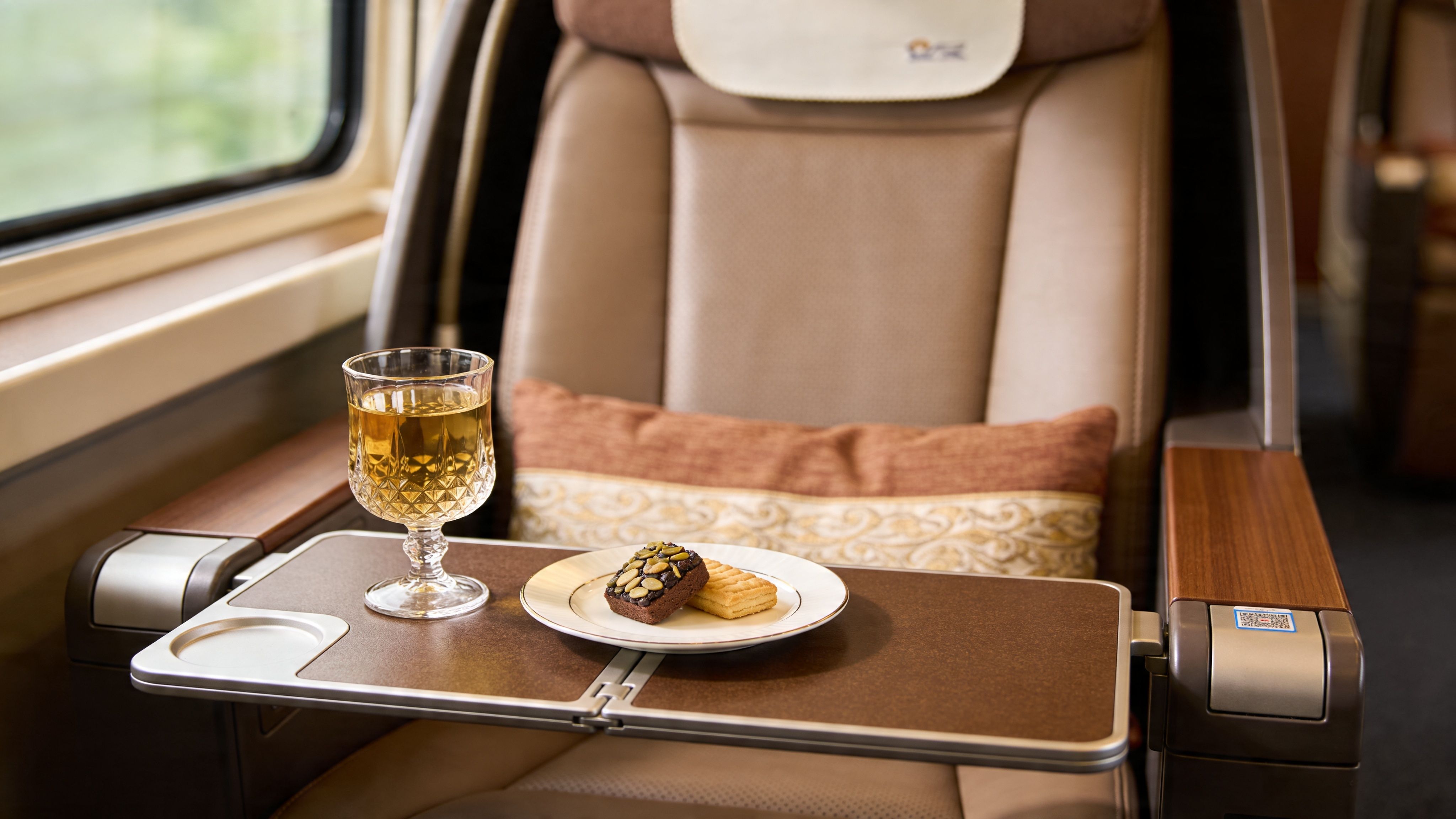
According to this Business Insider coach versus business class review, Amtrak business-class seats offer about 42 inches of legroom versus 39 in coach, an 8% increase. The same report says business class includes a complimentary nonalcoholic drink, 25% bonus Amtrak Guest Rewards points, and a quieter car that typically has around 15 seats.
The perks that matter most
Here’s what I’d count as the benefits:
| Business class perk | Why it matters |
|---|---|
| More legroom | Helpful on longer rides, especially if you hate feeling boxed in |
| Quieter car | Big upgrade if you want to read, work, or just be left alone |
| Complimentary drink | Nice, but not a reason by itself to upgrade |
| Bonus loyalty points | Useful if you ride Amtrak regularly |
| Fewer passengers | Less chaos, less foot traffic, better overall mood |
The comfort upgrade is real, but limited
An extra few inches of legroom matters more on a long ride than on a quick hop. The footrest helps too. But this isn’t the kind of leap you get when moving from a bad airline seat to a lie-flat cabin. It’s a modest improvement, not a revelation.
That’s why I don’t treat business class as a comfort purchase alone. I treat it as an environment purchase.
You’re often paying for calm
This is the part many travelers underestimate. A quieter car with fewer people can change the whole feel of the trip. If you’re trying to work, decompress, or avoid the first-come scramble of a busy coach section, that calmer setup has real value.
Practical rule: Business class makes the most sense when you care about peace and predictability more than flashy amenities.
That’s also where rewards can tilt the math. If you collect points and already think strategically about travel spending, these best credit cards for travel rewards can help you decide when a premium fare delivers something back later.
The Side-by-Side Showdown Coach vs Business
You don’t need more marketing language. You need a clean comparison.
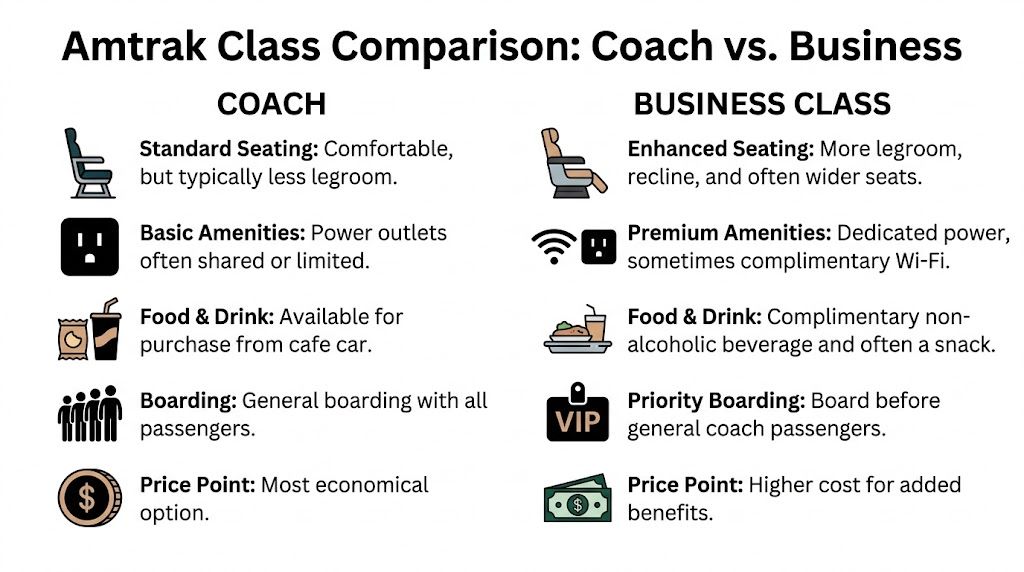
Seating and personal space
Coach: Comfortable enough for most trips. The seat gets the job done, and for many riders that’s all it needs to do.
Business class: Better for stretching out and settling in. The added space helps, especially if you’re tall or carrying the kind of tension that makes every inch count.
The upgrade feels bigger in your legs and in the atmosphere than in the seat itself.
Onboard perks and amenities
Coach: Buy what you want from the cafe car and keep it simple. You aren’t paying upfront for extras you may not care about.
Business class: You get a complimentary nonalcoholic beverage and some route-specific convenience benefits. Nice touch, but not enough on its own to justify a big fare jump.
Travel environment
The gap gets sharper here.
Coach can feel busier, noisier, and more fluid. That’s not automatically bad. Some travelers like the casual feel and don’t need a hushed cabin.
Business class tends to feel more contained. Fewer people. Less churn. Better if you’re overstimulated, trying to work, or want a more orderly ride.
Best use case for each
Choose coach for flexible, budget-first travel
You want the lowest fare and a comfortable enough ride. That’s the classic backpacker logic, and it’s often the right one.Choose business for a work trip or decompression
If you need laptop time, quiet, or a more settled environment, business class starts making practical sense.Choose coach for short rides
The shorter the journey, the harder it is for business class to prove its value.Choose business when the fare gap is modest
A small upgrade can be worth it. A giant markup usually isn’t.
Quick verdict table
| Category | Coach wins if... | Business wins if... |
|---|---|---|
| Budget | You want the lowest fare | The extra cost is small |
| Comfort | You’re fine with solid basics | You want more space to stretch |
| Quiet | You don’t mind a lively car | You need calm |
| Flexibility | You’re price-sensitive | You want a smoother feel |
| Overall value | The upgrade looks overpriced | The route makes the premium reasonable |
If you like to compare options fast before booking, these best travel apps for planning and booking trips can make that side-by-side process much easier.
Unpacking the Price The Real Cost of an Upgrade
You’re booking a train and the upgrade button says business class for a little more money. Sometimes that’s a smart add-on. Sometimes it’s a lazy fare trap.
That’s the part many Amtrak guides miss. Business class is not a fixed product with fixed value across the network. It changes by route, by train, and sometimes by how Amtrak prices that corridor on that day. So stop asking, “Is business class worth it?” Ask, “Is this specific upgrade worth it on this specific trip?”
According to NerdWallet’s Amtrak coach versus business fare comparison, at their last check in early 2026, the non-Acela New York to Boston route jumped from $25 in coach to $114 in business class, while Los Angeles to San Diego went from $36 to $55.
Those examples make the point better than any marketing copy. On one route, business class is a reasonable bump. On another, it’s priced like a joke. You are not getting four times the comfort because you picked a Northeast trip. You are paying a route-specific premium, and that premium needs to earn its keep.
Here’s the filter I use.
- If the fare gap is small, business class can be a good buy for a longer ride, a busy departure, or a trip where you want to work or decompress.
- If the fare gap is large, book coach and move on unless the upgrade includes something concrete you know you will use.
- If the route has special business class perks, check them before paying. Some routes justify the upcharge better than others.
- If you’re hesitating, that usually means the price already feels too high for what you expect to get.
One rule matters more than the rest. Compare your exact train, not the category in the abstract.
A lot of travelers get burned because they compare “coach vs. business class” like they are universal standards. They are not. Amtrak’s business class can be a sensible splurge on one corridor and a bad deal on the next departure two hours later.
If the extra cost already annoys you at checkout, coach is probably the right call.
And if you’re weighing train prices against airfare for the same trip, these tips on how to save money on flights help you check whether the rail fare still wins on total value.
Making Your Decision Who Should Choose Which Class
If you want the short answer, here it is. Coach is the smart default. Business class is the selective upgrade.
The right choice depends less on prestige and more on what kind of traveler you are that day.

One practical detail changes the equation fast. On Amtrak’s unreserved coach seat policy page, the company says that on unreserved services like the Pacific Surfliner, coach seating “is not guaranteed,” while business class offers “a guaranteed seat.” That alone can justify paying more during busy travel periods.
Choose coach if this sounds like you
You care most about getting there affordably. You’d rather save the fare difference for your hotel, your meals, or the next leg of your trip.
Coach is also the better pick if:
- You’re traveling light and staying flexible
- You don’t mind a busier car
- You’re on a short or casual daytime trip
- You hate overpaying for minor improvements
For solo travelers and backpackers, that’s often enough. If your expectations are realistic, coach feels completely fine.
Choose business class if this sounds like you
Business class earns its keep when you need something specific, not when you’re chasing a vague sense of “nicer.”
It makes sense if:
- You need a quieter ride to work or rest
- The upgrade price is modest on your route
- You’re traveling at a crowded time and want a more predictable experience
- You’re on an unreserved service where a guaranteed seat matters
That last point matters a lot more than people realize. A guaranteed seat is not a cosmetic perk. It’s a practical one.
My advice: If missing out on a seat would ruin the trip, stop treating business class like a luxury and start treating it like insurance.
My candid recommendations by traveler type
| Traveler type | Best choice | Why |
|---|---|---|
| Budget backpacker | Coach | Best value, money goes further elsewhere |
| Solo traveler during peak times | Business class on unreserved routes | Guaranteed seating matters |
| Remote worker | Business class | Quiet is the product |
| Couple on a scenic ride | Coach or one small upgrade if cheap | Don’t overspend for marginal comfort |
| Frequent Amtrak rider | Depends on fare gap | Points and comfort may add up |
The clearest rule
If you’re asking whether business class is “worth it” in some broad universal sense, you’re asking the wrong question.
Ask this instead: What problem does the upgrade solve on my route?
If the answer is “none,” book coach and don’t look back.
Smart Booking and Upgrade Strategies
You don’t have to choose between paying full coach fare and blindly splurging on business class. There’s a middle ground if you book with some discipline.
How to shop smarter
- Check the route before the class: Don’t assume business class has standard value systemwide. Compare the exact train you want.
- Book when your plans are firm: The earlier you lock in a trip, the easier it is to spot a reasonable premium before prices get weird.
- Travel off-peak when you can: If your schedule is flexible, less crowded departures usually make coach more appealing and reduce the need to upgrade for peace.
- Use points strategically: If you already collect Amtrak Guest Rewards, an upgrade can feel a lot better when cash isn’t leaving your wallet.
- Watch for upgrade opportunities: If Amtrak offers you a chance to move up for less than the original fare difference, that can be the sweet spot.
- Don’t count on last-minute station upgrades: Sometimes they work out. Sometimes they don’t. I wouldn’t build my plan around luck.
My final booking advice
Start with coach. Then look for a reason to leave it.
That reason might be a small fare gap, a guaranteed seat on an unreserved service, or a trip where quiet matters more than savings. If none of those apply, keep your money.
That’s the answer to amtrak business vs coach. Coach is the better default. Business class is the better exception.
Travel Talk Today helps travelers make sharper decisions like this without blowing the budget. If you want more practical, experience-first advice on affordable, meaningful travel, visit Travel Talk Today.