You're probably looking at Jamaica the same way a lot of independent travelers do. The beaches look unreal, the music feels magnetic, and the all-inclusive packages promise an easy week in the sun. But if you're the kind of traveler who wants more than a resort wristband, you've also run into the other side of the research: vague warnings, mixed advice, and almost no practical middle ground between “stay inside the resort” and “just wing it.”
That gap is exactly why a serious Jamaica travel guide matters.
Jamaica is compact enough to plan without feeling overwhelmed, but not so simple that you can drift across the island without thinking about transport, timing, and where you sleep each night. According to World Travel Guide's Jamaica overview, the island covers 10,992 sq km and has an estimated 2,881,000 people, with a population density of 266 people per sq km. That makes it manageable for a short trip, but dense with different moods, regions, and trade-offs.
This guide is for travelers who want the Jamaica beyond the resort gates. The cook shops, the small guesthouses, the roadside views, the city energy, the beach towns with personality, and the kind of trip where your choices shape your experience. It's also for solo travelers, especially women, who need advice that's honest without being defeatist.
Beyond the Resorts A Different Jamaica Awaits
The usual version of Jamaica travel planning goes like this. You search for beaches, compare resort packages, then hit the safety section and start second-guessing the whole idea of going independently. Most guides stop there. They warn you, but they don't help you decide what kind of trip is workable.
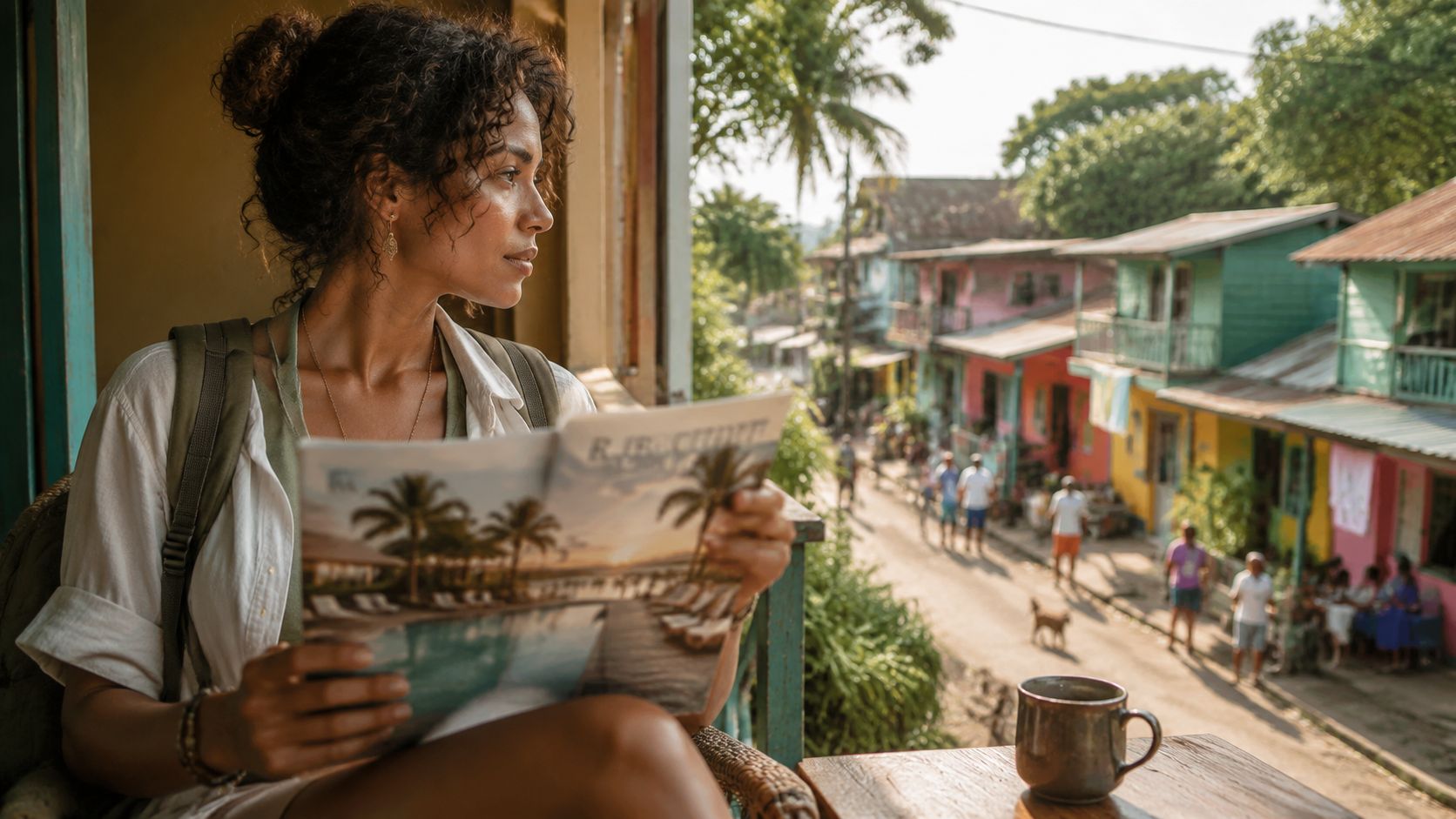
That's the wrong way to think about the island. Jamaica isn't a place where you either hide in a compound or throw caution out the window. It rewards travelers who plan well, stay flexible, and choose the right base for their style.
What independent travel looks like here
A good independent trip in Jamaica usually isn't about seeing everything. It's about choosing a few areas well. You might spend time in Kingston for music, history, and food, then shift to a coast with a calmer rhythm. You might choose one beach town and one inland stop instead of trying to zigzag all over the island.
That matters because many guides focus on warnings but rarely translate them into a real decision framework for independent travelers. As noted in this practical Jamaica dos and don'ts guide, the more useful question isn't limited to whether Jamaica is safe. It's which travel style, areas, and transport choices make an independent trip workable.
Practical rule: In Jamaica, freedom comes from structure. Book your first nights, know how you'll move between bases, and leave spontaneity for your daytime hours.
Why this version of Jamaica is worth the effort
The reward for doing it well is a more personal trip. You eat where people eat. You hear music where it lives, not where it's packaged. You start noticing the island's variety: city neighborhoods, fishing villages, mountain roads, beach strips, and communities that feel completely different from one another.
If you're still deciding whether Jamaica fits your style, it helps to compare it with other regional options. Travel Talk Today's guide to affordable Caribbean islands is a useful starting point if you're weighing Jamaica against places that feel easier on paper but less layered in practice.
Jamaica isn't the easiest Caribbean trip for a solo or budget traveler. It may be the most rewarding one if you approach it with your eyes open.
Planning Your Trip Best Times to Visit and How to Budget
Jamaica planning gets easier once you stop chasing the “perfect” season and start matching the trip to your priorities. Budget travelers usually care about three things: price, weather risk, and how much friction a destination has when moving around alone.
The right timing depends on which trade-off bothers you least. Crowds and higher rates can make logistics simpler because more tourism infrastructure is running at full speed. Quieter periods can feel better for a slower trip, but weather uncertainty and reduced frequency in some services can add complexity.
Think in trade-offs, not in ideal months
For solo and budget travel, shoulder periods are often the sweet spot because you can find a balance between activity and breathing room. But Jamaica isn't a destination where I'd advise making every decision based on the lowest possible price. A slightly better-located guesthouse, a daytime transfer instead of a late arrival, or a more reliable transport option can make the whole trip smoother.
The island's tourism sector also changed sharply during and after the pandemic. The Jamaica Tourist Board reports that total visitor arrivals in 2021 reached 1,535,165, up 15.5% from 1,329,675 in 2020, an increase of 205,490 visitors year over year, while the first quarter of 2021 still showed an 84.2% decline versus 2020 in total arrivals, as shown in the Jamaica Tourist Board Annual Travel Statistics 2021 report. For travelers, the practical takeaway is simple: capacity and pricing can shift fast, so book core logistics early and keep your arrival day uncomplicated.
Sample Daily Budgets for Independent Travel in Jamaica
Use the table below as a planning framework, not a fixed promise. Specific prices vary by season, location, and comfort level. Since verified cost data isn't provided here, the smartest move is to build your own spreadsheet around these categories before you book anything.
| Expense Category | Backpacker Style | Mid-Range Independent |
|---|---|---|
| Accommodation | Hostel dorm, simple guesthouse, basic room in a local property | Private guesthouse room, boutique stay, small hotel |
| Food | Patties, cook shops, fruit stands, self-catered breakfasts | Mix of local eateries, cafés, and a few nicer dinners |
| Transport | Shared route taxis for short hops, coach for longer intercity moves | Coach, selected private transfers, occasional registered taxi |
| Activities | Free beaches, self-guided walks, one paid attraction every few days | More paid attractions, guided experiences, occasional day tours |
| Nightlife | Casual bars, local music spots with planned transport home | Mix of nightlife, live music, and more comfortable transport choices |
| Buffer | Small emergency cash reserve | Larger flexibility fund for safer late returns or plan changes |
If you need help building a trip budget line by line, Travel Talk Today has a practical guide to travel budgeting tips that works well for destinations where transport choices can swing your costs quickly.
Money habits that work better on the ground
A few habits matter more than chasing minor savings:
- Carry a spending mix: Keep small daily cash separate from your backup money.
- Use restraint with visible valuables: Phones, jewelry, and bulky wallets attract attention you don't need.
- Budget for transport mistakes: In Jamaica, one “I'll figure it out later” transfer can become the most expensive part of the day.
- Leave room for safety upgrades: Sometimes the right move is paying more to avoid arriving late, walking too far with bags, or relying on a random ride.
Build your budget around movement first, not attractions. On this island, transport decisions shape both cost and safety.
Crafting Your Perfect Jamaica Itinerary
The strongest Jamaica travel guide doesn't hand you a giant bucket list. It helps you cut one down.
Jamaica is geographically manageable, but route planning isn't evenly easy across the island. Rough Guides notes that Jamaica is about 235 km long with 1,019 km of coastline, and that roughly a quarter of the population lives in greater Kingston, which concentrates transport, lodging, and services in the southeast rather than distributing them evenly nationwide, according to its Jamaica destination guide. That's why multi-stop regional trips usually work better than trying to see everything from one hotel.
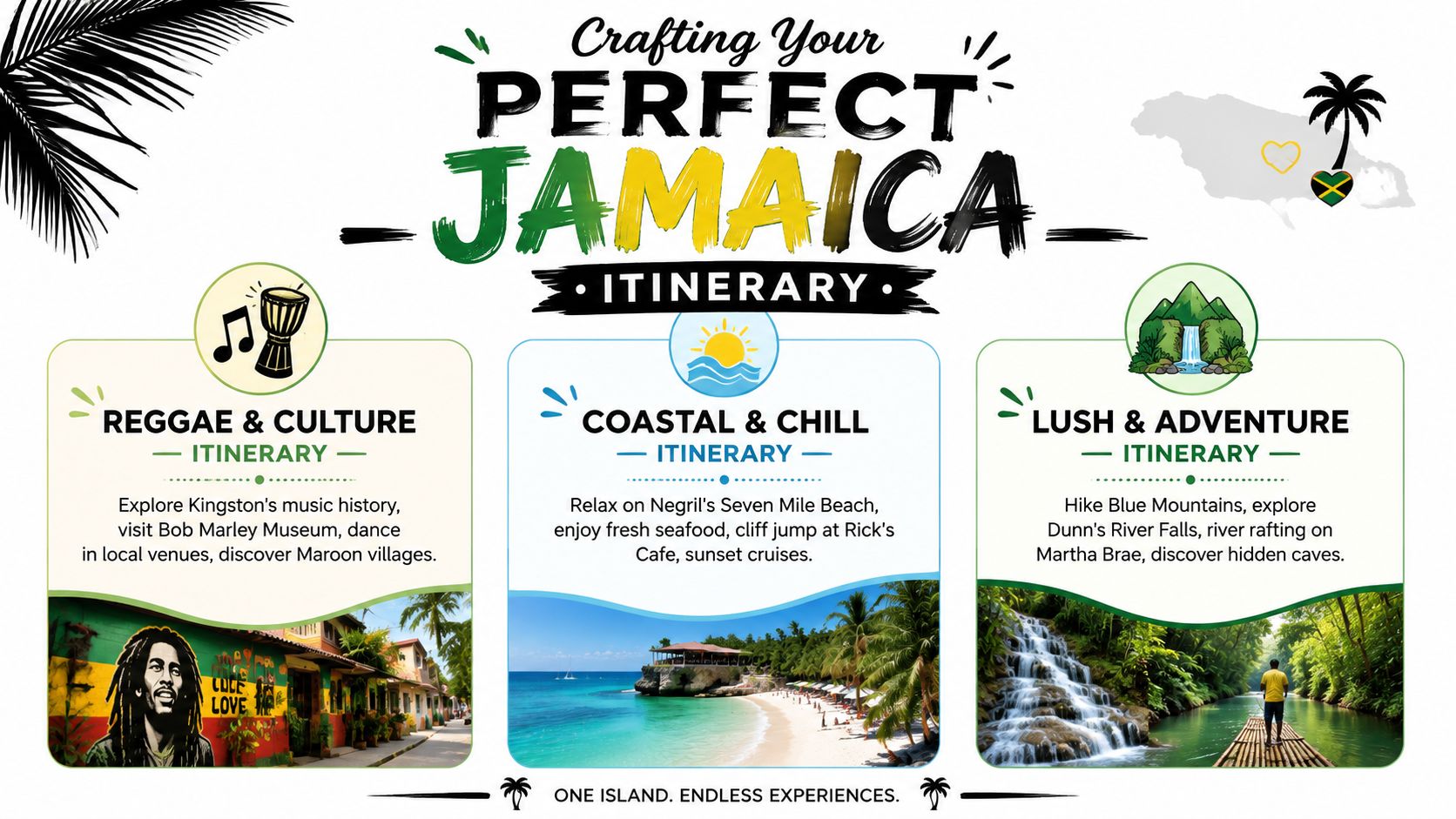
The 7 day Reggae and Culture route
This is the trip for travelers who care more about Jamaica's identity than about ticking off every famous beach.
Base plan
- Kingston
- Blue Mountains or nearby day trip
- One coastal finale
Start in Kingston. Keep your days structured. Focus on major cultural stops, museums, food neighborhoods, and organized outings rather than wandering aimlessly. Then take a day into the mountains or a cooler inland area before finishing with a few slower nights by the sea.
Why this works: Kingston gives context to everything else. Music, politics, street life, food, and art all land differently once you spend time there.
The 10 day Coastal and Chill route
This one fits travelers who want swim time, seafood, relaxed afternoons, and a trip that doesn't feel rushed.
A good shape looks like this:
- Arrive and settle into one north or west coast base
- Stay long enough to stop packing every other morning
- Add one second coastal stop with a different vibe
- Use selected day trips instead of constant relocation
This style works well because beach towns in Jamaica can feel very different from each other. Some are social and easy to get around. Others feel more spread out or more couple-oriented. On a solo trip, your choice of base affects whether evenings feel easy or isolating.
A practical rule is to choose places where food, beach access, and lodging sit within a reasonable daytime radius. That reduces your reliance on ad hoc transport after dark.
The 14 day Lush and Local route
With two weeks, you can combine coast, city, and interior without turning the trip into a transport marathon.
Consider this structure:
| Stop Type | What to prioritize | Why it earns a place |
|---|---|---|
| Urban base | Music, galleries, historic sites, local food | Gives the trip cultural depth |
| Beach base | Rest, swimming, sunset time, easy social energy | Prevents constant motion |
| Nature stop | Waterfalls, hiking, river activities, rural scenery | Shows a different Jamaica |
| Final soft landing | Last nights near your exit route | Reduces departure stress |
A longer trip is where hidden costs show up. Laundry, transit between regions, and paying for convenience start to add up. That's one reason I prefer fewer, longer stays instead of trying to conquer the island.
The best Jamaica itineraries feel selective, not exhaustive.
If you want to keep paid sightseeing under control, use a mix of anchor experiences and low-cost days. Travel Talk Today's collection of free things to do while traveling can help you think more creatively about building those lighter days into the route.
What doesn't work well
Some itinerary choices look efficient on a map and feel miserable in practice.
- One-base island conquest: Staying in one resort area and trying to day-trip everywhere wastes time and energy.
- Late arrivals to unfamiliar towns: Budget rooms are cheaper until you're dragging luggage through an area you don't know after dark.
- Too many one-night stops: Jamaica rewards settling in enough to understand the rhythm of a place.
A good route leaves room for weather, transport delays, and the simple fact that some places deserve a second afternoon.
Where to Stay From Hostels to Guesthouses
Where you sleep in Jamaica affects far more than comfort. It shapes your safety, your budget, how much local life you see, and whether your evenings feel easy or stressful.
For solo travelers, especially on a first visit, the best accommodation choice usually isn't the cheapest bed. It's the place that cuts unnecessary decision-making. A property in the right area, with staff who can help arrange trusted transport and give neighborhood advice, often saves money indirectly by preventing bad logistics.
Hostels and social stays
Hostels work best if your priorities are meeting people and keeping costs low. They're useful in places where solo evenings can otherwise feel isolating. A social common area can make it easier to split taxis, join day trips, or just avoid eating every meal alone.
The downside is inconsistency. Security, location, and noise matter more here than they do in destinations with effortless backpacker infrastructure. Before booking, check not just reviews in general, but comments about late arrivals, storage, front-desk coverage, and walking access to food.
Good hostel questions:
- Is the property in a populated area?
- Can staff arrange registered taxis or trusted drivers?
- Is there secure storage for passports and electronics?
- Can you walk to dinner in daylight without hassle?
Guesthouses and small local properties
For many independent travelers, this is the sweet spot. A small guesthouse often gives you more local context than a resort and more calm than a party hostel. You may get direct advice from owners, home-style breakfasts, and a better sense of the surrounding neighborhood.
This is also where location discipline matters most. A lovely room far from food, transport, or other travelers can become inconvenient fast. I'd rather take a simpler guesthouse in an active, practical area than a prettier one that leaves me stranded after sunset.
Choose lodging for the hour you'll feel most vulnerable, not the hour you're browsing photos.
Boutique hotels and apartment rentals
Boutique stays can work well when you want privacy but still need a manageable base. They're a strong option in towns where hostels are limited or where you want a little more structure without moving into full resort pricing.
Apartment rentals are more mixed. They can look like excellent value, but they demand confidence. If check-in is vague, the area is poorly described, or you'll need to sort out transport on your own from the airport or coach stop, that “deal” can become stressful quickly.
Area strategy by travel style
Rather than fixating on property type alone, think in zones:
| Travel Style | What to look for in an area | What to avoid |
|---|---|---|
| Solo first-timer | Populated streets, easy food access, staff support, reliable transport options | Isolated hillside stays, hard-to-find check-ins, long unlit walks |
| Budget backpacker | Social vibe, transit access, nearby cheap food, daytime walkability | Bargain properties with weak security or no local guidance |
| Independent mid-range | Small hotels near key sights, beach or city access, easy taxi coordination | Stylish but impractical stays far from everything |
| Solo female traveler | Strong reviews on safety, staffed reception, predictable arrival logistics | Properties that require late self check-in or remote access roads |
The right place to stay in Jamaica should make your day simpler by default. If a booking leaves you with too many unanswered transport or neighborhood questions, keep looking.
Getting Around Jamaica Independently and Safely
Transport is where many Jamaica trips go right or go wrong. Not because the island is impossible to get around, but because bad movement decisions create cascading problems: late arrivals, expensive last-minute rides, and situations where you have fewer safe options than you expected.
Mainstream advice often defaults to private transfers while warning against unlicensed taxis and night travel. That leaves budget travelers stuck between expensive convenience and vague caution. As explained in Fora Travel's definitive Jamaica guide, the key issue is understanding how island distances affect your day and when different transport modes make sense.
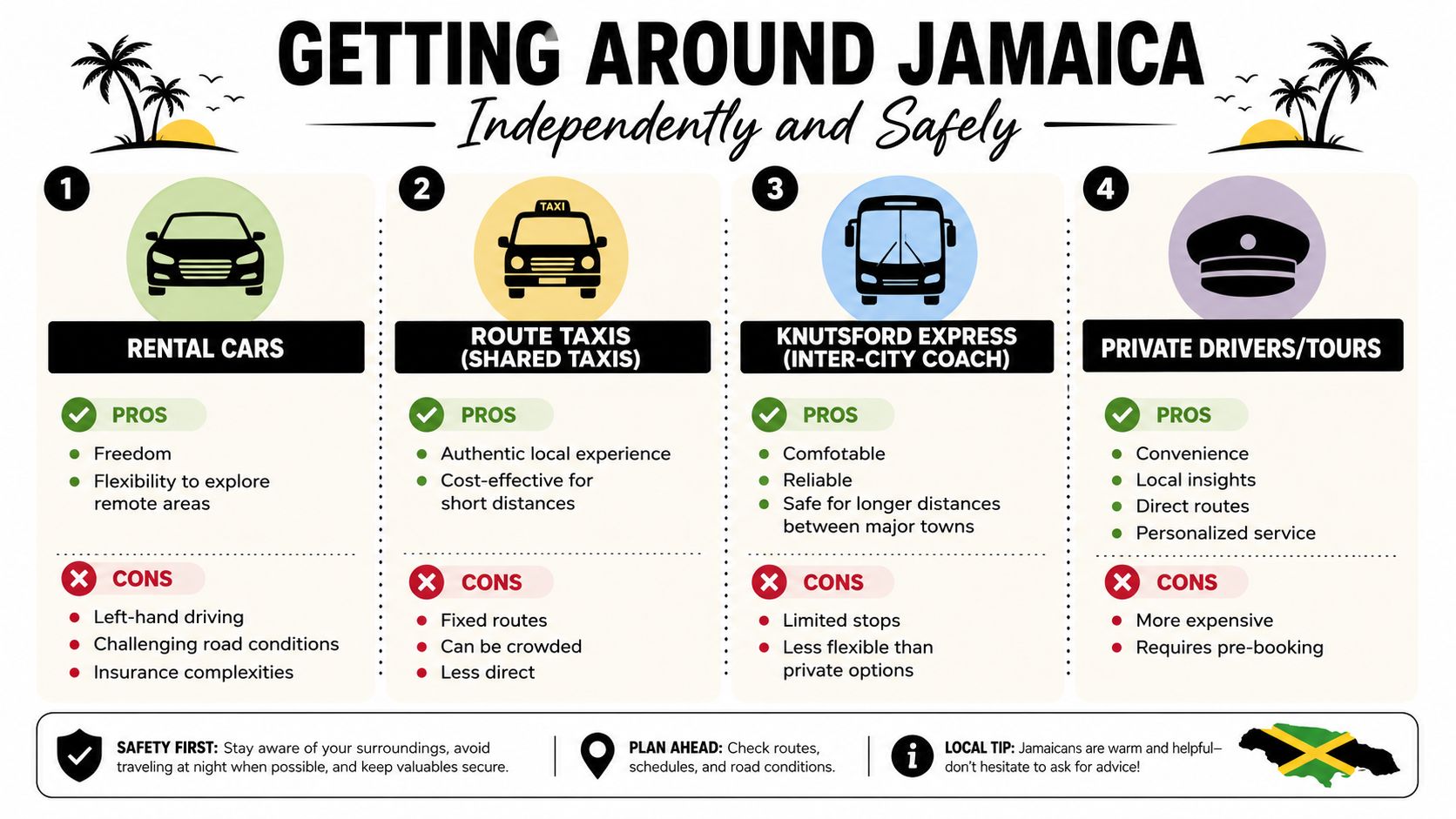
What works best for most independent travelers
For longer intercity moves, I strongly favor planned coach travel over improvising. The reason is simple: it reduces friction. You know your departure point, your approximate arrival window, and you're not negotiating the whole journey in real time.
For shorter local distances, route taxis can make sense if you understand the route, travel in daylight, and your accommodation confirms what's normal in that area. They can be useful, but they're not the right answer for every traveler or every arrival.
Private drivers still have a place. I'd use one selectively, not by default.
A practical transport framework
Use this instead of choosing one mode for the whole trip:
- Intercity transfer days: Book a coach or another established, prearranged option.
- Airport and late arrivals: Prebook the ride. Don't gamble.
- Short daytime hops in busy areas: Consider route taxis if your host confirms the route and pickup point.
- Sightseeing loops with multiple stops: A private driver can be worth the cost if it removes uncertainty.
- Remote attractions: Join a group tour or arranged excursion when transport is the hard part.
What usually causes trouble
Rental cars tempt a lot of travelers because they promise freedom. They can work, but they also raise the difficulty level immediately. You'll deal with unfamiliar roads, local driving patterns, parking concerns, and the risk of making a wrong turn into an area you didn't mean to enter. For some travelers that's fine. For many solo travelers, it's more stress than payoff.
The bigger mistake is ad hoc taxi use without a plan. If you don't know whether a taxi is licensed, what the normal fare structure is, or whether you'll have a safe return option, you're placing too much trust in the moment.
Don't ask transport to solve a bad itinerary. Fix the itinerary first.
Good transport planning starts before you land. Save addresses offline, confirm your first transfer, and avoid arrival windows that force you into after-dark decisions with bags in hand.
Staying Safe and Savvy as a Solo Traveler
The U.S. State Department advises travelers to exercise increased caution in Jamaica because of crime, health, and natural-disaster risks, and specifically warns against night driving, public buses, and remote areas, according to the official Jamaica travel advisory. For solo travelers, that advice matters most when it becomes behavior, not just background reading.

Safety in Jamaica isn't about acting scared. It's about reducing exposure to avoidable problems.
The habits that make the biggest difference
Start with movement. Daylight arrivals are easier. Prearranged rides are better than “I'll sort it when I get there.” Walking because a place looks close on the map isn't always smart if the route is unfamiliar or empty.
Then deal with visibility. If you look distracted, overloaded, or obviously unsure, people notice. Keep your phone use purposeful, don't flash cash, and avoid treating every street like a sightseeing zone.
Core solo safety habits:
- Share your plan: A friend should know your accommodation and transfer days.
- Keep a live phone option: Use a local SIM or e-SIM so you're not stranded without maps or messaging.
- Split valuables: Don't keep all cash and cards in one place.
- Leave if the vibe shifts: You don't need to be polite at the expense of your instincts.
Solo female travel in Jamaica
Women often ask the most practical question of all: not “Is it safe?” but “What form of independence feels realistic here?”
The answer depends on where you are, what time it is, and how self-contained your day is. Solo female travel in Jamaica can absolutely work, but it works better when you remove ambiguity. Know how you're getting back. Choose lodging with active staff presence. Don't rely on walking alone after dark. If you want nightlife or a music venue, go with a trusted recommendation and confirmed transport.
Unwanted attention can happen. The most effective response is usually firm, brief, and non-engaging. You don't owe anyone conversation because they started one.
Build confidence, not isolation
Being careful doesn't mean being closed off. Some of the best connections in Jamaica come through structure: guesthouse owners, food tours, small group excursions, musicians, drivers recommended by your stay, or other travelers heading to the same place.
If you're new to independent travel, Travel Talk Today's guide on how to plan a solo trip is a useful companion for setting up routines before you go.
A safe solo trip usually looks less spontaneous from the outside than people expect. On the ground, that structure gives you more freedom, not less.
Authentic Jamaica Food Culture and Hidden Gems
A resort can feed you well enough. It usually can't teach you how Jamaica tastes.
The island comes alive through small food moments: a patty eaten standing up, jerk smoke drifting from a roadside grill, fried fish close enough to the water that you still smell the sea, a cook shop lunch that tells you more about the place than any brochure ever will. If your Jamaica travel guide doesn't push you toward those experiences, it's leaving out the point.
Eat where the day already feels busy
The easiest rule for independent travelers is this: eat where there's turnover. Busy cook shops, active lunch counters, bakery stops, market-adjacent stalls, and known local favorites usually make better bets than empty places with a perfect ocean view.
Look for:
- Cook shops: Great for filling local meals and direct interaction.
- Patties and bakery stops: Fast, cheap, practical on transfer days.
- Seafood by the coast: Best when the place feels established and well-frequented.
- Breakfast spots with local staples: A good way to start the day before heat and transport complications kick in.
Ackee and saltfish matters because it's rooted in the island's food identity. Jerk matters too, but don't stop there. Try what a place cooks well, not only what tourists arrive expecting.
Culture is often found in the ordinary
A lot of travelers chase the “authentic” Jamaica while skipping the simplest version of it: spending time in real neighborhoods during the day, hearing music in context, talking to people who aren't paid to perform a cultural script, and choosing local businesses over generic tourism bubbles.
That doesn't mean wandering anywhere without a plan. It means using structure to access real life respectfully. A daytime food walk, a local art space, a market visit with someone knowledgeable, or a music-centered outing can open up far more than a generic attraction circuit.
The most memorable Jamaica moments are often small. Lunch under a zinc roof, a conversation on a veranda, a song playing from a passing car.
Hidden gems worth your attention
I'm less interested in “secret” spots than in places that still let you feel the island breathe. The best hidden gems are usually one of three things:
| Type of Place | Why it stands out | How to do it well |
|---|---|---|
| Small beaches outside major resort zones | Less packaged, more local rhythm | Go in daylight, keep transport simple |
| Inland nature stops | A different Jamaica from the coast | Pair with a guide, driver, or planned excursion |
| Local markets and town centers | Best for photography, food, and atmosphere | Visit by day and ask locals where to start |
If cultural depth matters to you, Travel Talk Today's piece on cultural immersion travel is worth reading before you go. Jamaica rewards travelers who participate carefully, not those who just consume scenery.
The island's beauty is obvious. Its character takes a little more effort. That's the part that is remembered longest.
Your Jamaica Trip Checklist and Final Thoughts
A smart Jamaica trip starts before the flight. Not with overplanning, but with the right kind of planning.
Use this checklist before you go:
- Book your first nights early: Arriving with a confirmed base removes a lot of stress.
- Prearrange your first transfer: This is one of the easiest safety upgrades you can make.
- Keep your route simple: Fewer bases usually means a better trip.
- Get data access sorted: A local SIM or e-SIM helps with navigation, messaging, and backup plans.
- Pack for movement: Lightweight clothing, a dry bag, power bank, sun protection, and shoes that work on uneven ground matter more than extra outfits.
- Carry backup money wisely: Split cash and cards between day-use and reserve storage.
- Get travel insurance: Especially if your plan includes hiking, waterfalls, boating, or frequent transit changes.
- Save key details offline: Accommodation addresses, transport bookings, and local contacts should not depend on one weak signal.
The broader point is simple. Jamaica works best when you stop treating it like an effortless beach holiday and start treating it like a real country with distinct regions, strong culture, and practical constraints. Once you do that, the island opens up.
You don't need to travel recklessly to fully experience Jamaica. You need good judgment, realistic pacing, and the willingness to choose substance over convenience when it counts. Do that, and Jamaica can give you a trip that feels warmer, richer, and more memorable than the polished version many travelers accept.
Travel Talk Today shares practical, thoughtful advice for travelers who want more than generic itineraries. If you're planning a trip that balances budget, safety, and cultural depth, explore Travel Talk Today for more destination guides, solo travel strategies, and trip-planning ideas.